Do You Need a Separate Amplifier for Your Speakers?
Why matching impedance and fixing room acoustics beats buying unnecessary audio gear
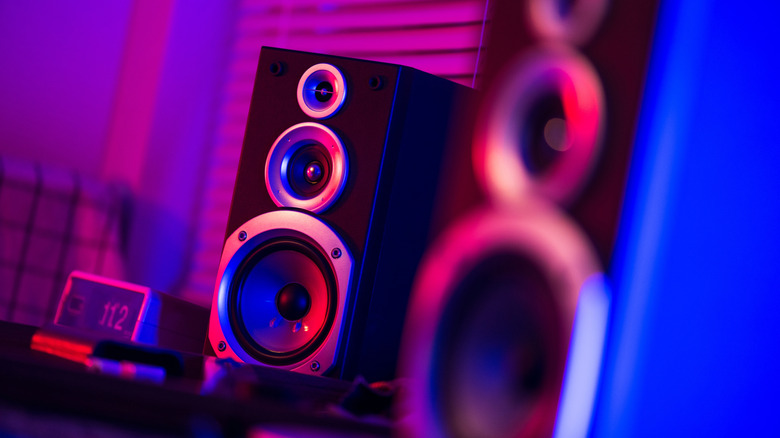
Most consumers shopping for better home audio make the same expensive mistake: buying a standalone amplifier they do not need. While dedicated amplification is essential for specific high-end configurations, the vast majority of modern living rooms already contain multiple amplifiers hidden inside everyday electronics.
Understanding when external power actually improves sound quality — and when it merely duplicates hardware you already own — prevents wasted spending and protects speakers from electrical damage.
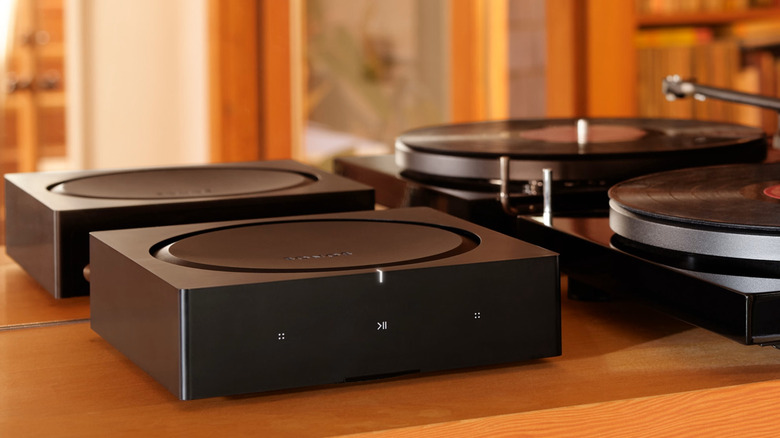


Every audio signal generated by a source component, whether a turntable cartridge tracking vinyl grooves or a digital-to-analog converter processing a streaming file, starts at a voltage far too low to physically move a speaker cone. An amplifier increases that signal’s current and voltage to drive transducers. Without this boost, listeners would hear only faint mechanical noise directly from a stylus, known in audiophile circles as needle talk.
Matching an amplifier to speakers requires checking two specifications: impedance, measured in ohms, and sensitivity, measured in decibels per watt at one meter. A speaker with 4-ohm impedance draws twice the current of an 8-ohm model at the same volume, demanding an amplifier capable of delivering stable power into lower loads without overheating. Sensitivity dictates efficiency; a speaker rated at 90 dB requires significantly less wattage to reach listening volumes than one rated at 84 dB. Ignoring these pairings frequently results in clipping, where the amplifier runs out of headroom and sends distorted square waves that burn out tweeters.
The distinction between active and passive loudspeakers eliminates much of the confusion surrounding external power. Active speakers house built-in amplification matched specifically to their drivers at the factory, requiring only a line-level signal and an AC power connection. Soundbars, Bluetooth monitors, and smart speakers all operate on this architecture. Passive speakers lack internal power and rely entirely on an external source.
However, owning passive speakers does not automatically necessitate a standalone amplifier. Audio/video receivers combine preamplification, digital signal processing, surround sound decoding, and multi-channel power amplification within a single chassis. For standard 5.1 or 7.1 surround setups, a modern receiver provides sufficient wattage for most residential rooms. Standalone power amplifiers become necessary only when channel counts exceed a receiver’s capacity — such as expanding a Dolby Atmos layout to a 7.2.4 or 9.2.6 configuration — or when driving exceptionally inefficient floor-standing towers that demand hundreds of clean watts per channel.
Preamplifiers serve a different function entirely. They switch between input sources, apply initial gain staging to bring signals up to line level, and often handle volume control. Many integrated amplifiers combine preamp and power amp stages in one box, while separates split them for users seeking modular upgrades or reduced electrical interference between components.
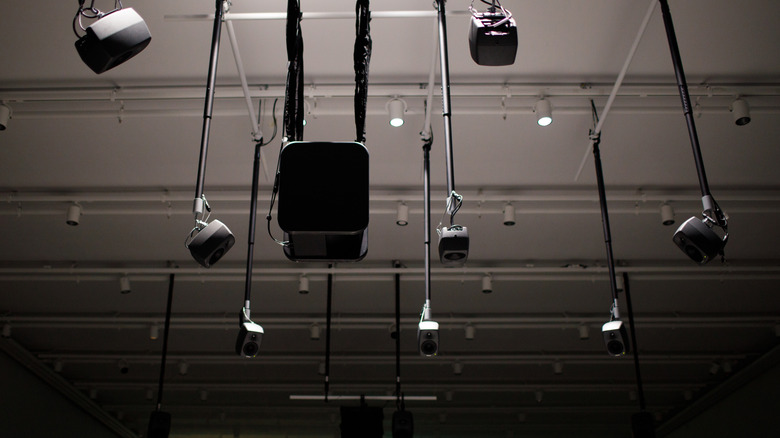
Debates over tube versus solid-state amplification often distract from practical system building. Vacuum tube amplifiers introduce even-order harmonic distortion that human hearing interprets as warmth, making them popular for two-channel music listening. Their limitations in home theater applications are severe. Most consumer tube designs deliver under 50 watts per channel, run extremely hot, require periodic bias adjustments, and eventually need costly tube replacements. Solid-state Class AB and highly efficient Class D amplifiers deliver the high current, low distortion, and reliability required for dynamic movie soundtracks across multiple channels simultaneously.
Before investing in additional amplification, addressing room acoustics typically yields larger improvements in perceived sound quality. Hard floors and bare walls create flutter echoes and bass buildup that no amount of electrical power corrects. Positioning speakers away from boundary walls reduces muddy low-frequency response. Isolation stands or decoupling mats prevent vibrations from transferring into furniture and flooring. Broadband acoustic absorption panels tame early reflections that smear stereo imaging.
Modern receivers and active systems increasingly include automated room correction software, such as Dirac Live or Audyssey MultEQ. These systems use calibrated microphones to measure frequency response anomalies caused by room geometry and apply digital filters to flatten the output. Rerunning calibration after moving furniture or adding rugs ensures the DSP adapts to the altered acoustic environment.
Upgrading the transducers themselves remains the most direct path to better audio. Moving from a basic stereo soundbar to a dedicated three-channel front stage with a center speaker dramatically anchors dialogue. Adding discrete rear surrounds expands spatial separation beyond what virtualized processing achieves. While overhead ceiling channels complete immersive object-based audio formats, they require structural mounting and wiring runs that complicate installation compared to upward-firing modules bouncing sound off flat ceilings.
Manufacturers continue refining integrated amplification. Recent releases of high-efficiency Class D modules from companies like Hypex and Purifi have narrowed the performance gap between affordable AV receivers and boutique monoblock amplifiers, delivering near-zero distortion at high wattage while generating minimal heat.