Billionaire Family Offices Pivot to Luxury Assets as Inflation Hedge
Record auction sales and fragmented market returns reveal how the ultra-wealthy use physical collectibles to store capital outside traditional portfolios.
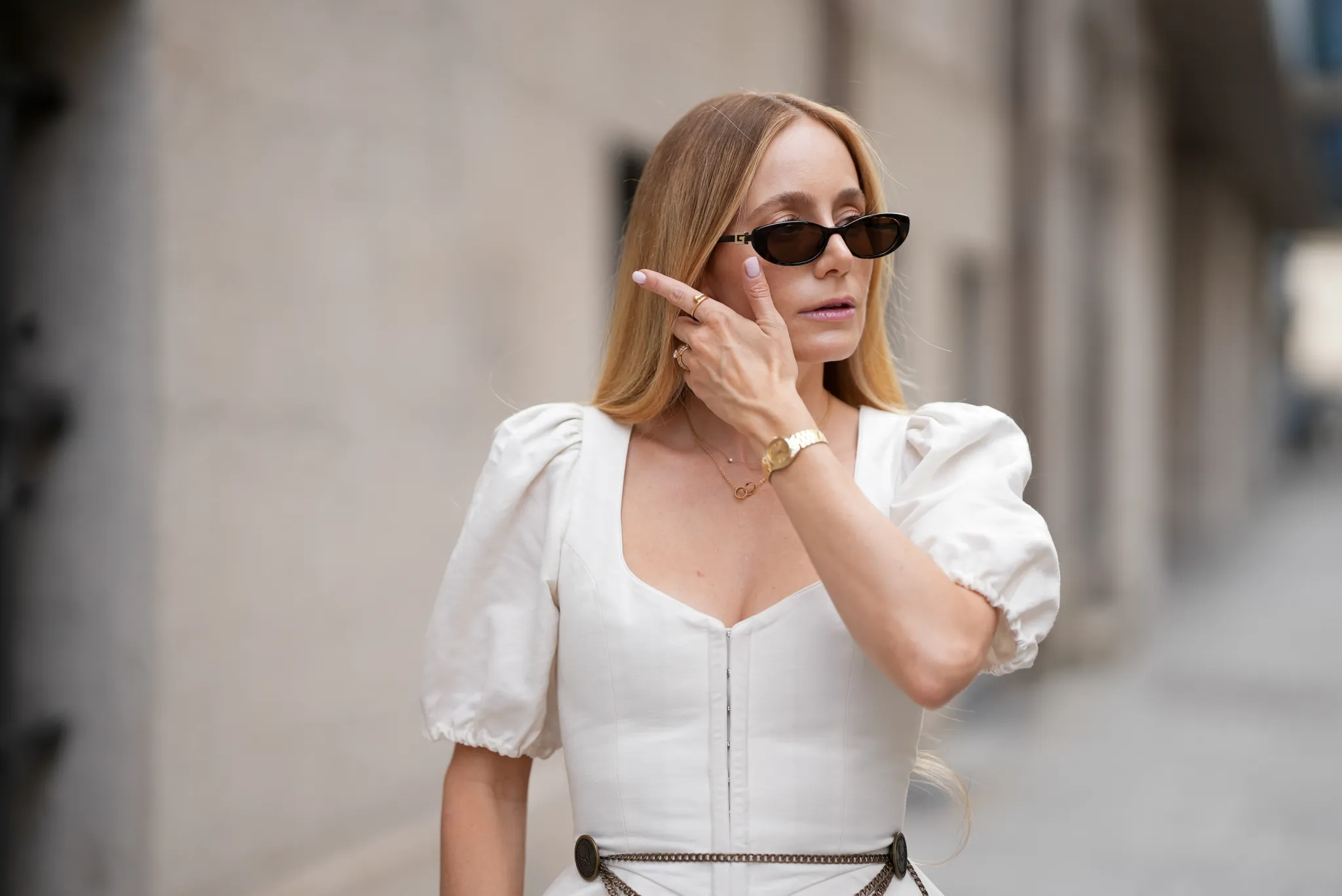
Sotheby’s reported $4.4 billion in first-half sales in 2026, a 58% surge from the prior year, signaling that the ultra-wealthy are aggressively converting capital into physical objects rather than waiting for traditional markets to stabilize.
Behind that auction house boom is a structural shift inside single-family offices — the private wealth management firms overseeing fortunes typically exceeding $250 million. A BNY Wealth survey of investment decision-makers at 290 such firms found that nearly two-thirds now hold assets deliberately uncorrelated to their primary portfolios, roughly double the share recorded a year earlier. Among the 290 offices surveyed, almost half manage more than $1 billion.
The fastest-growing allocations are not yield-generating properties or infrastructure stakes. They are watches, fine jewelry, art and rare spirits. These categories outpaced investments in sports franchises and music rights, which generate recurring cash flow and offer pricing flexibility during inflationary periods but lack the immediate portability and density of value found in high-end tangibles.

Central bank missteps and persistent inflation rank as the top five-year risks identified by these offices. The pivot toward collectibles mirrors historical behavior during monetary uncertainty, functioning similarly to gold accumulation but with added utility as status markers.
Whether luxury goods actually protect purchasing power remains fiercely debated among economists. A 2021 study by Duke University’s Campbell Harvey and researchers at Man Group analyzed eight U.S. high-inflation periods spanning World War II through the 2008 financial crisis. During those regimes, art returned approximately 7% annually above inflation, wine 5% and stamps 9%.
Subsequent research has fractured that consensus. A 2025 study published in Applied Economics determined that while art hedged against inflation over the long term in France, it failed to do so in the United States or the United Kingdom. A 2022 analysis by Credit Suisse and Deloitte Private drew sharper distinctions within the asset class itself: Chanel handbags, traditional Chinese art and specific watchmakers held up during high-inflation periods, whereas fine wines, modern and contemporary art, and American and Latin American art tended to suffer.
Market data from 2025 reflects this fragmentation. The Knight Frank Luxury Investment Index, which tracks 10 collectible categories, declined just 0.4% for the year following broader losses in 2023 and 2024. Fine art sales across major auction houses rose 11%, anchored by Sotheby’s $236.4 million sale of Gustav Klimt’s Bildnis Elisabeth Lederer in November. Secondary watch prices climbed 5.1%, driven entirely by Patek Philippe, which gained 12.1%, and Rolex, up 4.6%. Fine wine dropped 2.5% in 2025 as U.S. tariffs suppressed demand, leaving the category nearly 25% below its 2022 peak.
The economic mechanics driving these valuations differ fundamentally from equities or fixed income. In a 2009 paper in the American Economic Review, economist Benjamin Mandel demonstrated that art cannot be valued using standard financial models because its worth derives simultaneously from aesthetic utility and what sociologist Thorstein Veblen termed “conspicuous consumption.” The signaling value of owning an irreplaceable object increases alongside its price.
A 2011 American Economic Review study by William Goetzmann, Luc Renneboog and Christophe Spaenjers confirmed a long-run relationship between top-tier incomes and art prices, concluding that the high-end market is driven almost entirely by the spending capacity of the wealthiest households rather than broader economic health. Colored gemstones have recently emerged as a specific target within this dynamic, with wealthy consumers increasingly treating them as direct investment vehicles rather than adornments.
This concentration of capital operates within what economists describe as a K-shaped economy. Federal Reserve Bank of New York research shows that households earning more than $125,000 experienced cumulative real spending growth of about 7.6% through March 2026, compared with just over 1% for those earning under $40,000. Researchers at the Minneapolis Fed have cautioned that the underlying data does not support such a clean bifurcation, but the divergence in discretionary spending power remains visible at auction houses globally.
Even as family offices allocate heavily to physical stores of value, they maintain aggressive positions in technology. Artificial intelligence ranked as the most compelling five-year investment theme for the third consecutive year in the BNY survey, cited by 68% of respondents. Y Combinator cofounder Paul Graham noted in February that when artificial intelligence removes barriers to creation, curation and taste become the primary differentiators — a principle that applies directly to how the ultra-wealthy select physical assets.
Andy Warhol articulated the underlying logic of this asset class in his 1975 book The Philosophy of Andy Warhol, arguing that a $200,000 painting should simply be viewed as money tied up and hung on a wall so visitors see the capital immediately upon entering the room.
Sotheby’s record $4.4 billion in first-half sales for 2026 represents the latest confirmation that families controlling nine-figure portfolios continue executing that exact strategy at scale.