
Africa’s New Data Center Race Links Power Projects to AI Infrastructure
Energy deals and data centers reshape the U.S. technology push across Africa

WASHINGTON — Major energy projects and commercial data hubs are increasingly being paired across Africa through U.S. trade diplomacy and public-private financing. The strategy seeks to secure critical digital infrastructure while challenging China’s established footprint in regional telecommunications.
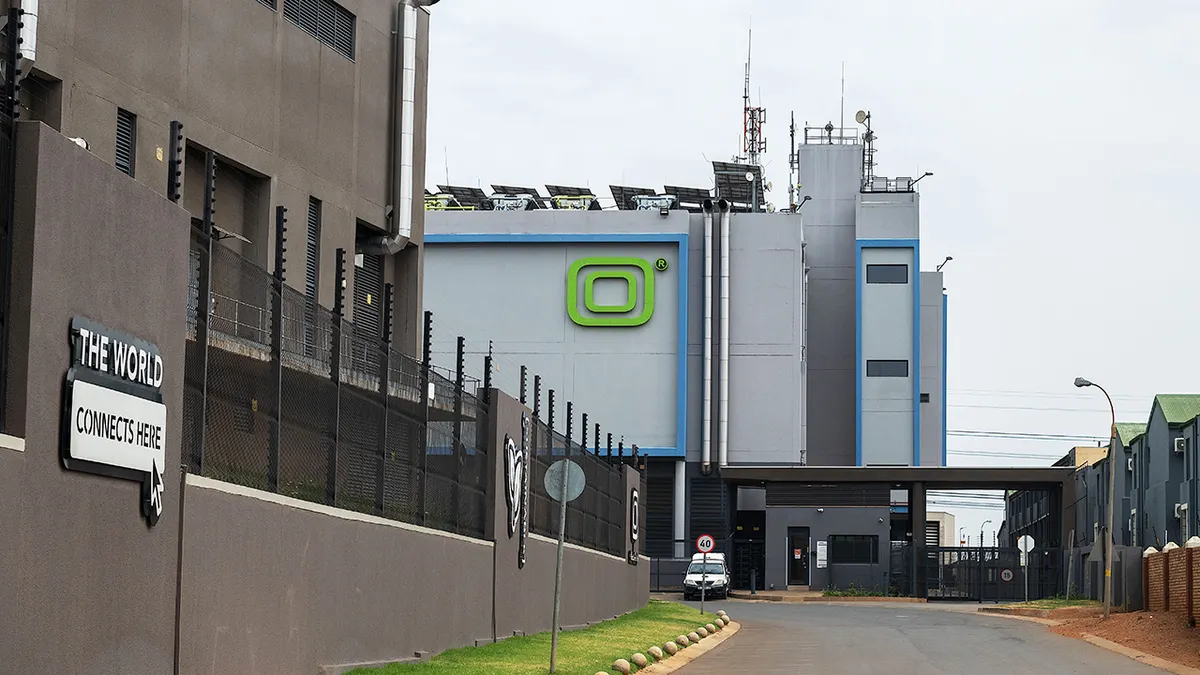
Computational capacity across the continent remains heavily concentrated in South Africa, Kenya, Nigeria, Morocco, and Egypt. South Africa holds an estimated 70 percent of all operational data center infrastructure in Africa, with much of it clustered around Johannesburg at facilities such as Teraco Data Environments’ Isando Campus, which hosts major enterprise and cloud service nodes.

Industry analysts point to unallocated land and significant potential for utility-scale solar, wind, hydro, and geothermal energy development as structural advantages for energy-hungry server infrastructure. “Africa is emerging as a significant potential location for building AI infrastructure, especially as many mature markets face increasing environmental and power constraints,” said Abhishek Goyal, a consultant at research firm Arizton Advisory & Intelligence.
Goyal added that North America and Europe face power scarcity and regulatory slowdowns, while Africa’s emerging infrastructure offers an operational opportunity for rapid deployment. In the United States and Western Europe, technology developers are encountering electric grid congestion, prolonged utility interconnection queues, municipal zoning delays, and environmental friction over heavy water and power consumption.
By combining electricity generation with server facilities, U.S. companies are attempting to bypass local grid deficits across African markets. The power sources range from natural gas plants to high-capacity hydro installations.
A $6.2 billion project in Lesotho illustrates the approach. U.S.-based developer Convalt Energy is constructing the Kobong Pumped Hydro project alongside associated data center facilities in the landlocked Southern African kingdom.

The high-altitude hydro installation is engineered to provide the stable, dispatchable power required to run energy-intensive computing clusters continuously. Data centers can also serve as guaranteed anchor customers that make new renewable energy generation projects bankable for international lenders, allowing American firms to co-develop power and computing assets, Arthur Goldstuck noted.
Similar energy-and-tech packages are advancing in Central and West Africa. In Gabon, intervention by the U.S. Embassy helped American companies secure a $100 million agreement to deliver two data centers alongside a dedicated gas-to-power plant. The transaction followed a broader diplomatic commercial effort in Gabon that assisted U.S. companies in winning approximately $600 million in combined business contracts.
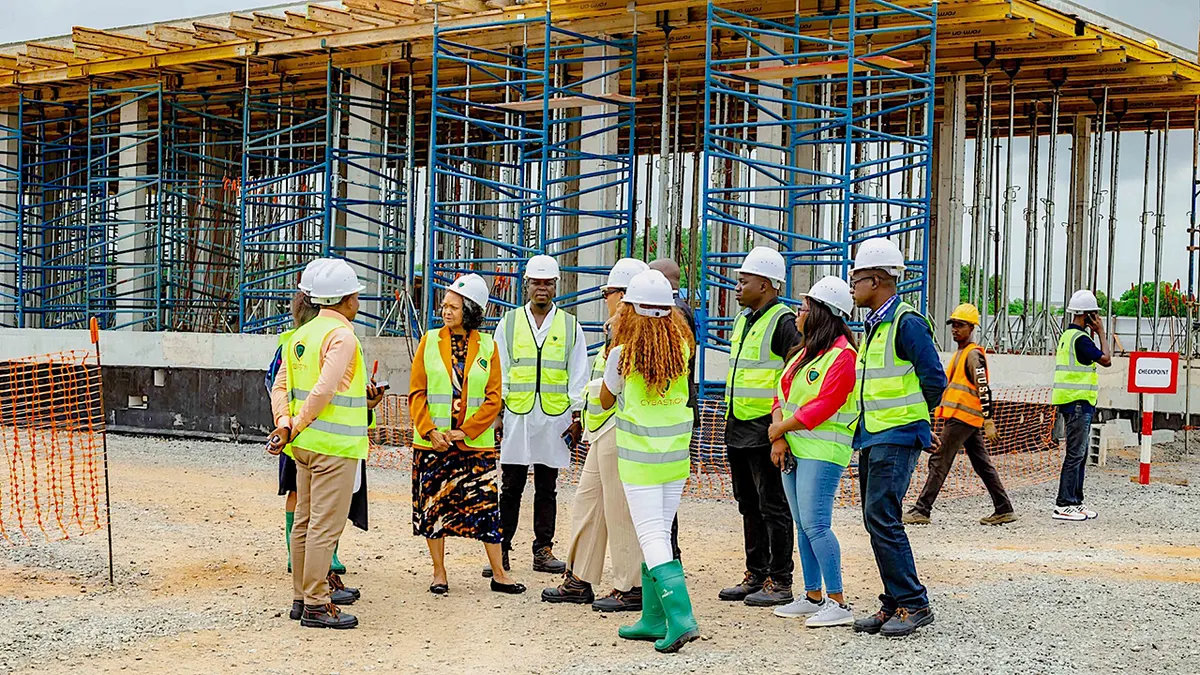
In Côte d’Ivoire, the U.S. Embassy in Abidjan facilitated a $170 million contract between the Ivorian government and American technology firm Cybastion. The agreement covers a modern data center in the economic capital, as well as digital governance and cybersecurity platforms.
“Under President Trump’s leadership, the United States is assisting U.S. companies to find new markets and flourish in Africa,” said Frank Garcia, Assistant Secretary of State for African Affairs.
The Trump administration has explicitly tied these commercial efforts to national security priorities, aiming to position American artificial intelligence technology and hardware standards as the primary alternative to Chinese infrastructure. Over the past two decades, Chinese state-backed telecommunications manufacturers, notably Huawei and ZTE, built an estimated 70 percent of Africa’s 3G and 4G wireless network backbones under Beijing’s Digital Silk Road initiative.
State Department officials said Washington’s strategy centers on deploying public and private capital to ensure international digital networks remain secure. “We are committed to ensuring that American AI – including enabling infrastructure like data centers – continues to be the gold standard worldwide, and that we remain the partner of choice for foreign governments and businesses who are seeking to upgrade their telecommunications networks and AI capabilities,” a State Department spokesperson said.
Telecommunications consortia are deploying transoceanic subsea fiber-optic systems to support cross-continental data transmission. High-capacity cables landing along the West and South African coasts are intended to bridge African server facilities with Western networks.
Those subsea fiber cables allow African server facilities to handle non-instantaneous computing workloads for Western clients, including data backups, disaster recovery, and batch AI processing. Physical latency limits their suitability for applications requiring real-time response times in North America.
Goldstuck, chief executive officer of South African tech research firm World Wide Worx and author of The Hitchhiker’s Guide to AI – The African Edge, said, “Africa is experiencing a data center boom, but it begins from a very small base.” He explained that Africa will not immediately rival Western markets as a global computing hub because of total capacity limitations.
The primary commercial catalyst is localized demand from regional businesses, banks, and governments seeking to store sensitive data locally to meet emerging data sovereignty rules. That demand is developing while capital expenditure accelerates across the region.
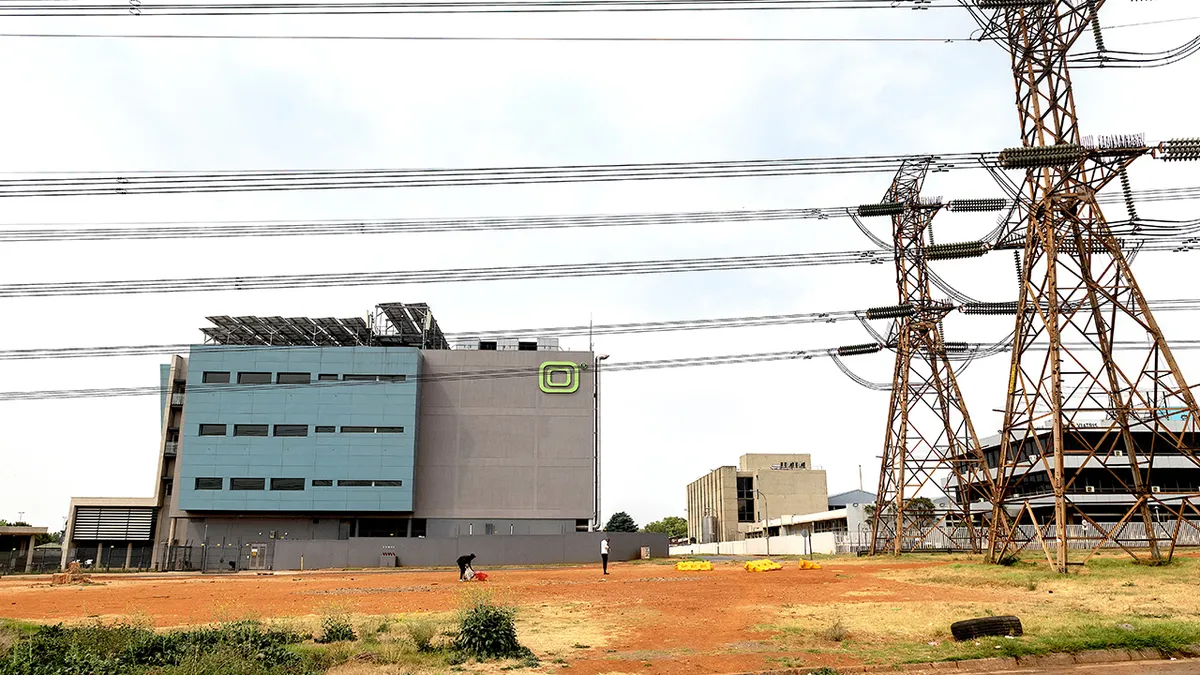
Academic and policy experts warn that regulatory frameworks have not kept pace with the rapid construction of energy- and water-intensive computing sites. Pitso Tsibolane, senior lecturer in information systems at the University of Cape Town, pointed out that even in South Africa there is currently no centralized public register of data center installations.
Operators are also not required to publicly disclose standardized metrics regarding power draw, water consumption, or land usage. “That gap serves nobody,” Tsibolane said. “Communities cannot see what is being traded on their behalf, and responsible operators cannot distinguish themselves from the rest, because nobody’s numbers are on the table.”
Tsibolane added that transparent reporting guidelines, independent baseline measurements, and clear regulatory approval paths will be vital to protecting local electrical grids while providing foreign tech investors with long-term commercial certainty.