
401(k) Balances Hit $155,800 as Younger Workers Invest More
Younger investors and market gains help push workplace retirement accounts to record levels

Average American workplace retirement account balances reached historic highs in the second quarter of 2026 as equity markets surged and workforce participation expanded. The increase reversed losses recorded earlier in the year.
Fidelity Investments’ Q2 2026 Building Financial Futures report found that the average 401(k) balance rose to a record $155,800. That was a 10.5% gain from the first quarter of 2026 and a 13.1% increase from the same period a year earlier.



The second-quarter recovery followed a minor contraction in the first quarter of 2026. Fidelity, one of the nation’s largest workplace retirement plan administrators, reported comparable momentum in non-profit and public-sector accounts, with average 403(b) balances also returning to record territory.
The standard 401(k) account was created under Section 401(k) of the Internal Revenue Code as part of the Revenue Act of 1978. It has become the dominant vehicle for private-sector retirement savings in the United States, largely replacing traditional defined-benefit pensions. 403(b) plans serve employees of public schools, universities, hospitals, and tax-exempt organizations.
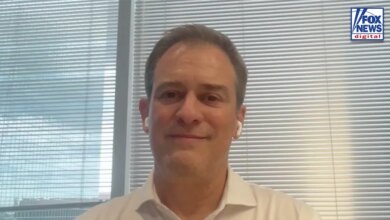
Financial analysts attributed the second-quarter expansion to persistent equity market gains and shifting saver behavior. In an interview with FOX Business, Jade Warshaw, co-host of “The Ramsey Show,” said that high participation rates among younger workers are contributing significantly to the aggregate rise in retirement balances.
“I’ve seen a trend with Gen Z, who is really investing more,” Warshaw said. She added that multi-year market returns have incentivized broader participation as workers seek to capitalize on growth.
The influx of younger participants has coincided with legislative adjustments to workplace savings frameworks. Under federal legislation such as the SECURE 2.0 Act of 2022, employers have increasingly adopted automatic enrollment and automatic contribution escalation features for newly established 401(k) and 403(b) plans.
Those features automatically direct a portion of employee wages into default investment options such as target-date funds. Warshaw also said that heightened economic anxiety and global financial volatility have led many workers to increase their personal savings rates as a stabilizing measure.
“Depending on the generation that we’re talking about and whose account we’re talking about, different things are driving it,” Warshaw said. “I think right now, there’s just a want and a need for security.” She noted that when broader economic conditions feel uncertain, many individuals find reassurance in controlling personal financial variables within their immediate reach.

Despite the rise in retirement account balances, personal finance advisors emphasize establishing household liquidity before maximizing investment allocations. Warshaw cautioned against diverting cash into long-term retirement accounts without a foundational safety net.
She outlined the standard financial sequence advocated by Ramsey Solutions, known as the “7 Baby Steps.” The framework begins with establishing a $1,000 starter emergency fund and eliminating all non-mortgage consumer debt.
The sequence then calls for an emergency fund covering three to six months of living expenses before allocating 15% of gross household income toward retirement accounts. Workers maintaining retirement accounts during periods of market volatility are also advised against short-term trading strategies.
Warshaw identified market timing—attempting to outsmart market cycles by frequently buying and selling positions—as a common misstep for workplace investors. “What I suggest for people to do is invest in the most boring way possible,” Warshaw said.
Rather than making discretionary trades based on short-term market fluctuations, financial standards rely on dollar-cost averaging. Through automated payroll deductions, dollar-cost averaging directs fixed dollar amounts into selected investment portfolios at regular intervals regardless of unit prices.
The structure automatically purchases more fund shares when prices decline and fewer shares when prices rise, lowering the average cost per share over extended periods. “You set it and forget it and let it run,” Warshaw said, comparing the steady, continuous investment strategy to “the tortoise and the hare” and stating that consistent, long-term contributions remain the most reliable path for building wealth over time.