
The 9/11 Files Trump Promised to Review Still Point to Saudi Arabia
Trump’s promised review opened another chapter in the families’ fight for the FBI records
For nearly two decades, families of the 2,977 people killed in the September 11, 2001, terrorist attacks have pursued a multi-billion-dollar civil lawsuit against the Kingdom of Saudi Arabia in federal court while also challenging the U.S. government’s classification systems.
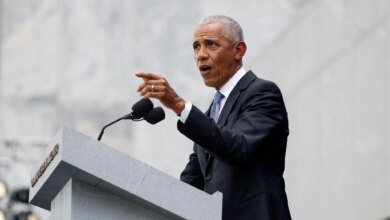
Their legal route opened in September 2016, when Congress overwhelmingly passed the Justice Against Sponsors of Terrorism Act (JASTA) over President Barack Obama’s veto. JASTA amended the Foreign Sovereign Immunities Act, allowing U.S. citizens to sue foreign states in federal court for acts of international terrorism committed on U.S. soil. The law paved the way for the consolidated civil lawsuit *In re Terrorist Attacks on September 11, 2001*, pending in the U.S. District Court for the Southern District of New York.
The dispute concerns allegations that Saudi government employees and state-funded charities in the United States provided housing, funding, and logistical assistance to the first hijackers who arrived in southern California in 2000. Fifteen of the 19 hijackers were Saudi nationals. The Saudi government has consistently and vigorously denied any official role in or funding of the attacks.


Families and their legal teams have sought unredacted reports from the FBI’s decade-long investigation, code-named “Operation Encore.” The files focused heavily on Fahad al-Thumairy, a former Saudi consular official and imam in Los Angeles, and Omar al-Bayoumi, a suspected Saudi intelligence agent. Both men are alleged to have assisted hijackers Nawaf al-Hazmi and Khalid al-Mihdhar after their arrival in Los Angeles.
The 2004 9/11 Commission Report remained the basis of the official U.S. government position for years. It concluded that it found “no evidence that the Saudi government as an institution or senior Saudi officials individually funded” al-Qaeda. A joint congressional inquiry and Operation Encore later uncovered numerous connections between Saudi diplomats, intelligence agents, and the hijackers.
Successive administrations nevertheless shielded many FBI and Central Intelligence Agency records. The families’ legal team faced claims of “state secrets privilege,” with officials arguing that disclosure could compromise national security, jeopardize foreign intelligence partnerships, or damage the U.S.-Saudi diplomatic relationship, which is anchored in counterterrorism cooperation, energy markets, and arms sales.
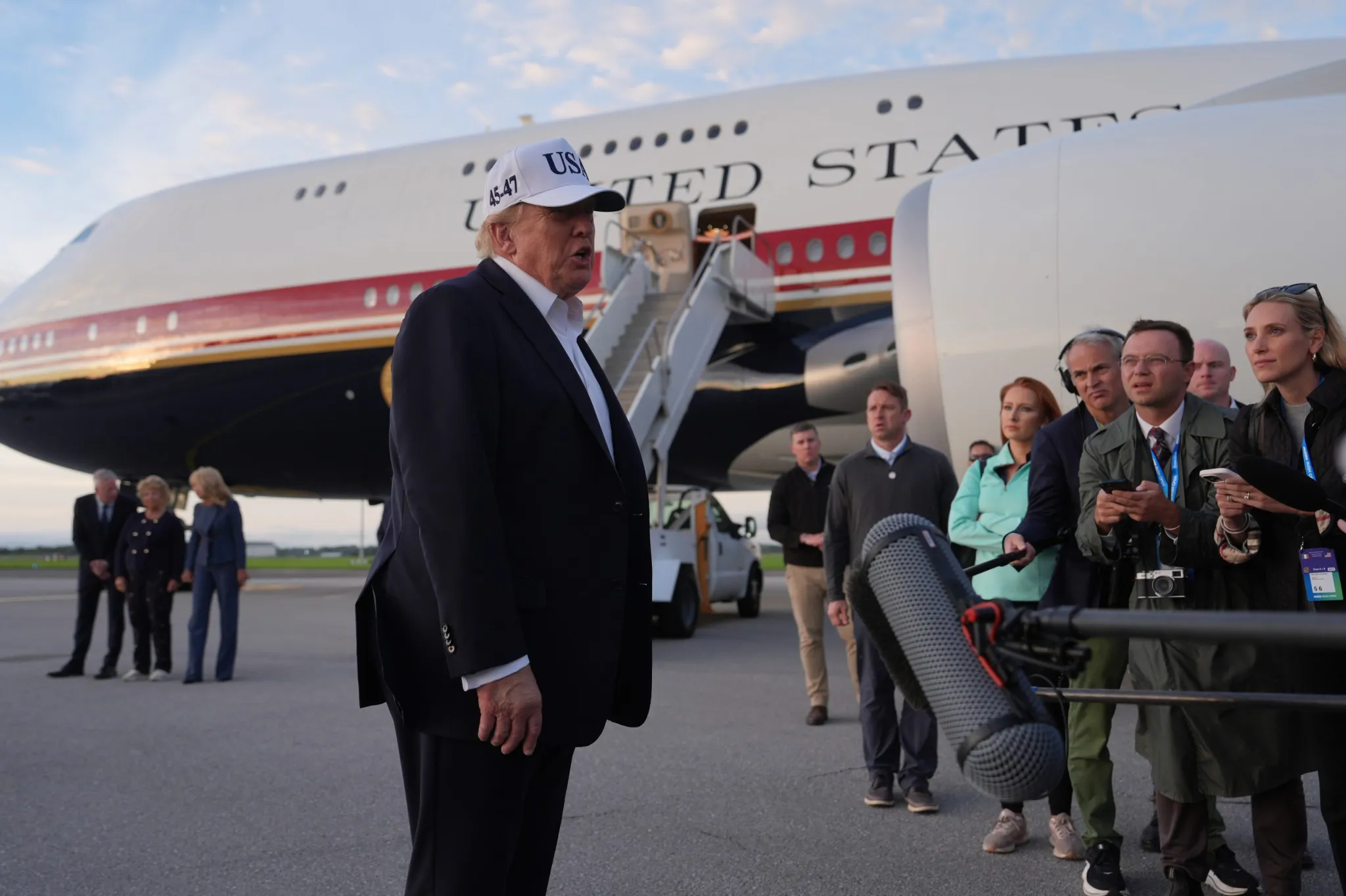
Pressure reached the steps of Air Force One in Shannon, Ireland, on June 9, 2019. President Donald Trump had been asked to declassify highly sensitive FBI documents concerning Saudi Arabia’s alleged logistical and financial support for the hijackers. “I’m going to look at it when I get back,” Trump told reporters before boarding the presidential aircraft for Washington. “I know they asked me Friday,” he added.
Trump was ending a European trip that included D-Day commemoration ceremonies in France, a state visit to the United Kingdom, and a stay at his personal golf resort in Doonbeg, Ireland. Days earlier, at a gathering in New York City, Terry Strada, the national chairperson of 9/11 Families United, had directly challenged the White House.
Strada’s husband, Thomas Strada, was an executive at Cantor Fitzgerald and died in the North Tower of the World Trade Center. Representing thousands of survivors and relatives, she accused successive U.S. administrations of prioritizing the strategic and economic alliance with Riyadh over transparency for the victims’ families. “Tell the Saudis to stop lying,” Strada said, urging Trump to break with his predecessors. She said past presidents had chosen “to protect the Saudis instead of standing with the 9/11 families.”
Strada described the government’s decades of nondisclosure as “one betrayal after another,” while maintaining that the administration could still change course. Trump’s promise to “look into” the records added executive involvement to the dispute.
In late 2019, however, Trump’s Justice Department, under then-Attorney General William Barr, asserted state secrets privilege to block the release of key names and details from the civil lawsuit. The families continued their political campaign against government secrecy alongside the federal case.
That push culminated in September 2021, when President Joe Biden signed an executive order directing the Department of Justice and other federal agencies to conduct a declassification review of the FBI’s 9/11 investigative files. The review led to the public release of hundreds of pages of previously classified documents detailing extensive logistical contacts between Saudi nationals in the United States and the hijackers, though the Kingdom of Saudi Arabia continues to deny any official complicity in the attacks.