
U.S. Naval Forces Sink Cartel Refueling Station in Eastern Pacific Campaign
Joint Task Force Western Hemisphere destroys mid-ocean supply vessel linked to Los Choneros narco-terrorist organization
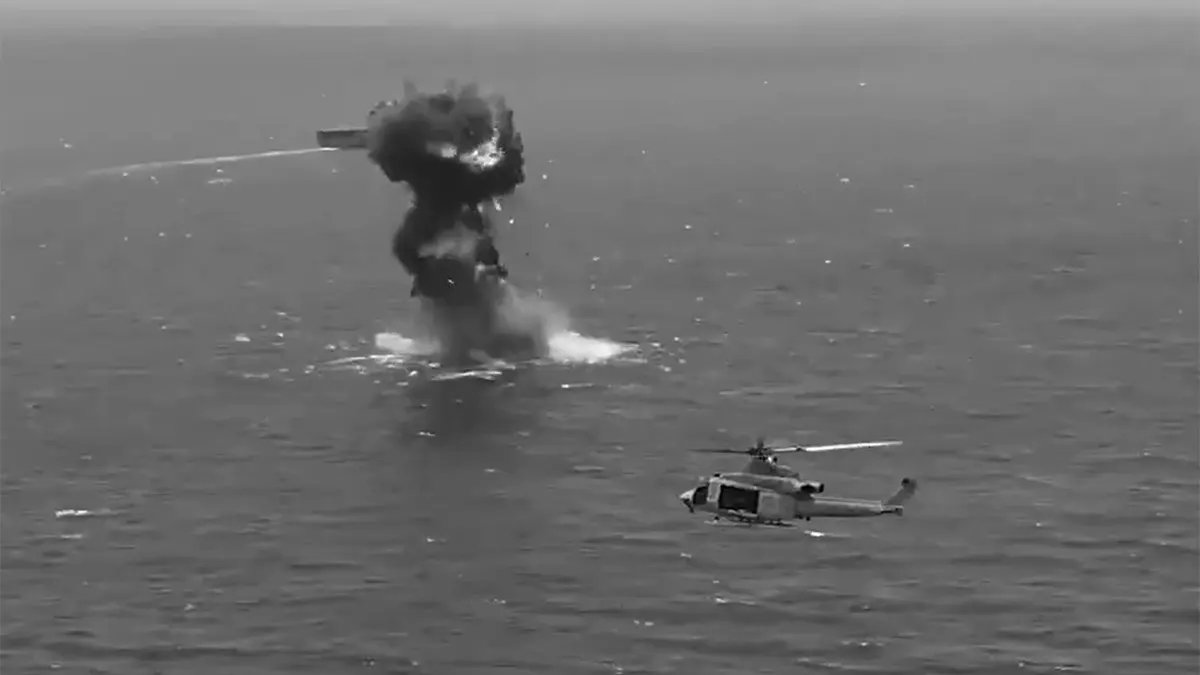
A targeted U.S. military maritime campaign in the Eastern Pacific is increasingly focusing on the logistical lifelines of South American drug cartels, systematically destroying the deep-sea refueling infrastructure that enables transnational smuggling operations. The interdiction was carried out by Joint Task Force Western Hemisphere (JTF-WHEM), a multi-agency task force operating under SOUTHCOM’s directive. Following maritime surveillance and intelligence confirmation of the vessel’s ties to Los Choneros, U.S. forces boarded and cleared the ship. The individuals on board were detained and subsequently transferred to Ecuadorian authorities for prosecution. After securing the vessel and ensuring the crew’s safe removal, U.S. forces sank the ship.
These floating refueling stations—often modified fishing trawlers or commercial supply boats—are positioned at strategic, pre-arranged coordinates in international waters. Transnational criminal organizations rely on them to extend the operational range of “go-fast” boats and low-profile semi-submersible vessels carrying multi-ton loads of cocaine from South American coastlines to transit points in Central America and Mexico. Because these smuggling vessels have limited fuel capacities, the mid-ocean stations are critical to bypassing coastal patrols and maintaining high-volume trafficking routes.



In the latest phase of this campaign, U.S. Southern Command (SOUTHCOM) confirmed that joint forces intercepted and sank a “floating refueling station” linked to Los Choneros, an Ecuadorian narco-terrorist organization. The operation, conducted on September 8, 2026, represents a tactical shift by U.S. and allied forces to neutralize the mid-ocean supply vessels that allow smuggling craft to travel thousands of miles without returning to land.
By scuttling these refueling vessels, U.S. forces permanently degrade the cartels’ logistics. Under international maritime law and bilateral agreements, U.S. Coast Guard Law Enforcement Detachments (LEDETs) operating from U.S. Navy and Coast Guard vessels are authorized to board suspected stateless or non-compliant ships. When a vessel is determined to be unseaworthy, lacking valid registration, or posing a hazard to navigation, maritime authorities frequently scuttle the craft after removing its occupants. Los Choneros, the organization linked to the sunken vessel, is recognized by U.S. counterterrorism and intelligence agencies as a major driver of the destabilizing violence plaguing Ecuador. Originally a prison-based gang, the group has evolved into a highly organized narco-terrorist syndicate. It controls key maritime smuggling corridors out of major Ecuadorian ports, such as Guayaquil, and relies on illegal gold mining and control of the domestic prison system to fund its operations.
The transfer of the detained crew to Ecuador highlights the deepening security partnership between Washington and Quito. Facing an unprecedented wave of cartel-related violence, Ecuador signed bilateral security and maritime cooperation agreements with the United States in late 2023 and early 2024. These pacts allow for joint patrols, shared intelligence, and streamlined legal frameworks to prosecute maritime smugglers arrested in international waters.
The gang’s criminal portfolio includes contract killings, kidnappings, extortion, political assassinations, and the smuggling of military-grade weapons and explosives. Los Choneros maintains strategic alliances with major Mexican cartels, primarily the Sinaloa Cartel, as well as European-based Albanian organized crime networks, to facilitate the global distribution of cocaine. The group’s influence sparked a severe security crisis in Ecuador, leading President Daniel Noboa to declare a state of “internal armed conflict” in January 2024 after the high-profile escape of Los Choneros leader José Adolfo Macías Villamar, alias “Fito,” from a prison in Guayaquil. The declaration mobilized the Ecuadorian military to combat gang operations nationwide.
The September 8 operation is part of an ongoing series of maritime interdictions by JTF-WHEM aimed at dismantling the logistical networks of transnational criminal groups in the Western Hemisphere. U.S. Southern Command has emphasized that targeting these at-sea supply stations remains a priority to restrict the flow of illicit narcotics before they reach North American transit zones.