
China’s AI Television Experiment Cuts Production Costs by 90%
AI-generated television moves into China’s prime-time schedule
China’s domestic creative workforce is already feeling the effects of artificial intelligence adoption. Industry tracking data shows that approximately 95 percent of short-form digital micro-dramas launched in China during the first quarter of 2026 were produced using artificial intelligence tools. Analysts report that the shift has reduced compensation structures and project engagements for human voice actors, traditional animators, and live-action camera crews across the domestic media landscape.
That expansion now extends into prime-time television. Chinese state-backed media networks are accelerating the integration of full-scale generative artificial intelligence into broadcasts, achieving cost reductions of up to 90 percent while changing traditional production workflows and visual effects economics.
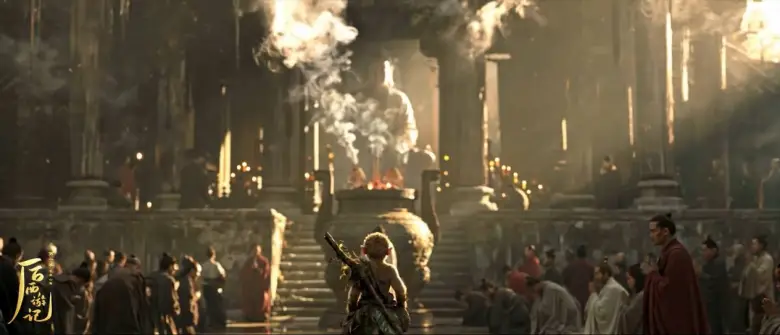


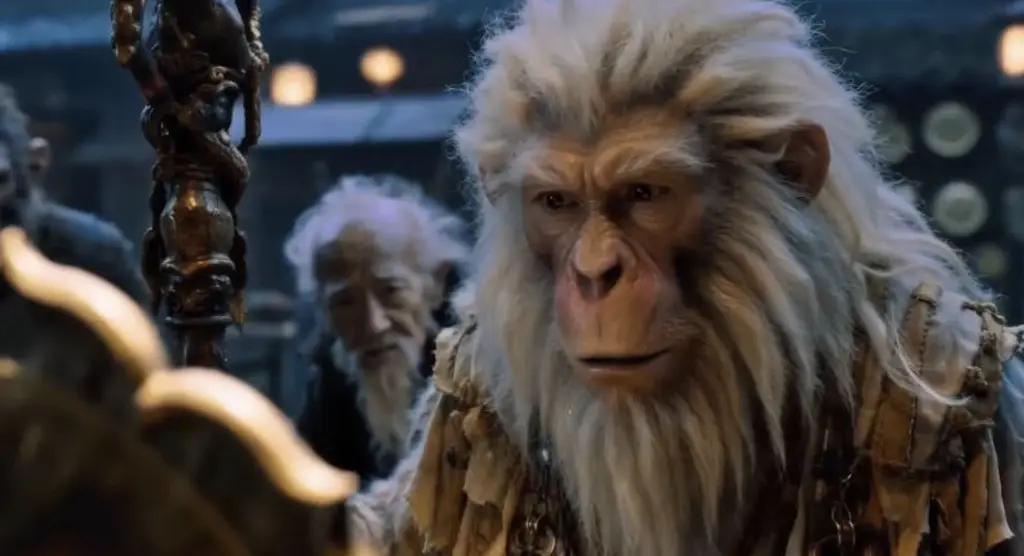
One of the most prominent examples is “Beyond Wukong,” an animated television series made entirely without human actors or traditional animation crews. Mango TV produced the program through its Content Innovation AIGC Center. Since late August, it has occupied the 8:00 p.m. prime-time block across major satellite channels in China, becoming one of the first long-form television series generated end-to-end by artificial intelligence to secure widespread commercial television syndication.
The series draws on a continuation of “Journey to the West,” the 16th-century classical Chinese novel attributed to Ming dynasty writer Wu Cheng’en. Its storyline takes place 1,000 years after Sun Wukong, the Monkey King and central protagonist, achieves Buddhist enlightenment. The new group of figures at the center of the program sets out to recover lost sacred scriptures, with the narrative drawing specifically from sequel literature written during the late Ming and early Qing dynasties.
Its first five-episode arc is set around the legendary Flower and Fruit Mountain. Visual prompts based on classical Chinese ink-wash paintings were used to generate iterative models for the architecture, garments, color palettes, and environments. Production took place on the LumeCreate AIGC platform, with a lean team of roughly 100 technicians and prompts engineers.

According to figures released by the production team, a 40-minute episode cost approximately 900,000 yuan, or about $125,000 or €115,000. That is less than one-tenth of the budget required for a standard commercial animated series in China. The complete project moved from initial concept to television premiere in three months, compared with development cycles of up to two years under conventional Chinese television production involving script writing, filming, manual CGI creation, and post-production editing.
The production demands were different from those of short-form viral videos or clips generated by platforms such as Seedance. For “Beyond Wukong,” the engineering team built a specialized workflow to maintain character consistency, lighting logic, and narrative continuity across multi-episode story arcs. The broadcast still contains visible technical artifacts, including continuity errors in which characters appear empty-handed in one frame and hold weapons or props in the next.
Action scenes show the scale of the cost difference particularly clearly. Director Li Dongxian said a three-minute battle sequence in the show’s third episode was generated with AI tools for between 20,000 and 30,000 yuan, or $2,800 to $4,200. The same sequence made with traditional computer-generated imagery, or CGI, would have cost between 4 million and 5 million yuan, equivalent to $560,000 to $700,000.

Despite the technical flaws, audience metrics compiled by Chosun ranked the program as the most-watched show among satellite television channels during its premiere week.
The commercial rollout also highlights a widening divergence between China’s entertainment sector and Western media markets. Major U.S. film studios and technology developers have faced regulatory scrutiny, intellectual property lawsuits, and labor negotiations, including the 2023 SAG-AFTRA and Writers Guild of America strikes over protections related to generative AI. Chinese broadcasting hubs, by contrast, have rapidly incorporated AI video models into mainstream programming.