Spain Funds First Industrial Olive-Solar Plant in Jaén
Backed by a €2.8M IDAE grant, the 3.65 MW Greening-developed array powers a packaging plant while preserving the grove.
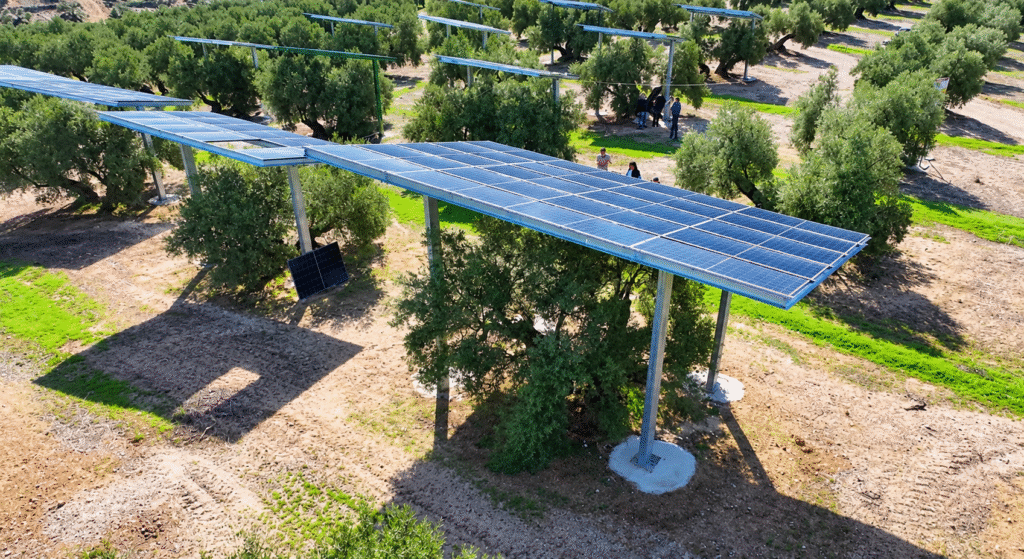
Jaén province, which produces roughly half of Spain’s olive oil and about 20% of the global supply, is testing whether its groves can simultaneously generate industrial electricity. Seville-based producer Acesur has begun building a 3.65 MW solar installation directly over an active olive grove in Vilches, according to the company. Every kilowatt-hour generated will feed the adjacent packaging plant.
The project arrives as Spanish olive oil producers face compounding cost pressures. Wholesale prices spiked past €9 per kilogram in early 2024 following severe droughts across Andalusia, forcing mills and bottlers to absorb higher energy bills while raw material costs fluctuated wildly. Generating power on-site offers a direct hedge against grid volatility for energy-intensive packaging operations.
Granada-based renewable developer Greening is executing the build. The design elevates more than 5,150 solar modules over four meters above the ground on steel pillars set in concrete foundations. That clearance allows standard agricultural machinery to harvest olives underneath without altering existing cultivation methods, the company said. A 3 MWh battery energy storage system (BESS) will manage load balancing for the facility.

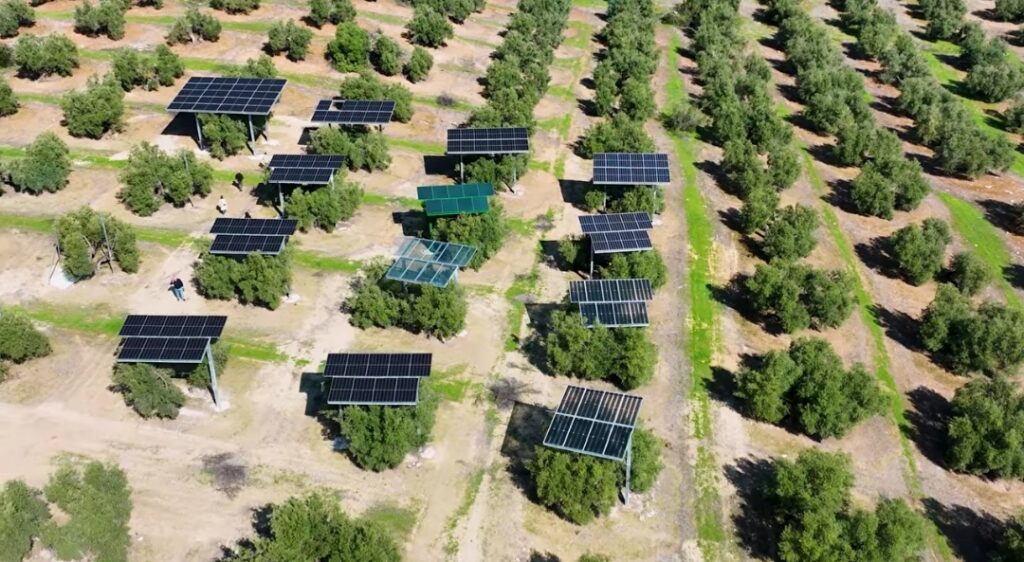
Acesur and Greening spent years validating the concept before breaking ground. The development sequence moved from theoretical bioclimatic simulations to controlled greenhouse testing, followed by a prototype deployed in a traditional rain-fed olive grove. A company representative stated that data from two consecutive harvests showed the panels lowered soil temperatures, retained moisture, and improved crop yields compared to unshaded plots.
Spanish authorities are underwriting part of the risk. The Institute for Energy Diversification and Saving (IDAE) awarded the project a €2.8 million grant to support integrating renewable energy into industrial operations, according to the announcement. Madrid has increasingly directed IDAE funds toward dual-use agrivoltaic pilots as it attempts to meet EU renewable targets without triggering land-use conflicts between farmers and energy developers.
Dual-use solar installations remain rare in commercial agriculture globally. While vineyard and berry farm pilots exist in France and Japan, scaling photovoltaics over mature tree crops introduces complex engineering constraints regarding root systems, canopy management, and harvesting logistics. The Vilches site represents what the representative described as the world’s first industrial-scale “olivovoltaic” installation.
If the packaging plant integration performs as modeled, the setup provides a template for other Andalusian cooperatives and private bottlers operating near their own groves. Acesur intends to scale the technology for broader industrial use following final performance validation phases at the Vilches site.