NIL and Transfers Fuel Historic Parity as College Football Enters Most Unpredictable Playoff Era
NIL and transfers have leveled the playing field — here's why the 2026 season defies all predictions
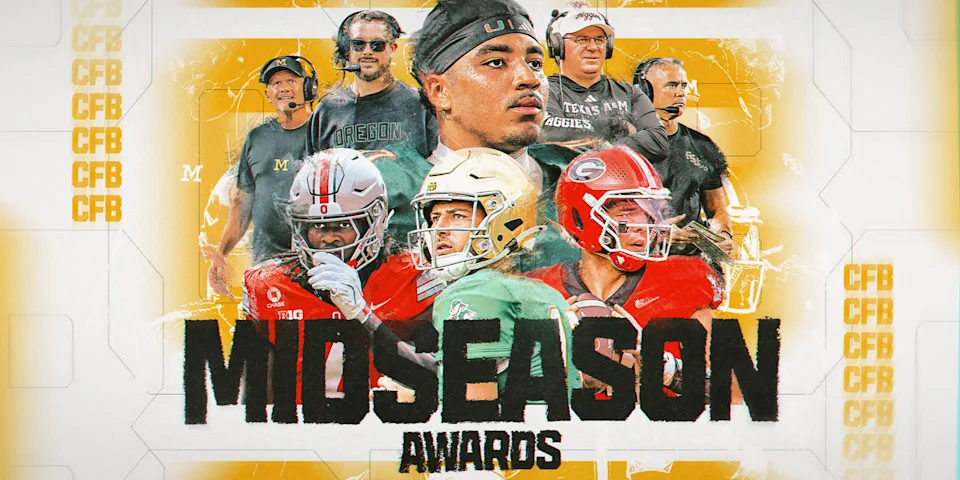
The carnage of Week 7 — five top-10 teams falling, every SEC program already owning a conference loss, only six unbeaten teams remaining across FBS — isn’t an anomaly. It’s the new baseline.
Three years after the Supreme Court’s Alston ruling and the NCAA’s surrender on name, image, and likeness compensation, the structural transformation of college football has reached a tipping point. The 2026 season is the first where the combined effects of unrestricted transfers, direct athlete pay, and a 12-team playoff have fully matured. The result: a level of parity that would have been unimaginable in the BCS or early CFP eras.

“We’re watching the complete dismantling of the recruiting monopoly that blue bloods held for decades,” said an SEC personnel director who spoke on condition of anonymity because he wasn’t authorized to discuss competitive dynamics publicly. “A five-star recruit signs with Georgia or Ohio State, doesn’t play immediately, and he’s in the portal by December. The asset walks. That never happened at scale before 2021.”
The numbers bear this out. According to 247Sports transfer portal data, 2,341 FBS players entered the portal in the 2023-24 cycle — a 38% increase from the first full portal year in 2021-22. Power Four programs now average 14.2 portal additions per roster, per Sports Info Solutions tracking. Meanwhile, high school recruiting rankings correlate less with on-field success each season. The 2024 composite team recruiting champion, Georgia, sits 5-2 after a home loss to unranked Auburn. The 2023 champion, Alabama, is 4-3.
Miami’s rise to No. 1 illustrates the new model. The Hurricanes’ quarterback, Darian Mensah, arrived via the portal from Tulane. Their leading receiver, Samuel Brown, came from Houston. Six of their top nine tacklers transferred in. Head coach Mario Cristobal, hired in 2022 with a $80 million contract backed by booster collectives, rebuilt the roster almost entirely through acquisition rather than development.
“We don’t recruit high school kids to wait three years anymore,” a Miami staffer said. “We identify proven college players who fit our system, pay them market value through NIL collectives, and plug them in. It’s an NFL model with a salary cap replaced by donor capacity.”
That donor capacity varies wildly. Ohio State’s collective, “The Foundation,” reportedly distributed over $20 million to athletes in 2023-24. Oregon’s “Division Street” and Texas’s “Clark Field Collective” operate at similar scale. But mid-majors have found arbitrage opportunities. James Madison, 7-0 and leading the Sun Belt, pays its roster a fraction of what SEC programs spend but retains talent through playing time guarantees and developmental reputation. The Dukes’ leading rusher, George Pettaway, turned down Power Four offers to stay.
“We sell continuity,” said a JMU assistant. “At a lot of Power Four schools, you’re one bad game from being replaced by a portal guy. Here, you develop.”
The 12-team playoff amplifies the chaos. With automatic bids for the five highest-ranked conference champions and seven at-large spots, a two- or three-loss team from the SEC or Big Ten is virtually guaranteed entry. That reduces the cost of early-season experimentation — and early-season losses. Georgia’s loss to Auburn, Texas’s back-to-back defeats to unranked Oklahoma and Florida, Oregon’s collapse without Dante Moore — none are season-enders anymore.
“The regular season used to be an elimination tournament,” said ESPN analyst and former CFP committee member Chris Fowler. “Now it’s a seeding tournament. That fundamentally changes how coaches manage risk.”
Coaching behavior reflects the shift. Montana State’s Brent Vigen called timeout with one second left while leading Idaho 34-27 — a decision that gifted the Vandals an untimed down and a walk-off win. Cal’s Tosh Lupoi opened a quarterback competition midseason, risking the departure of Jaron-Keawe Sagopolutele, a former Oregon commit. In the old model, such moves invited booster revolts. Now, with rosters turning over 30-40% annually, coaches prioritize immediate results over program stability.
Penn State’s 0-4 Big Ten start under Matt Campbell — hired from Iowa State with quarterback Rocco Becht in tow — shows the downside. The Nittany Lions’ collective spending ranks top-10 nationally, but portal misses at offensive line and cornerback left structural holes that high school recruiting couldn’t fill fast enough. Meanwhile, UCLA’s Bob Chesney, hired from James Madison after winning 19 straight Sun Belt games, has the Bruins 6-0 with a roster built on FCS transfers and developmental picks.
“Chesney proved you can win with culture and scheme at the FCS level,” said a Big Ten personnel executive. “Now he’s doing it with Power Four resources. That’s the market inefficiency everyone missed.”
The Heisman race reflects the quarterback market. Ohio State’s Jeremiah Smith, a true freshman receiver, leads the betting markets despite the award’s 20-year quarterback bias. Oregon’s Dante Moore, once a projected top-two NFL pick, suffered a concussion at USC and hasn’t regained form. Miami’s Mensah, a portal acquisition, leads the nation in passer rating. The transfer quarterback — once a last resort — is now the primary acquisition strategy for title contenders.
Looking ahead, the second half of the season will test whether parity produces a two-loss national champion. Georgia, Notre Dame, Miami, Indiana, and BYU all have plausible paths. The SEC, despite its depth, may cannibalize its own playoff hopes: six conference games remain between currently ranked SEC teams.
“The irony,” the SEC director said, “is that the conference that benefited most from the old system — the SEC — is now the most vulnerable to the new one. Everyone beats everyone. The playoff committee is going to have to pick between a 10-2 SEC team and an 11-1 Big 12 champion. That’s a fight nobody wanted.”
For now, the only certainty is volatility. Wake Forest, picked 13th in the ACC preseason poll, leads the conference at 5-1. Kentucky, 5-1 under first-year coach Will Stein, has already beaten Ole Miss and Florida. Indiana, 6-0, owns a win over a top-10 Penn State team that no longer exists in the rankings.
“Every week is an elimination game for someone,” Fowler said. “Just not the same someones you expected in August.”