Smart #2 EV Debuts at Paris Motor Show Under $26,500
The two-seat electric city car revives the brand's micro-mobility roots with a 180-mile range and five-link rear suspension.
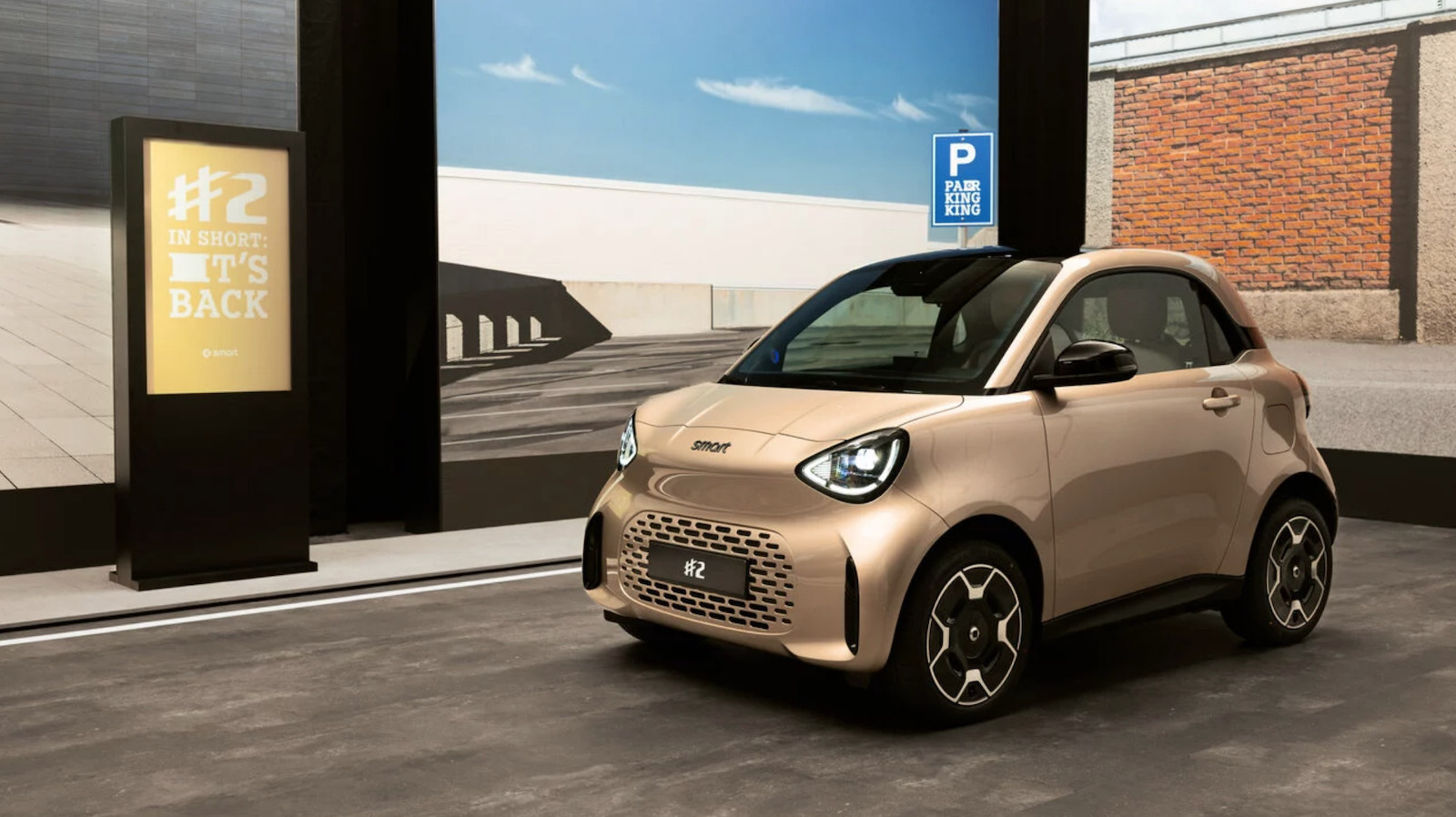
The Smart #2, a two-seat electric vehicle designed exclusively for dense urban driving, debuted at the Paris Motor Show with a starting price under $26,500 (£20,000). The ultra-compact hatchback signals a sharp pivot for the Geely-Mercedes-Benz joint venture, which spent the last four years chasing the global crossover trend with the larger Smart #1 and Smart #3 SUVs.
Unlike those heavier predecessors built on Geely’s SEA platform, the #2 returns to the brand’s original micro-car philosophy. The vehicle pairs a rear-mounted 60kW electric motor delivering 130Nm of torque with a floor-mounted battery capable of 180 miles (290km) per charge. A five-link rear suspension system—a complex architecture rarely found in budget city cars—replaces the cheaper torsion beam setups typical of this segment. Wider rear tires are fitted to improve stability around the rear-driven axle.
DC fast-charging replenishes the battery from 10 to 80 percent in 20 minutes. The entry-level Pure trim relies on standard charging speeds, while the Pure+ variant introduces 11kW AC charging alongside a heated driver seat.


Smart structured the lineup across four tiers. The Premium model adds a glass roof, heated leather seats, and a seven-speaker Sennheiser audio system. A limited Couture Edition, capped at 999 units globally, features a white exterior with a gold-painted roof and gold wheel detailing.
Inside the cabin, drivers interact with an 8.8-inch instrument display and a 10.1-inch central touchscreen. Standard connectivity includes 4G, Wi-Fi, and Bluetooth integration, supported by a suite of advanced driver assistance systems tailored for tight European streets where parking spaces frequently measure under 2.5 meters.
Preorders open in the spring, with initial customer deliveries scheduled for summer. The rollout targets Europe and China, where micro-EVs benefit from favorable tax structures, dedicated parking zones, and congestion charge exemptions in cities like London and Paris.
American buyers remain excluded from the launch. Smart withdrew from the United States market entirely in 2019 after years of declining sales. Reintroducing a subcompact two-seater would face immediate regulatory friction; U.S. Federal Motor Vehicle Safety Standards require specific crash-test structures that disproportionately increase engineering costs for micro-vehicles. Combined with American consumer preference for larger crossovers and trucks, the economics of certifying a two-seat city car for North America currently prevent its return.