

Wireless Charging Runs Hotter and Slower Than a Cable
Qi2 convenience comes with lower efficiency, more heat, and slower charging

Technical specifications and laboratory measurements show a permanent thermodynamic trade-off between user convenience and electrical energy efficiency as wireless power transfer standards expand across the consumer electronics market. Data published by the Wireless Power Consortium indicates an 88 percent satisfaction rating among consumers using Qi2 charging devices.
A standard lithium-ion battery is engineered to sustain between 1,000 and 2,000 complete charge cycles. A complete cycle is defined as the cumulative discharge and recharge of 100 percent battery capacity. Sustained exposure to high temperatures during charging accelerates side reactions within the battery’s internal chemistry, reducing the total number of usable cycles.
The Wireless Power Consortium’s industry benchmarks show that Qi2 wireless charging devices are up to 30 percent less efficient at delivering electrical power to a device than direct copper cable connections. With wired charging, current travels from a power adapter through a physical conductor into the device’s battery circuitry with minimal loss. Wireless charging instead uses electromagnetic induction: a wire coil in the charging pad creates an alternating magnetic field that induces electrical current in a corresponding coil inside the smartphone.


An Apple iPhone 18 Pro connected through a USB-C cable to a 60-watt-capable power adapter can reach a 50 percent charge level in 15 minutes. The same half-charge using a Qi2-compliant wireless charger requires 30 minutes. Older smartphone generations without modern fast-charging power delivery architecture are limited to maximum wireless inputs of 10W to 15W.
The wall adapter also sets a ceiling for total power delivery. A 25W fast wireless pad connected to a legacy 5W power brick will deliver only a 5W charge to the device.
When energy is not captured during electrical transfer, it dissipates into the surrounding environment. During wireless transmission, that lost energy becomes thermal output, raising the operating temperature of both the charging pad and the smartphone. Elevated surface and internal temperatures accelerate lithium-ion battery-cell degradation, reducing overall energy-retention capacity by up to 12 percent over two years of regular use under standard conditions. In hotter operating environments, thermal stress can reduce battery capacity by up to 25 percent over the same two-year period.
Magnetic alignment between the primary transmitter coil in the charger and the secondary receiver coil in the smartphone directly affects thermal generation. Proper alignment is required for optimal energy coupling, while misalignment weakens the magnetic-field connection and causes a larger percentage of supplied power to become waste heat instead of electrical current.
Protective smartphone cases can also increase heat levels. Cases that are not engineered for wireless-standard compliance may widen the physical gap between the induction coils or contain non-conductive materials that obstruct magnetic transfer. Hardware guidelines recommend removing non-compliant cases during wireless operation to limit heat accumulation.
Qi-certified mobile devices and chargers use active power-management communication protocols to prevent critical thermal damage during charge cycles. Power-management integrated circuits continuously monitor thermal sensors and dynamically adjust voltage and current flow during power transfer. These safety mechanisms allow modern smartphones to remain safely connected to power sources overnight, with either wired or wireless connections, without immediate overcharging failures.
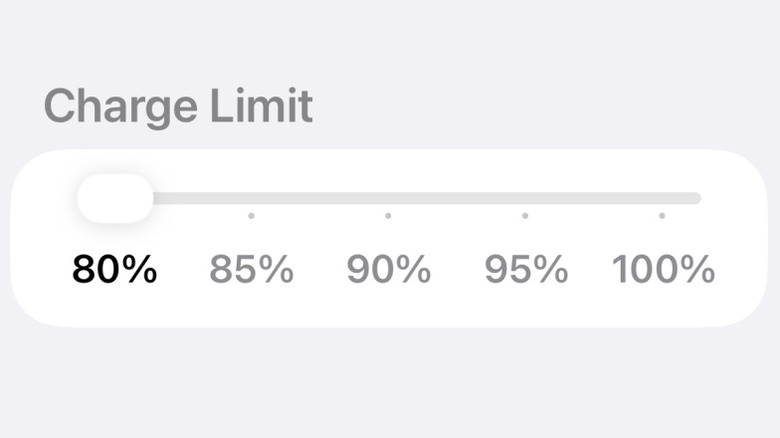
Operating-system controls provide another way to manage battery degradation by regulating charge states. Limiting a lithium-ion battery’s state of charge to a window between 20 percent and 80 percent minimizes stress on the cell electrodes and preserves long-term cycle capacity.
Apple includes battery-management toggles under “Settings” > “Battery” on iPhone 15 and subsequent models to cap maximum charge thresholds. Samsung offers comparable safeguards across its device line through “Settings” > “Battery” > “Battery protection.”









