
MagSafe Escapes Apple as Android Adopts Magnetic Phone Hardware
Qi2 brings MagSafe-style magnetic charging to Android phones
Apple’s MagSafe design is becoming a broader smartphone hardware standard as the global market moves toward unified magnetic attachment systems. The shift is being driven by the Wireless Power Consortium (WPC), the growth of magnetic aftermarket accessories, and Android manufacturers adding comparable hardware to their devices.
The move toward magnetic attachment followed several earlier experiments with modular phone hardware. Motorola Mobility introduced Moto Mods in June 2016 with the Moto Z series, using a 16-pin gold-plated magnetic connector on the rear of the phone for external speakers, projector modules, and extended battery packs. Essential Products launched the Essential Phone PH-1 in August 2017 with a rear-mounted two-pin magnetic connector that streamed data and power to accessories including a 360-degree camera module. Both systems were eventually retired because changing form factors and low consumer uptake made multi-generation hardware support unsustainable.
Apple also discontinued other hardware features after introducing them. The company launched 3D Touch, a pressure-sensitive display layer, with the iPhone 6s in September 2015 and phased it out by 2019. The OLED Touch Bar appeared on MacBook Pro laptops in October 2016 and began disappearing from higher-end configurations in 2021.

MagSafe, introduced for smartphones with the iPhone 12 series in October 2020, established a more durable hardware design. It uses a circular array of rare-earth magnets around an internal inductive charging coil, along with an alignment magnet and a magnetometer, to provide precise mechanical coupling and power delivery of up to 15 watts.
The Wireless Power Consortium announced the Qi2 wireless charging standard at the Consumer Electronics Show in January 2023. Apple worked directly with the WPC and contributed its MagSafe design as the foundation for Qi2’s Magnetic Power Profile (MPP). Qi2 requires magnetic alignment for accurate transmitter-to-receiver coil positioning, reducing energy loss through heat dissipation and supporting standardized 15-watt wireless power delivery across competing operating systems.
Android hardware has since begun incorporating Qi2 and magnetic support. HMD Global released the HMD Skyline in July 2024, making it one of the first Android smartphones with built-in magnetic charging capability conforming to Qi2 principles. Google has adopted similar magnetic alignment features under its Pixelsnap branding, while Apple omitted internal MagSafe magnets from the entry-level iPhone 16e to reduce bill-of-materials costs, using basic unaligned Qi charging instead.
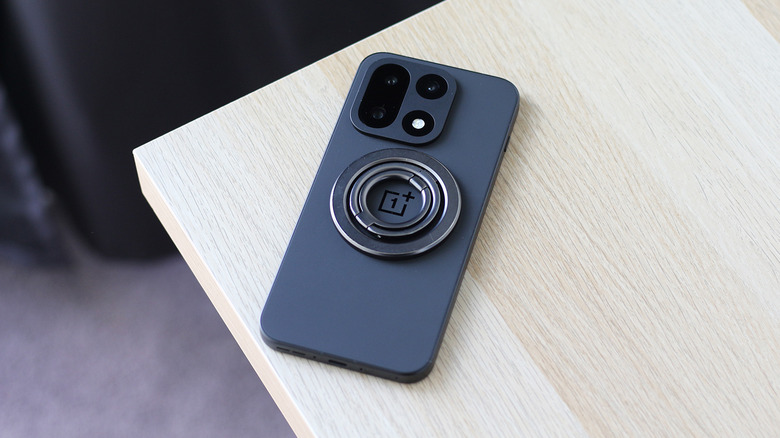
For phones without factory-installed internal magnets, manufacturers and accessory companies offer alternatives. Samsung Electronics and OnePlus produce official protective cases with embedded magnetic rings that mirror Apple’s physical dimensions and magnet positioning. Standalone products such as the ESR MagSafe Sticker use high-bond 3M pressure-sensitive adhesives to attach magnetic rings directly to existing protective cases. Individual ring conversion kits have accumulated more than 12,500 verified customer reviews on major retail platforms such as Amazon.
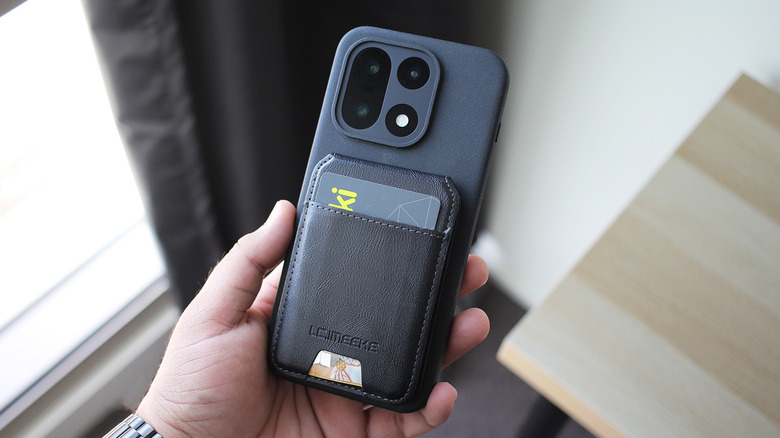
The usefulness of these accessories depends on the phone’s underlying hardware. Inductive wireless charging pads and magnetic power banks require built-in Qi wireless charging coils aligned with the external magnet ring. Mechanical accessories such as magnetic card wallets, kickstands, and PopSockets need only physical pull force, allowing them to work with any smartphone fitted with an external magnetic ring, even without internal charging capability.
Tests of third-party magnetic cases frequently find that aftermarket magnetic enclosures provide greater pull-force retention than bare, caseless iPhones. That added retention reduces the likelihood of accidental detachment when the phone is attached to heavy vehicle mounts or desktop stands.