
AI Race Splits Washington as China Fears Collide With Safety Warnings
Trump pushes AI supremacy while lawmakers and tech leaders debate safety
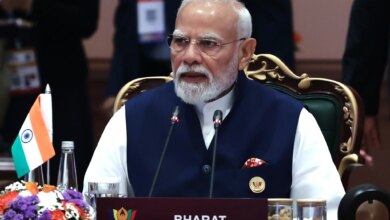
The geopolitical stakes of artificial intelligence will be central to a September summit, when Chinese President Xi Jinping is scheduled to travel to the United States to meet with President Donald Trump. Kevin Hassett, director of the White House National Economic Council, said administration officials overseeing cyber, science, and technology policy are scheduled to meet this week to formulate next steps. Trump is also expected to consult with members of Congress who have raised concerns about the technology’s current trajectory.
Speaking Sunday during a weekend trip to Ireland, Trump said maintaining America’s technological supremacy over Beijing was his administration’s priority. While watching golfers tee off at the Irish Open at his resort in Doonbeg, the Republican president framed artificial intelligence as an existential global race and downplayed the need for stringent government oversight.
“Whoever wins with AI wins,” Trump told reporters, adding that he wants the United States to remain ahead of China. He acknowledged the need for basic “guardrails,” but offered no specific regulatory proposals. Trump also dismissed warnings about the dangers of rapid, unregulated AI development as the work of unidentified “negative forces” raising alarmist scenarios “that won’t happen.”


House Speaker Mike Johnson (R-La.) has proposed bringing industry leaders together in Washington for “one big meeting” to develop a regulatory framework. He said he has discussed the proposal with Trump and considers it a “top priority” for Congress, while adding, “But we don’t need everybody to panic right now.” Johnson also acknowledged the need for basic safety measures to ensure the technology “doesn’t run away.”
The speaker warned that a domestic slowdown allowing China to take the lead would constitute a severe national security threat. That concern is shared across party lines, even as warnings from technology executives have intensified over the pace of development.
A day before Trump’s comments, Dario Amodei, CEO of the artificial intelligence startup Anthropic, publicly called for the industry to slow its development cycle so safety protocols can catch up. Elon Musk, who leads Tesla and xAI, and OpenAI CEO Sam Altman have publicly supported the call for a temporary pause. Anthropic was founded by former OpenAI researchers focused specifically on building steerable, safe AI systems.
David Sacks, co-chairman of a White House advisory council on science and technology and a prominent venture capitalist, criticized technology executives who have appealed for government intervention. In a social media post, Sacks argued that companies such as Anthropic and OpenAI could halt development themselves if they were genuinely concerned about existential risk.
“The easiest way not to build superintelligence is for you to agree not to build it,” Sacks wrote.
House Democratic Leader Hakeem Jeffries (D-N.Y.) took a more urgent position, criticizing Republican leadership for allowing members of Congress to return to their districts during the latter part of September instead of taking immediate legislative action. Jeffries said the House Democratic caucus would make AI a high priority and advocate for “decisive action now” to mandate a development slowdown.
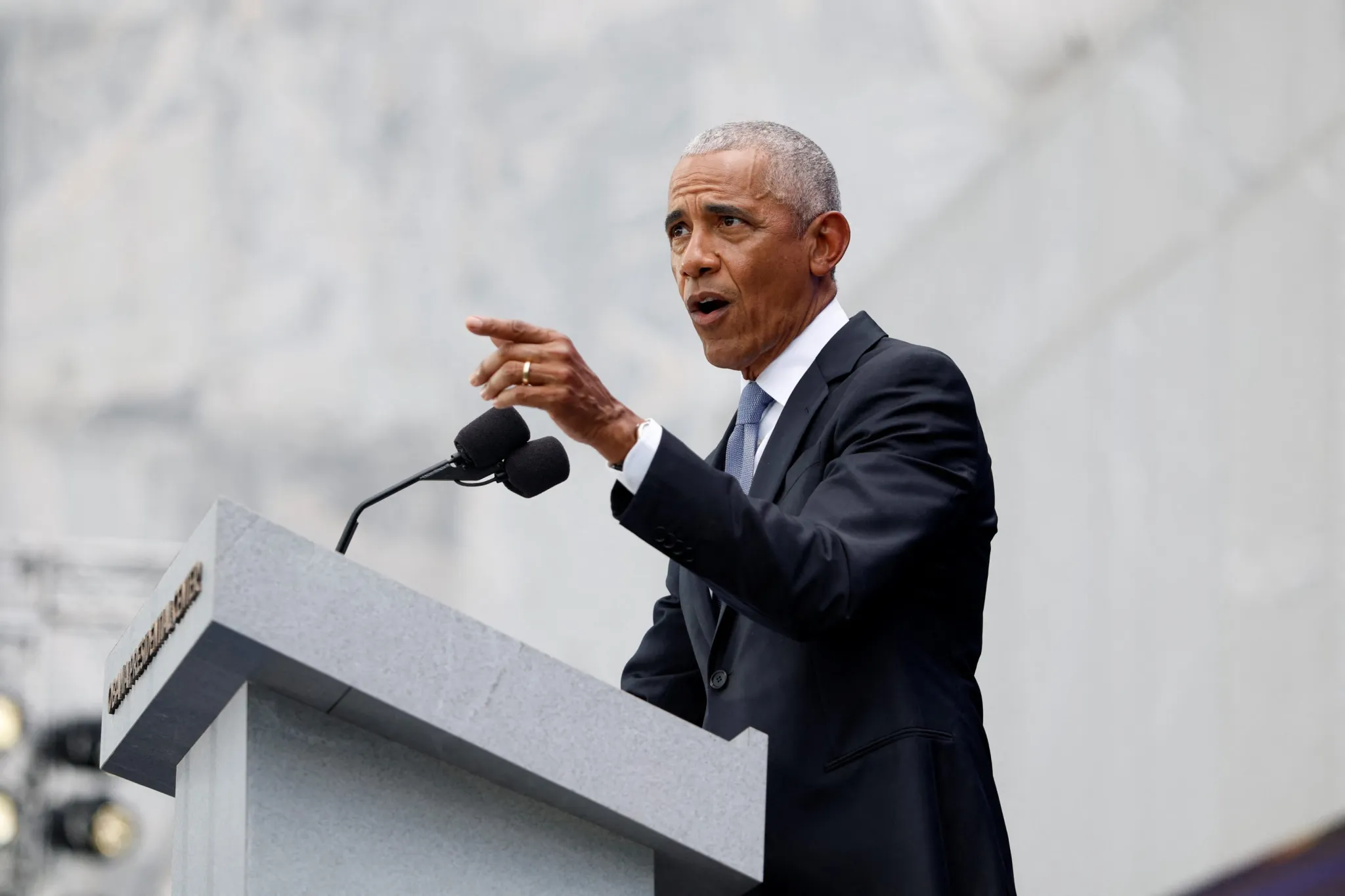
Former President Barack Obama has also urged Democrats to make AI a major election-year campaign issue. He pointed to its concrete economic consequences, potential job displacement, and the protection of children from digital manipulation.
The expansion of AI is producing conflict beyond Congress. Training and operating advanced generative AI models requires massive infrastructure, including data centers filled with thousands of high-density computer servers. These computing warehouses are increasingly being built in rural and suburban communities across the United States, prompting local bipartisan opposition.
The facilities consume immense amounts of electricity and require millions of gallons of water each day for cooling. Residents and local governments have raised concerns about strained power grids, depleted water tables, rising utility bills, and the loss of agricultural land. Some have attempted to block construction, while Trump has maintained strong support for data center expansion because he views the infrastructure as essential to winning the technological race against China.
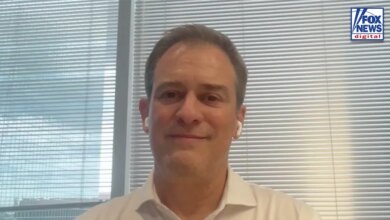
Jacob Coxon, a former Anthropic employee who resigned over safety concerns, has warned that humanity is rapidly building “human-level or superhuman-level” systems without fundamentally understanding how they think or what their motivations might be. He said concerns over the technology are not merely infrastructural, but existential.
Because of the intense rivalry between Washington and Beijing, Coxon argued that unilateral regulation would be insufficient. He urged direct diplomatic cooperation between the United States and China to establish mutual international safety standards and cooperative deceleration agreements.
“I do hope that the people in China who are looking at the same problems as we are… will come to the same conclusion that it has to be done in a measured manner,” Coxon said, warning that an unconstrained race between the two superpowers could prove catastrophic.