Texas Court Halts Trump Border Wall in Big Bend Region
Judge rules DHS likely violated law by waiving environmental protections to build along the remote Rio Grande corridor
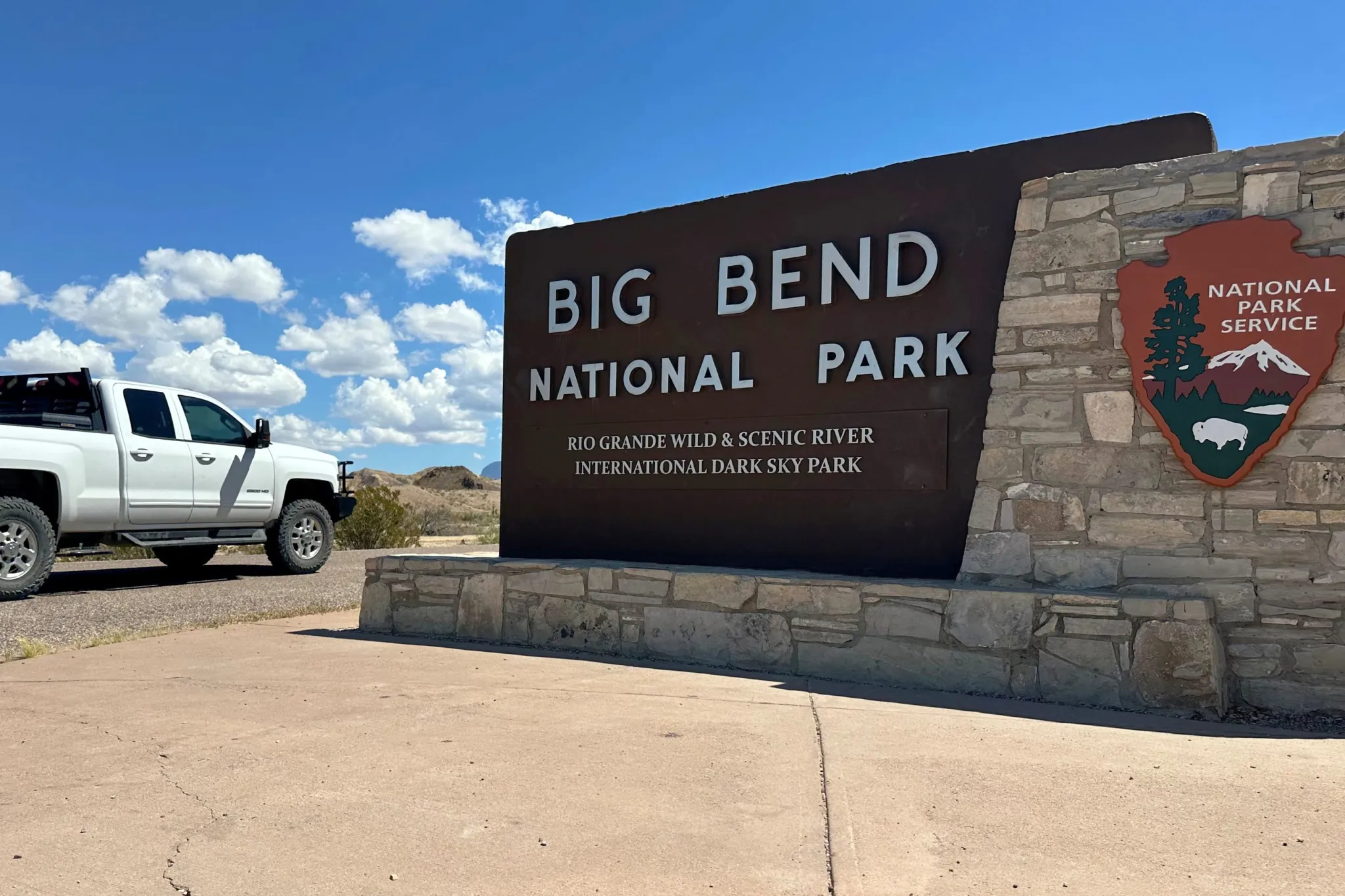
A federal judge in Texas issued a temporary restraining order Friday halting construction of border wall infrastructure across the Big Bend region, freezing one of the most contested segments of the Trump administration’s southern border fortification campaign.
U.S. District Judge Kathleen Cardone ruled that a coalition of environmental groups, local landowners and river guides demonstrated a likelihood of success on their claims that the Department of Homeland Security unlawfully bypassed environmental, cultural and archaeological protections to accelerate the project. The injunction applies not only to Big Bend National Park but extends upriver and downriver along the Rio Grande, covering private lands where U.S. Customs and Border Protection had planned roads, vehicle barriers, surveillance towers and 30-foot steel bollard panels.
The ruling halts work tied to a broader $46 billion administration effort to install physical and technological barriers along the U.S.-Mexico border. Unlike heavily trafficked urban corridors such as San Diego or the Rio Grande Valley, the Big Bend sector spans roughly 500 miles of remote Chihuahuan Desert terrain characterized by deep canyons, extreme temperatures and minimal road access. Border Patrol agents have historically recorded significantly lower apprehension numbers in this sector compared to metropolitan crossing points, a geographic reality that formed the foundation of the plaintiffs’ argument that massive infrastructure is unnecessary and disproportionately destructive.


Cardone found that without an injunction, the plaintiffs would suffer irreparable harm, and that the balance of equities favored pausing construction while the court evaluates the underlying legal challenges.
DHS relied on sweeping waiver authorities granted under Section 102(c) of the Illegal Immigration Reform and Immigrant Responsibility Act of 1996 to exempt the Big Bend projects from dozens of federal statutes, including the Endangered Species Act, the National Environmental Policy Act and the Antiquities Act. While previous administrations used these waivers sparingly, the current administration has deployed them aggressively across multiple states to fulfill a central campaign promise. Legal scholars note that challenges to IIRIRA waivers rarely succeed, making Friday’s injunction a notable deviation from established precedent regarding executive border authority.
Construction crews erected the first steel wall panels in the Big Bend sector in mid-September, just weeks before the court intervened. Tensions escalated sharply in August when bulldozers were spotted clearing vegetation inside Big Bend National Park boundaries. That activity triggered rare bipartisan backlash. Both Republican and Democratic officials demanded an immediate halt, prompting CBP to temporarily pause operations within the park. That administrative pause expired earlier this week, setting the stage for the federal court intervention.
The litigation was driven by the Center for Biological Diversity alongside advocates for a historic church in the border town of Ruidosa and local commercial river guides whose livelihoods depend on undisturbed access to the Rio Grande. Laiken Jordahl, representing the Center for Biological Diversity, characterized the injunction as a complete victory that will keep heavy machinery out of the region until the court issues a final ruling on the merits.
CBP defended its operational mandate following the decision. The agency stated it remains confident in its legal authorities to secure the border while preserving the landscape, confirming it is coordinating with the Department of Justice on next steps. The Department of Homeland Security did not immediately respond to requests for comment.
Beyond the national park, the injunction protects privately owned ranchland where the government has struggled to secure voluntary access. In recent court filings, federal attorneys indicated they were prepared to refer uncooperative landowners to the Justice Department to initiate eminent domain proceedings—a process that typically requires years of litigation and guaranteed compensation under the Fifth Amendment.
Conservation organizations are now pressing the administration to address existing scars on the landscape. Tiernan Sittenfeld, president and CEO of the National Parks Conservation Association, called on federal agencies to repair damage already inflicted on the park and engage directly with border communities to develop alternative security strategies that do not rely on physical barriers.
The administration has stated it is reevaluating its specific plans for Big Bend National Park but has not announced any revised approach. CBP and DOJ must now determine whether to appeal Cardone’s order to the Fifth Circuit Court of Appeals or negotiate modified construction parameters with the plaintiffs.