

Ohio Police Lieutenant Indicted Over Flock Camera Misuse
Walter Cordes allegedly queried the surveillance network 29 times for personal reasons, joining a growing list of officers prosecuted for ALPR abuse.
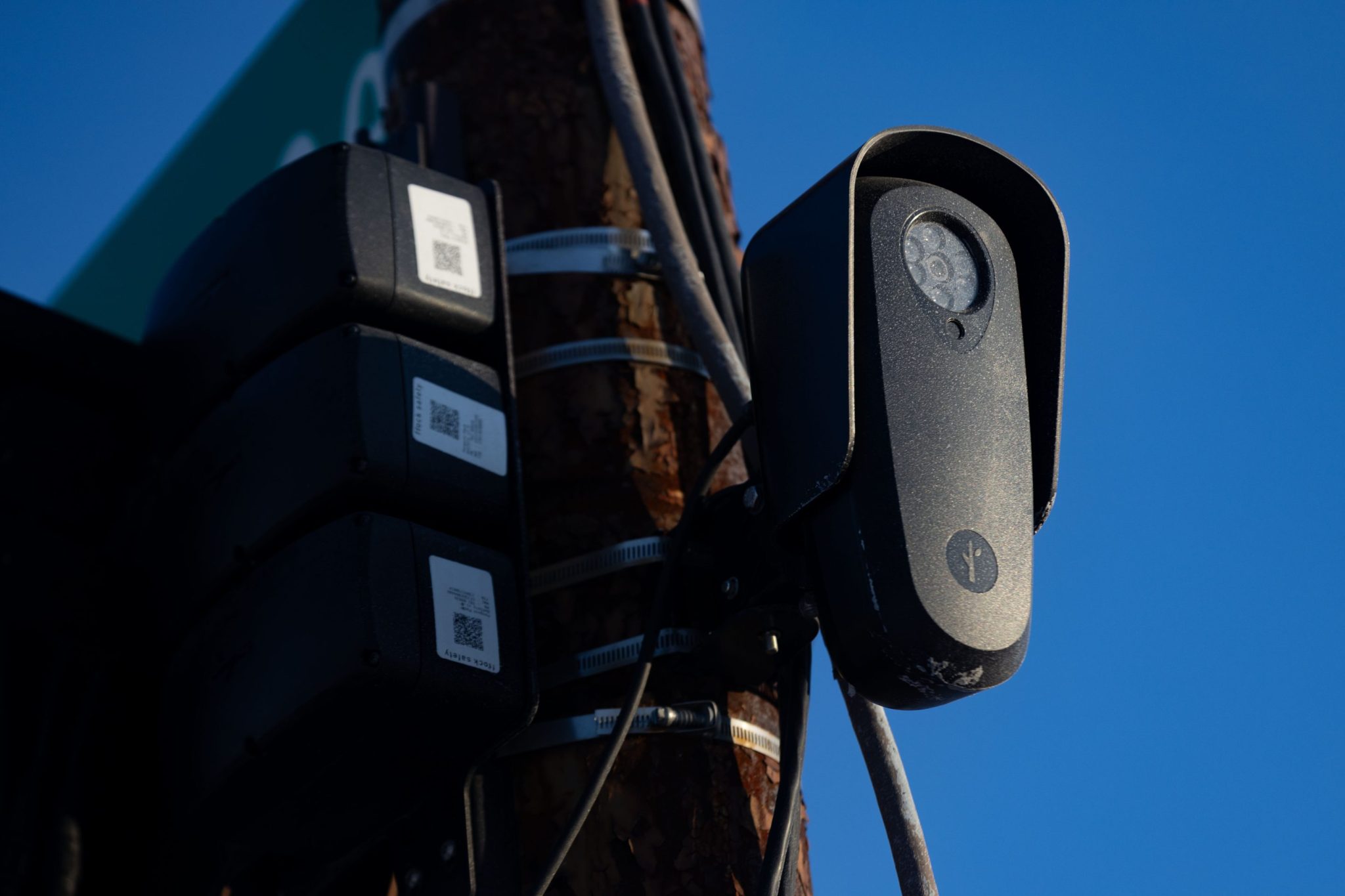
A Sharonville, Ohio, police lieutenant faces a fifth-degree felony charge after allegedly exploiting his department’s automated license plate reader network to monitor the movements of someone he knew personally. Walter Cordes, 48, was indicted Oct. 13 by a Hamilton County grand jury on one count of unauthorized use of a computer, cable or telecommunication property, an offense punishable by up to 12 months in prison under Ohio law.
Prosecutors say Cordes queried the Flock Safety camera system 29 times between Dec. 19, 2024, and April 20, 2026, for reasons entirely unrelated to active investigations or legitimate police work. The Hamilton County Prosecutor’s Office has not publicly identified the person Cordes tracked or disclosed the motive behind the searches.
The alleged misuse surfaced during a routine internal audit of the department’s surveillance technology in June. Sharonville Police Chief Jim Nesbit confirmed that the review uncovered broader improper activity within the agency. During that process, Cordes voluntarily reported his own actions and subsequently admitted to them during an investigative interview conducted by the Hamilton County Sheriff’s Office. He remains on administrative leave pending the completion of the department’s internal investigation.


Sharonville leases 24 cameras from Flock Safety, an Atlanta-based surveillance company whose automatic license plate recognition hardware captures vehicle plates and cross-references them against databases to generate location histories. Unlike traditional closed-circuit television, these systems do not record continuous video; they capture still images of passing vehicles and log precise timestamps and GPS coordinates. This architecture allows any authorized user to reconstruct a vehicle’s travel patterns across entire metropolitan regions if multiple agencies share data through interoperability agreements.
Hamilton County Prosecutor Connie Pillich characterized the incident as a direct threat to public confidence in law enforcement, noting it marks the first time her office has charged a police official with misusing this specific technology since she assumed the role.
Cordes is now part of a rapidly expanding roster of officers facing criminal prosecution for abusing plate reader access. In September, Marion County prosecutors in Indiana charged five Indianapolis Metropolitan Police Department officers with similar offenses. One Indianapolis officer allegedly searched for his ex-wife’s vehicle more than 950 times over six months. Earlier this month, former Joliet, Illinois, police lieutenant Jeremy Harrison was charged with computer tampering and official misconduct tied to his use of that city’s Flock network.
These cascading indictments are intensifying scrutiny on Flock Safety, which recently secured $500 million in funding at an $8.3 billion valuation. Backed by venture capital firms including Andreessen Horowitz and Tiger Global, the company has aggressively expanded its footprint, supplying hardware to thousands of police departments, homeowner associations, and private businesses nationwide. Privacy advocates have long warned that without strict access controls, ALPR networks function as warrantless tracking tools vulnerable to personal abuse by insiders.
Flock maintains that every search executed on its platform is logged and monitored through an internal Audit Assistance tool designed to flag anomalous query patterns for agency administrators. However, the reliance on internal software audits rather than independent oversight has drawn criticism from civil liberties organizations, who argue that self-policing mechanisms frequently fail to catch misuse until significant damage occurs.
The fallout is already reshaping local government contracts. In August, the Arizona cities of Tempe and Cave Creek terminated their Flock agreements simultaneously, with Cave Creek explicitly citing privacy vulnerabilities and documented instances of officer abuse. Across Greater Cincinnati, several jurisdictions—including the Hamilton County Sheriff’s Office, the very agency tasked with investigating Cordes—have suspended or canceled their Flock deployments amid mounting concerns over data governance.
Flock Safety declined to comment on the indictment. Legal representation for Cordes could not be reached for response.








