Razer Bets Future on AI Hardware With Grok-Powered Companion, Smart Headset
Gaming hardware maker bets on 'cognitive gaming' after going private with CVC Capital Partners
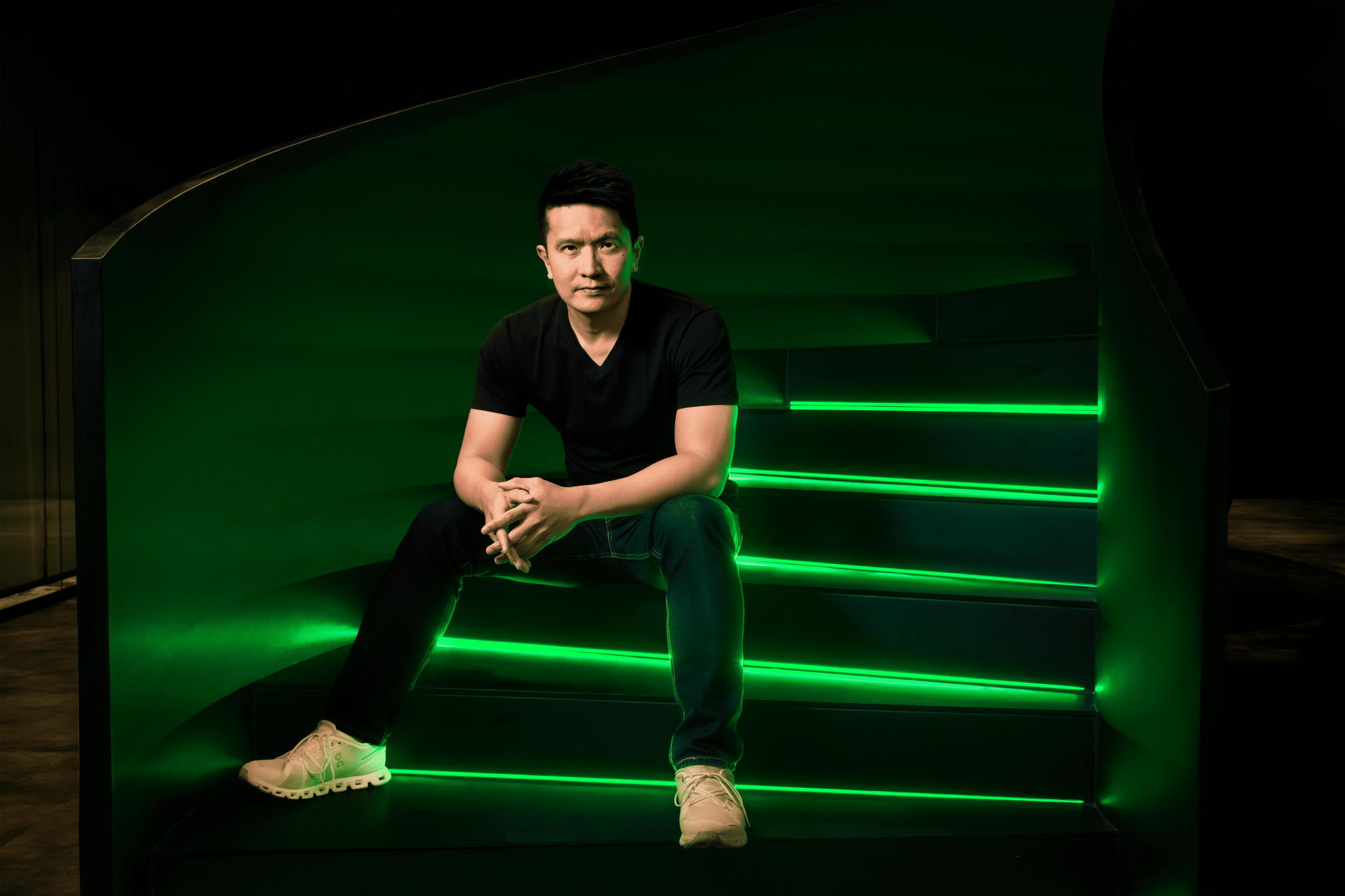
Razer, the gaming peripherals maker known for its three-headed snake logo and cult following, is pivoting hard into artificial intelligence hardware — unveiling a desktop AI companion powered by Elon Musk’s xAI and a wearable headset with built-in computer vision that the company says takes a “privacy-first” approach distinct from Meta’s strategy.
The moves signal CEO Min-Liang Tan’s conviction that AI will expand the $188.8 billion gaming industry into a trillion-dollar market. Razer went private in 2022 with backing from CVC Capital Partners, a decision Tan says freed the company from quarterly earnings pressure to make long-term bets on what he calls “cognitive gaming.”
At the center of the push is Razer AVA, a desktop companion featuring two scripted avatars — Sumi, a Tokyo-based illustrator with a calico cat, and Nico, a Los Angeles freelance engineer and skater. Both run on xAI’s Grok large language model and include what Razer describes as “personality and emotion engines.” In a demo, Sumi complimented a visitor’s cream halter top and wavy hair with warm, conversational tone; Nico is designed to be more curt and direct. The product is slated for release in the second half of 2026.


Complementing the software play, Razer unveiled the Barracuda AI headset on September 28. The wearable integrates cameras for computer vision, smart audio processing, and compatibility with multiple AI models including OpenAI’s ChatGPT and Google’s Gemini. Tan explicitly contrasted the device with Meta’s Ray-Ban smart glasses, which have drawn scrutiny over non-consensual recording capabilities. “It’s definitely not down the route of where Meta is going,” he said, emphasizing a privacy-first architecture.
Tan’s path to this moment was unconventional. A corporate lawyer by training, he grew up playing Richard Garriott’s Ultima series and co-founded Razer in 2005 with American businessman Robert Krakoff after meeting in online games. Their first product, the Boomslang mouse, was named after a fast-striking African snake because “we wanted to make a product which eats up other mice.” The company developed a fervent fan base — some tattooing the logo on themselves — and now employs over 1,500 people with dual headquarters in Irvine, California, and Singapore’s Queenstown district. About half its revenue comes from the U.S., 30% from Europe, and less than 1% from Singapore. “We’re probably more American than Singaporean,” Tan said.
The gaming demographic has shifted dramatically since Razer’s early days. What was once a predominantly male, 12-to-25 subculture “living in our parents’ basement” is now a near 50-50 gender split across 3.5 billion players worldwide, Tan noted.
But the AI-driven future Tan envisions carries risks. Generative AI tools are flooding digital storefronts with low-quality “shovelware.” One in five games released on Steam last year disclosed AI use — an eightfold increase year-over-year. In a single June week, 120 of roughly 300 new Steam releases carried AI disclosures, according to PC Gamer. A separate analysis of 53,000 titles found AI-made games account for up to 90% of monthly release growth, with almost none generating meaningful revenue.
Razer’s answer is the QA Co-AI, an automated testing tool launched last year to catch performance issues and review AI-generated bug reports. “We don’t like AI slop,” Tan said. “When you get a huge glut of content created, which is not very good, we can then help them make it better.”
The broader industry is moving fast. On October 7, Google and Unity launched Playground, an AI game creation platform that lets users build games from text prompts without coding skills. Tan predicts this will lead to “much larger games where there will be virtual worlds run by AI, and that can mimic or transcend the size of our world at this point in time.”
Asked whether AI development is moving too fast, Tan was dismissive. “AI is going to be inevitable, and the genie is already out of the bottle. What we can do is to see how we can effectively harness it.”