

Meta Brings Its Muse AI Agent to the Mac
Meta’s Muse AI agent enters the Mac with automation, subscriptions, and privacy questions
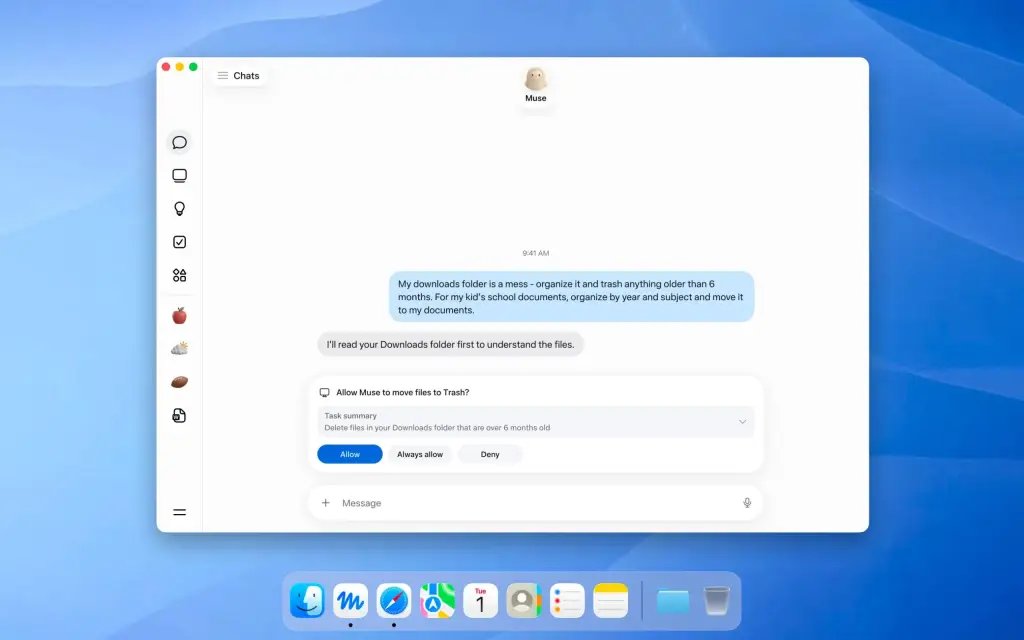
MENLO PARK, Calif. — Meta Platforms Inc. is releasing a native macOS application for its “Muse” artificial intelligence agent, mounting a direct challenge to Apple and Microsoft on their own desktop turf. The release was confirmed by Meta Chief Executive Mark Zuckerberg.
Powered by the company’s “Muse Spark” model, the application works with macOS productivity tools such as Mail, Messages, Calendar, and Notes. Muse can draft and send emails, manage invoices, fill out complex web forms, and coordinate travel itineraries by scanning local files and cross-referencing calendars.
Muse is free to download from the Mac App Store and Meta’s official website, but its advanced automation capabilities require a paid subscription. Meta is offering premium tiers at $20 and $100 per month through a freemium pricing structure.


The subscription model puts Meta in competition with consumer-focused services including OpenAI’s ChatGPT Plus, Microsoft Copilot Pro, and Anthropic’s Claude Pro. It also targets high-volume power users and enterprise clients that require intensive, multi-step system automation.
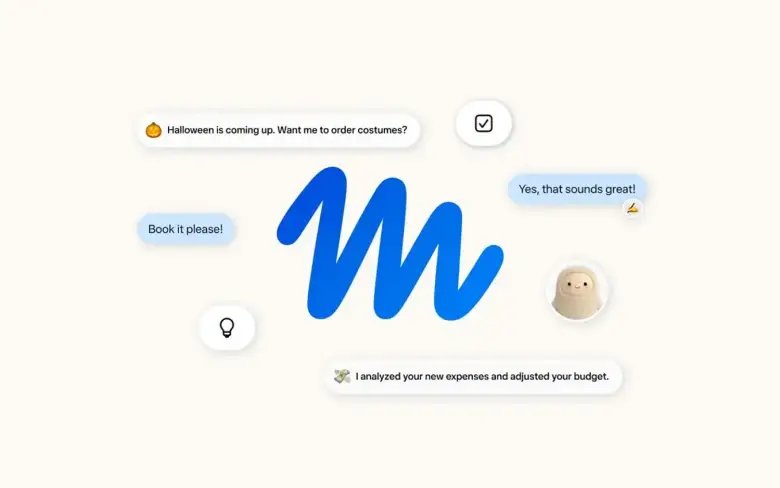
Unlike standard chatbots that only generate text, Muse operates as an active assistant. The macOS launch marks Meta’s push into the growing field of “agentic” AI, software designed to navigate operating systems and perform complex tasks on a user’s behalf.
When Meta rolled out Muse for iOS, Android, and web browsers, it executed user sessions inside remote, sandboxed virtual machines. Its proprietary “Sentinel” security layer monitored interactions under that setup, isolating sensitive data and credentials from the host system.
Meta has yet to publish detailed technical documentation explaining how local system permissions will be managed in the native Mac application. If Muse executes commands locally on macOS instead of routing them through a secure remote virtual machine, its mechanisms for data isolation and access control could function differently.
The agent requires broad system access to function, including the ability to read local files and monitor background activity. That operational shift remains a key point of scrutiny for cybersecurity professionals.
System access is entirely optional, Meta emphasizes, and users can define the boundaries of the agent’s involvement. The software requires explicit, manual authorization before executing any highly sensitive action.
For purchases and billing tasks, Muse routes sensitive actions through established third-party platforms such as Stripe and 1Password. This design prevents the AI agent from gaining direct access to a user’s bank credentials.
The native Mac application arrives amid an industry-wide race to deploy agentic AI. Microsoft has spent the last year deeply embedding Copilot into the Windows ecosystem, while Anthropic recently introduced a “computer use” feature for its Claude models that enables the AI to control desktops, click buttons, and type text.
Apple is progressively rolling out its native “Apple Intelligence” features across macOS Sequoia and iOS. Those features leverage deep system-level integration to perform cross-app tasks.
Meta aims to capture market share before operating-system-level AI agents become fully standardized. The company faces persistent skepticism regarding user privacy, given Meta’s history of data-handling controversies.
Convincing users to grant a third-party application permission to run continuously in the background, read personal correspondence, and analyze local files remains one of the product’s primary hurdles. Meta has sought to minimize friction by designing Muse to operate quietly in the background, learn user habits over time, and prompt notifications only when explicit verification is required.










2 Comments