Bitcoin’s Civil War Over ‘Spam’ Reignites as BIP-110 Threatens to Restrict Ordinals
A controversial proposal to restrict Ordinals and transaction data has reignited ideological divisions over censorship, spam, and the soul of the network.

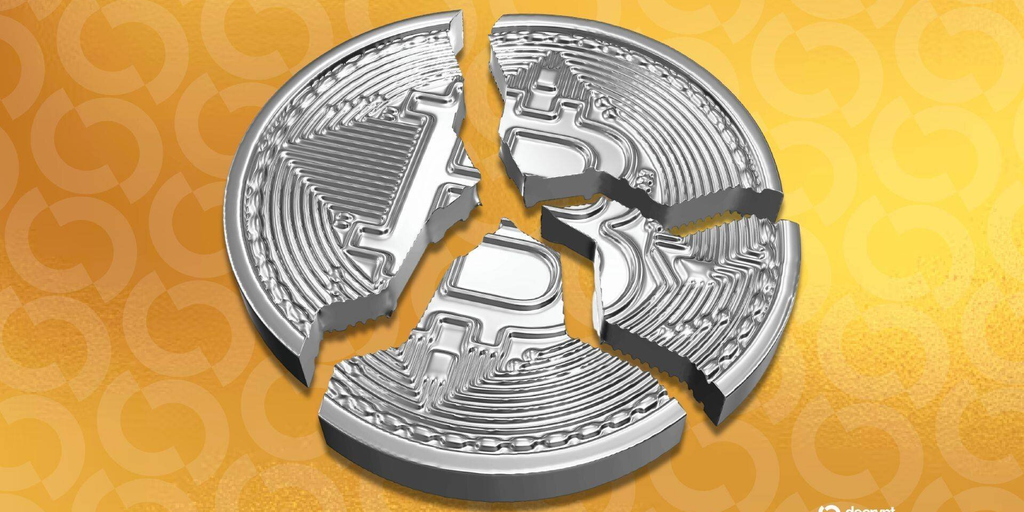
A contentious proposal to alter Bitcoin’s consensus rules has triggered one of the most intense governance debates in years, dividing developers, miners, corporate stakeholders, and users over the fundamental nature of the world’s largest cryptocurrency. At the heart of the conflict is whether Bitcoin should remain a strictly financial ledger or continue to permit arbitrary, non-financial data to be permanently etched into its blockchain.
The dispute centers around Bitcoin Improvement Proposal 110, or BIP-110. If implemented, BIP-110 would temporarily restrict several methods used to embed arbitrary data in Bitcoin transactions. Proponents of the measure argue that the network is being choked by “blockchain spam” that drives up transaction fees and bloats node storage. Conversely, critics warn that the proposal introduces a dangerous precedent of protocol-level censorship, potentially invalidating legitimate transactions and risking a catastrophic chain split.
The debate has drawn sharp reactions from some of the industry’s most prominent figures, including Bitcoin developer Luke Dashjr, Blockstream CEO Adam Back, MicroStrategy Executive Chairman Michael Saylor, Casa Chief Security Officer Jameson Lopp, and Bitcoin advocate Samson Mow.
“There are 110 things more dangerous to Bitcoin than spam. BIP 110 turns a spam dispute into a consensus change that would invalidate some currently valid, fee-paying transactions,” Saylor wrote on X. “That precedent is the danger. We should save our energy for threats that really matter.”
What is BIP-110 and How Would It Change Bitcoin?
While Bitcoin was originally designed as a peer-to-peer electronic cash system, its architecture allows transactions to carry more than just financial payments. Through transaction scripts and witness data, users can embed text, images, token metadata, and other arbitrary information directly onto the ledger.
BIP-110 is designed as a soft fork—a backward-compatible upgrade that tightens the network’s existing consensus rules. To curb the influx of non-financial data, the proposal introduces several strict technical limitations. Specifically, it would limit most new transaction outputs to 34 bytes, restore an 83-byte limit for OP_RETURN outputs, cap certain witness elements at 256 bytes, and temporarily restrict several Taproot features commonly used for inscriptions. Inscriptions function as the Bitcoin network’s equivalent to NFTs, which are highly popular on alternative blockchains like Ethereum and Solana.
By targeting these specific technical pathways, BIP-110 aims to make it economically and technically impractical to host large files directly on-chain. However, critics argue that defining what constitutes “spam” is inherently subjective, and enforcing such definitions at the protocol level compromises Bitcoin’s core value proposition.
In a February blog post, Jameson Lopp argued that BIP-110 would weaken two of Bitcoin’s defining properties: censorship resistance and predictability.
“Bitcoin’s strength lies in its censorship resistance and predictability,” Lopp wrote. “BIP-110 signals that the protocol can be altered to censor subjectively ‘undesirable’ transactions, eroding its image as permissionless programmable money.”
The Ordinals Genesis and the Rise of On-Chain Data
The roots of the current crisis trace back to early 2023 with the launch of Ordinals, a protocol created by Bitcoin developer Casey Rodarmor. Ordinals introduced a methodology for numbering individual satoshis—the smallest unit of a Bitcoin—and “inscribing” them with digital content like images, videos, and text.
This innovation was made possible by two major historical upgrades to the Bitcoin protocol: Segregated Witness (SegWit) in 2017 and Taproot in 2021. While designed to improve transaction efficiency, smart contract capabilities, and privacy, these upgrades inadvertently removed size limits on witness data, allowing developers to utilize the witness portion of a transaction as cheap, decentralized storage.
As Ordinals and BRC-20 tokens (a fungible token standard built on top of the Ordinals protocol) exploded in popularity, demand for scarce block space surged. This network congestion pushed transaction fees to multi-year highs. Supporters of the movement argue that these elevated fees are a net positive, generating vital additional revenue for miners and securing Bitcoin’s long-term security budget as block subsidies continue to halve every four years. Critics, however, view these data-heavy transactions as an abuse of the network, with developers like Luke Dashjr leading the charge to classify them as spam that must be filtered out.
Miner Resistance and the Threat of a Chain Split
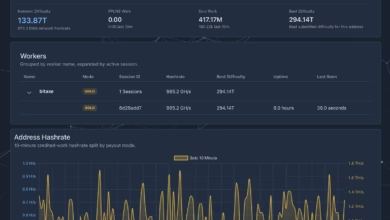
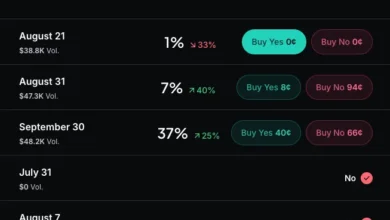
Despite the passionate arguments from BIP-110’s proponents, the proposal faces a steep uphill battle for activation. BIP-110’s mandatory signaling period begins in August, requiring miners to express support by writing specific data into the blocks they mine. So far, the proposal has found almost no traction among the mining community, with only 1% of miners showing support for BIP-110, according to the proposal’s monitoring dashboard.
Miners are economically disincentivized to support BIP-110, as doing so would voluntarily eliminate a lucrative source of transaction fee revenue. This economic reality highlights the difficulty of pushing through consensus changes that run counter to market incentives.
Blockstream CEO Adam Back pointed out that Bitcoin’s decentralized architecture is explicitly designed to resist unilateral changes, meaning users cannot simply force their personal preferences onto the broader network. While supporters of BIP-110 are free to split from the main network, Back made it clear that the broader ecosystem is unlikely to follow.
“Now the tough pill, which is unfortunately true,” Back wrote on X. “If you won’t listen to reason, educate yourself, learn, the same radical freedom applies to you: your permissionless recourse is to club together and create a fork.” He added flatly: “Bitcoin won’t be joining it.”
Echoes of the Blocksize Wars
For veteran market participants, the vitriol surrounding BIP-110 feels deeply familiar. In an essay posted to X on Tuesday titled The Bitcoin Alliance, Samson Mow argued that Bitcoin participants should view themselves as a loose coalition of distinct stakeholders rather than a uniform community. In this model, developers, miners, businesses, educators, and users all play unique, balancing roles to maintain the network’s equilibrium.
Mow drew direct parallels to the historical Blocksize Wars (2015–2017), a defining ideological conflict over whether Bitcoin should increase its 1 MB block size limit to scale throughput on-chain, or keep blocks small and scale via layer-2 protocols like the Lightning Network.
“During the Blocksize War, there was never this ‘if you’re not with us, you’re against us’ mentality on our side,” Mow wrote. “The small block camp never had to coerce anyone to join. We just all “got it” and were confident in our position.”
The Blocksize Wars ultimately concluded with the victory of the “small block” camp, prompting “big blockers” to split the network and launch alternative blockchains, such as Bitcoin Cash in 2017 and subsequently Bitcoin SV in 2018.
While Mow acknowledged that he shares concerns regarding the proliferation of blockchain spam, he remains opposed to BIP-110 because he believes protocol-level consensus changes require overwhelming, near-unanimous agreement across the entire alliance. He also criticized Bitcoin Core developers for their heavy-handed management of recent OP_RETURN policy changes, suggesting that aggressive governance tactics have unnecessarily inflamed the community.
“The way they handled the OP_RETURN change was full of stupid mistakes, from banning people on GitHub to the ninja ACKs,” Mow wrote. “Any normal person could have predicted the reaction from the plebs. People store their time and value in Bitcoin. Anything that appears to threaten that will get people up in arms.”