Bitcoin Rally Hits Resistance as Tech Stock Sell-Off Cools Risk Appetite
Despite cooling inflation data, a sharp decline in semiconductor shares and retail profit-taking in equities have stalled Bitcoin’s push toward $66,000.
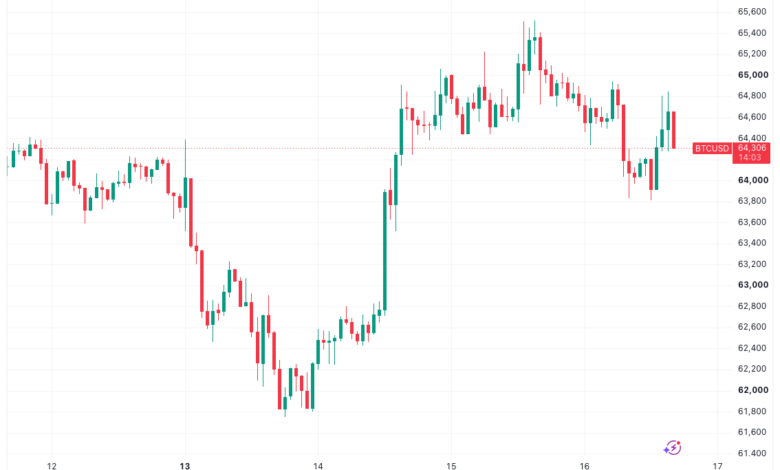
Bitcoin (BTC) saw its recent momentum stall on Thursday as a sharp reversal in U.S. tech stocks tempered the optimism previously fueled by cooling inflation data. After reaching three-week highs, the premier digital asset retraced alongside traditional risk assets, highlighting the ongoing correlation between the crypto market and high-growth equities.
Data from TradingView showed BTC/USD circling $64,500, down 1.5% from the local peaks established just 24 hours earlier. The pullback comes at a critical technical juncture, as Bitcoin struggles to convert short-term gains into a sustained breakout above heavy overhead resistance.
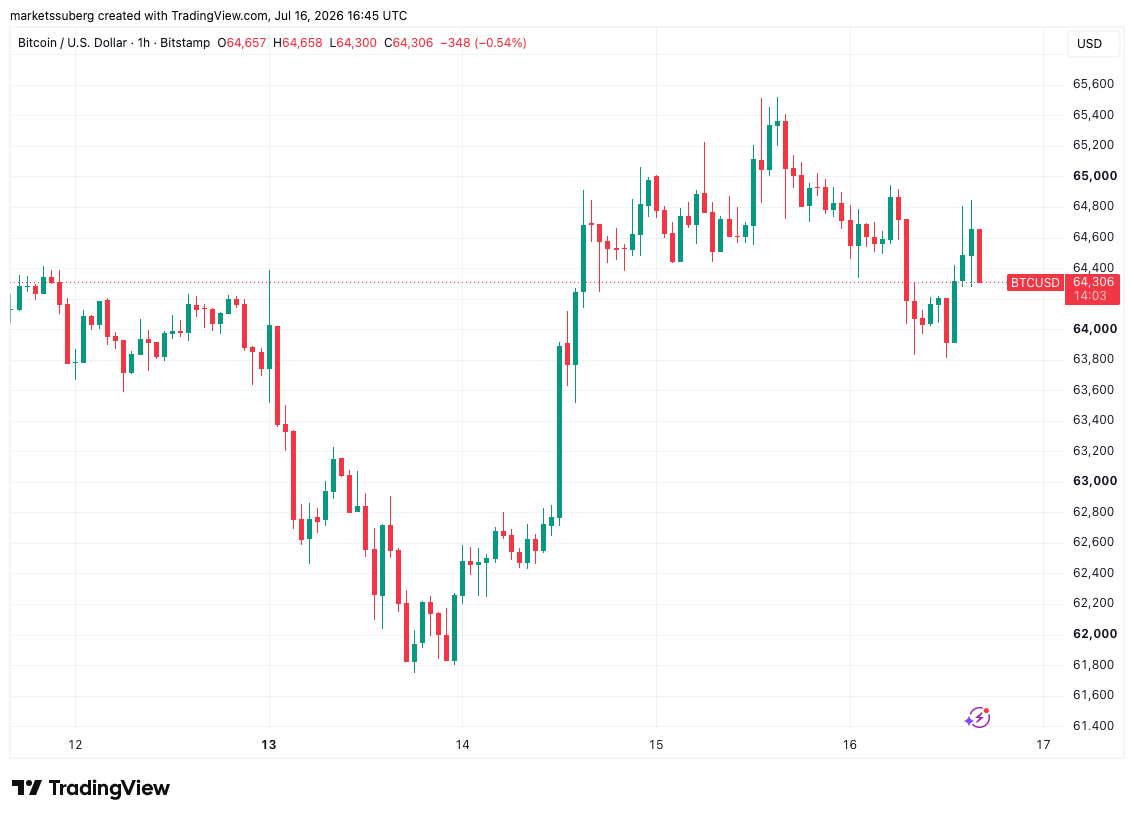
BTC/USD one-hour chart. Source: Cointelegraph/TradingView
The initial rally was sparked by two consecutive days of favorable macroeconomic reports. Both the Consumer Price Index (CPI) and Producer Price Index (PPI) for June came in lower than anticipated, suggesting that inflationary pressures in the U.S. economy are beginning to subside. Typically, lower inflation is viewed as a bullish catalyst for Bitcoin, as it increases the likelihood of the Federal Reserve easing its monetary policy, thereby injecting liquidity into risk-on markets.
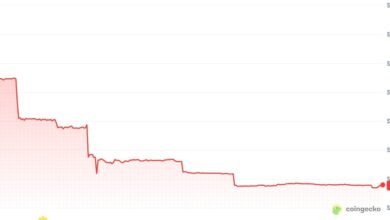
However, the narrative shifted on Thursday as tech stocks came under significant pressure. The semiconductor sector, often a bellwether for broader market sentiment, led the decline. Specifically, Micron Technologies saw its share price tumble by 15% during the session.
“Micron is now down over -30% since its June 22nd record high,” noted the macro trading resource The Kobeissi Letter in a post on X. This drawdown in a key tech player appears to have spooked crypto investors, who remain sensitive to the risk-off sentiment permeating Wall Street.
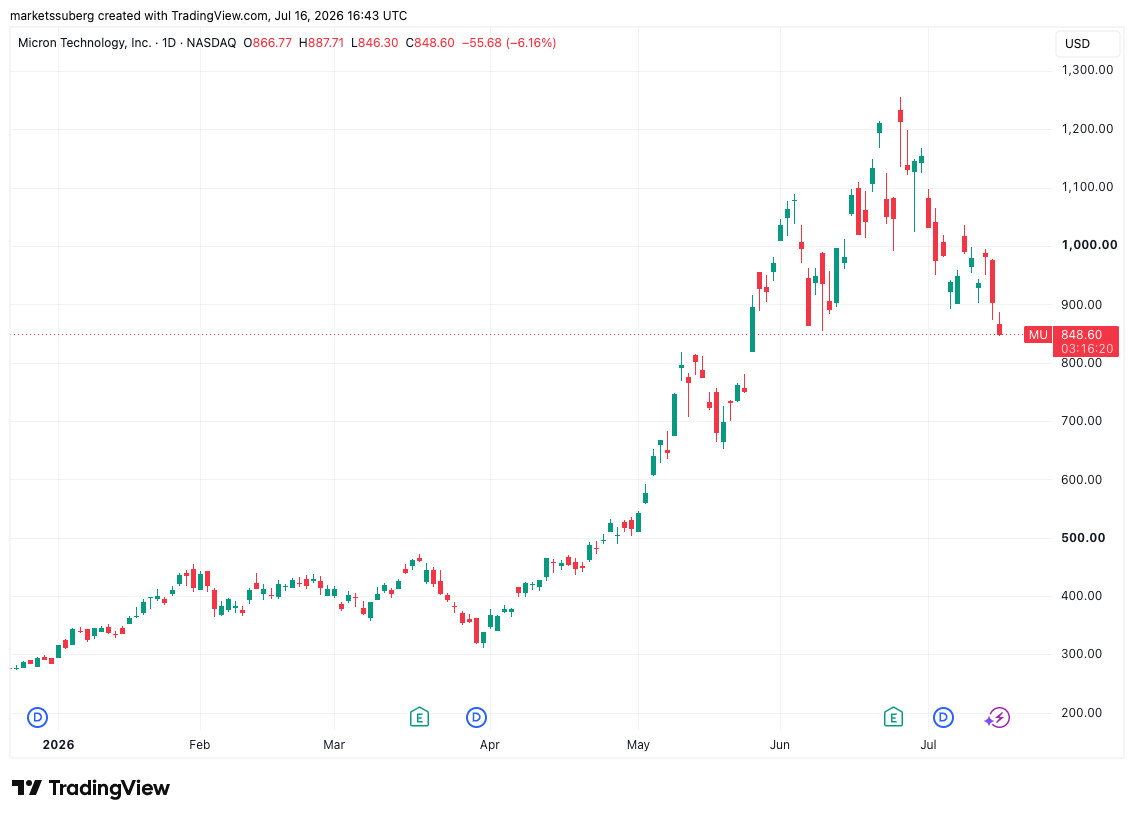
Micron Technologies one-day chart. Source: Cointelegraph/TradingView
The Kobeissi Letter further highlighted a trend of profit-taking among retail investors. Sales of high-profile tech stocks like Tesla and Apple have reportedly reached $200 million over the last two weeks. This suggests that while institutional interest remains a pillar of the market, the retail segment is becoming increasingly cautious, opting to lock in gains after a period of volatility.
“Meanwhile, the total retail turnover in single stocks rose to a record $370 billion, up from $220 billion at the start of 2026,” the resource added, underscoring the massive scale of current market participation and the potential for rapid shifts in liquidity.
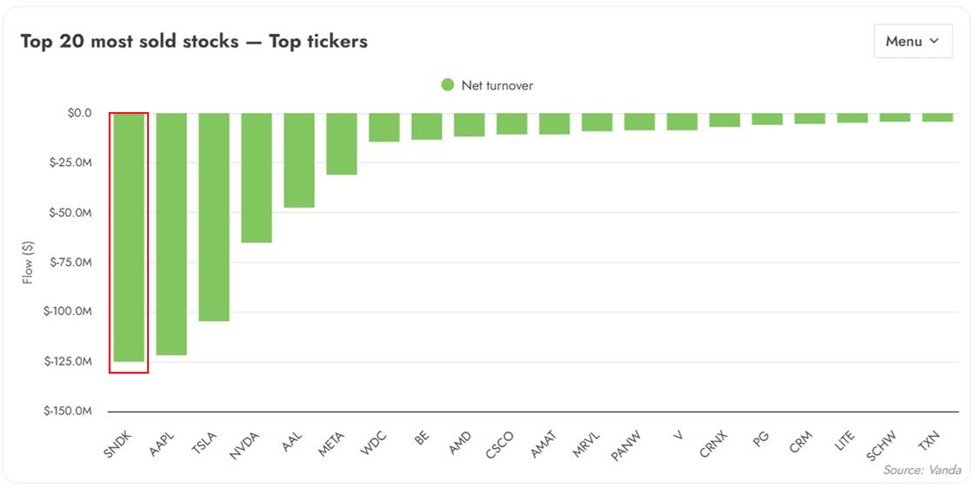
Retail investor equity sales data. Source: The Kobeissi Letter/X
Within the crypto-native landscape, the mood remains decidedly conservative. Analysts are closely watching technical indicators that suggest Bitcoin’s relief rally may be hitting a ceiling. The concept of a “rejection” has become a central theme in recent market commentary.
Market commentator Exitpump pointed toward the anchored volume-weighted average price (AVWAP) as a key level of interest. Specifically, the AVWAP measured from Bitcoin’s peak of $82,000 in early May is acting as a formidable barrier.
“Price is finally going to retest the AVWAP from 82K top that lead to strong local downtrend. To me such retest should cap the upside and give stronger rejection,” Exitpump explained to followers on X. This indicator is often used by traders to identify the average price at which all volume has traded since a specific point in time, serving as a psychological and mathematical anchor for the market.
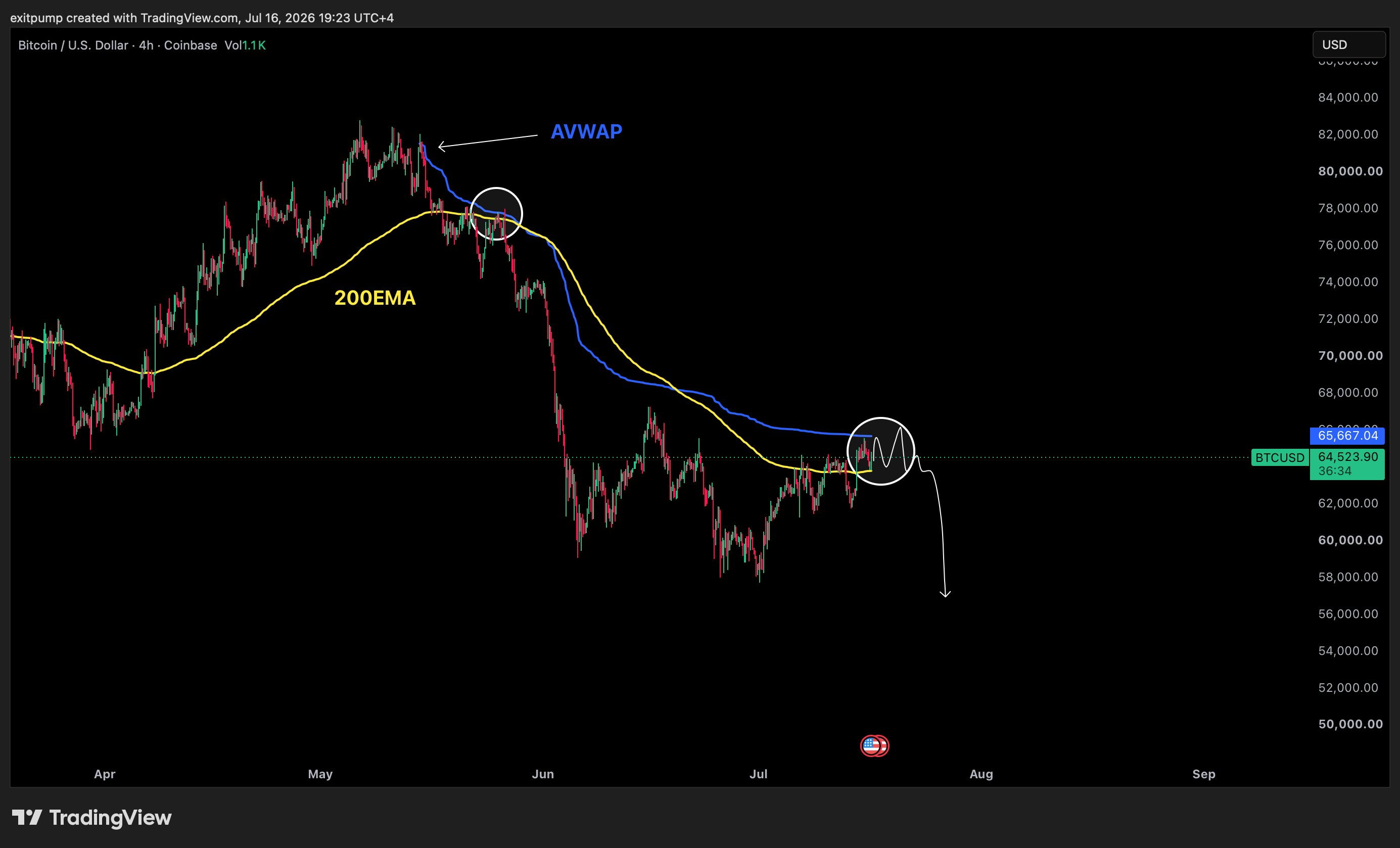
BTC/USD four-hour chart. Source: Exitpump/X
Adding to the cautious outlook, popular trader and analyst Rekt Capital observed that BTC/USD is “showing initial signs of rejection” from its 50-month exponential moving average (EMA), currently situated at $65,900. The EMA is a type of moving average that places a greater weight and significance on the most recent data points, making it a sensitive gauge of trend changes.
Rekt Capital noted that current price behavior appears to be mirroring patterns seen during the 2022 bear market. This historical comparison suggests that while local rallies provide temporary relief, the broader market may still be searching for a definitive macro bottom, which some analysts believe may not arrive until later in the year.