Solo Bitcoin Miner Beats Astronomical Odds to Solve Block Using $150 Device
A hobbyist using a pocket-sized Bitaxe device secured a block reward worth roughly $200,000 after just eight hours of operation.
A solo bitcoin miner operating a pocket-sized, hobbyist-grade device has defied immense statistical odds to secure a full Bitcoin block, earning a reward worth approximately $200,000.
The miner, using a credit-card-sized device known as a Bitaxe, successfully solved Bitcoin block number 957,382. The achievement yielded a total reward of 3.1382 BTC.
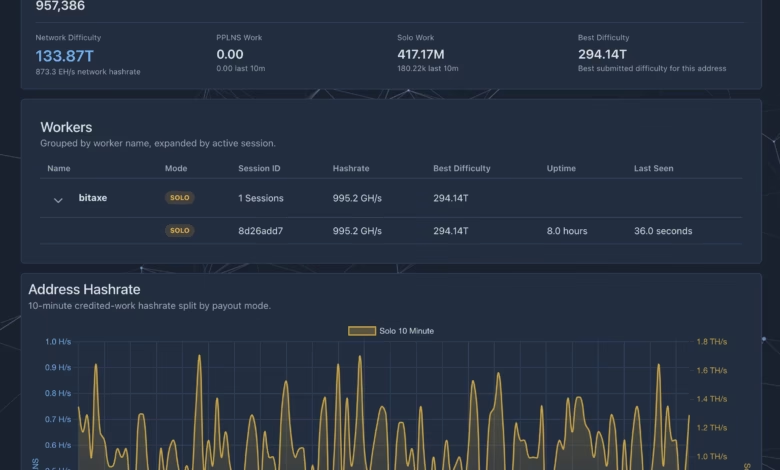
According to data posted on social media platform X by the tracking handle Public Pool, the miner had been running the rig for only eight hours through the Public Pool service before hitting the block. The device operated at an average hash rate of 995 GH/s, which is roughly equivalent to 1 terahash per second (TH/s).
This event represents the second time a single Bitaxe device has successfully solo-mined a block on the Public Pool platform.

What is a Bitaxe?
The Bitaxe is an open-source, credit-card-sized ASIC miner. Despite its small physical size, it is powered by the Bitmain BM1370 chip—the same chip utilized in industrial-grade Antminer S21 machines. The Bitaxe Gamma version is capable of producing between 1 and 1.3 TH/s of computing power while drawing only 15 to 21 watts of electricity. Retail prices for the device range from $60 to $150.
The achievement has been compared to winning a major lottery using a basic scratch-off ticket purchased at a gas station, highlighting the rarity of solo mining success on low-power hardware.
Technical Context: How Solo Mining Works
To understand the scale of this occurrence, it is helpful to examine how the Bitcoin network operates. Bitcoin relies on a Proof-of-Work consensus mechanism, where miners worldwide compete to solve complex mathematical puzzles. The first miner to find the correct solution is permitted to add a new block of transactions to the blockchain and receive the block reward, which currently consists of a fixed subsidy plus transaction fees.
A miner’s hash rate represents the number of computational calculations they can perform per second. While a single Bitaxe operates at approximately 1 terahash per second (one trillion hashes per second), the total collective computing power of the global Bitcoin network is measured in exahashes per second (one quintillion hashes per second). Because block rewards are distributed proportionally to a miner’s share of the total network hash rate, solo miners with hobbyist hardware face extremely low statistical probabilities of successfully finding a block on their own.
Most small-scale miners join large mining pools, where they combine their computing power with thousands of others to receive regular, fractional payouts. Solo mining pools, like Public Pool, allow individual miners to keep the entirety of the block reward if their specific device happens to find the winning hash, operating much like a lottery. While highly uncommon, this event demonstrates that solo mining remains a viable, if highly improbable, pursuit for hobbyists.