Mini Aceman JCW e Favoured Review: High Performance Meets a Punishing Ride
Testing the flagship electric crossover's performance and daily usability.
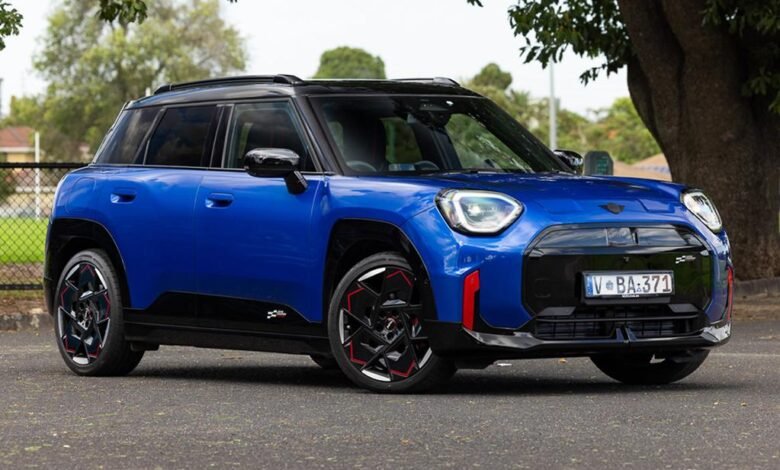
The introduction of the Mini Aceman marks a strategic expansion for the British brand, positioning a dedicated electric-only crossover between the traditional Cooper hatchback and the larger Countryman SUV. Unlike its siblings, which offer both internal combustion and battery-electric powertrains, the Aceman is available exclusively as an EV, targeting a competitive niche that includes the Volvo EX30 and Kia EV3.
The flagship of this new line is the Aceman JCW e Favoured. This performance-oriented variant features a 49 kWh battery pack paired with a single electric motor that produces 190 kW (255 hp) and 350 Nm (258 lb-ft) of torque. While these figures are lower than the dual-motor Countryman SE ALL4, the front-wheel-drive Aceman offers a more frenetic driving character.
Performance and Handling
On the road, the Aceman JCW e Favoured delivers sharp power delivery that can feel more engaging than its more powerful, all-wheel-drive stablemates. However, this enthusiasm comes with technical compromises. The vehicle exhibits significant torque steer under heavy acceleration, with the steering wheel pulling noticeably as the front wheels struggle to manage the electric motor’s instant torque. This effect is amplified when using the steering-wheel-mounted Boost button, which provides an additional 20 kW (27 hp) for 10-second bursts.
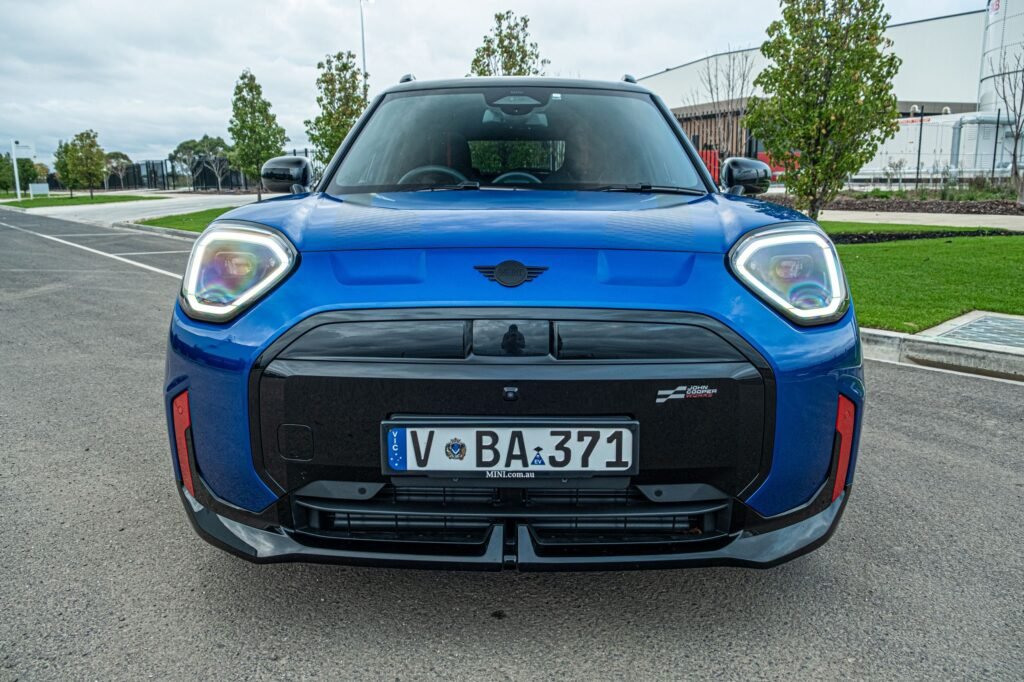
In performance testing, the Aceman reached 100 km/h (62 mph) in 6.5 seconds, slightly behind the manufacturer’s claim of 6.4 seconds. While the 1,745 kg vehicle feels agile in corners due to direct steering, the driving experience is frequently interrupted by traction control intervention, particularly in wet conditions.
The most significant drawback noted during testing was the ride quality. The suspension is exceptionally firm, leading to a jittery experience on anything other than perfectly smooth surfaces. While a stiff setup can benefit track performance, it proves punishing during daily commutes on roads with potholes or undulations.
Interior and Technology
The cabin maintains the brand’s signature aesthetic, featuring a circular infotainment display that supports wireless Apple CarPlay and Android Auto. The JCW e Favoured trim adds premium touches, including a Harmon Kardon audio system, a panoramic glass sunroof, and a dashboard upholstered in recycled-knit polyester with red contrast stitching.
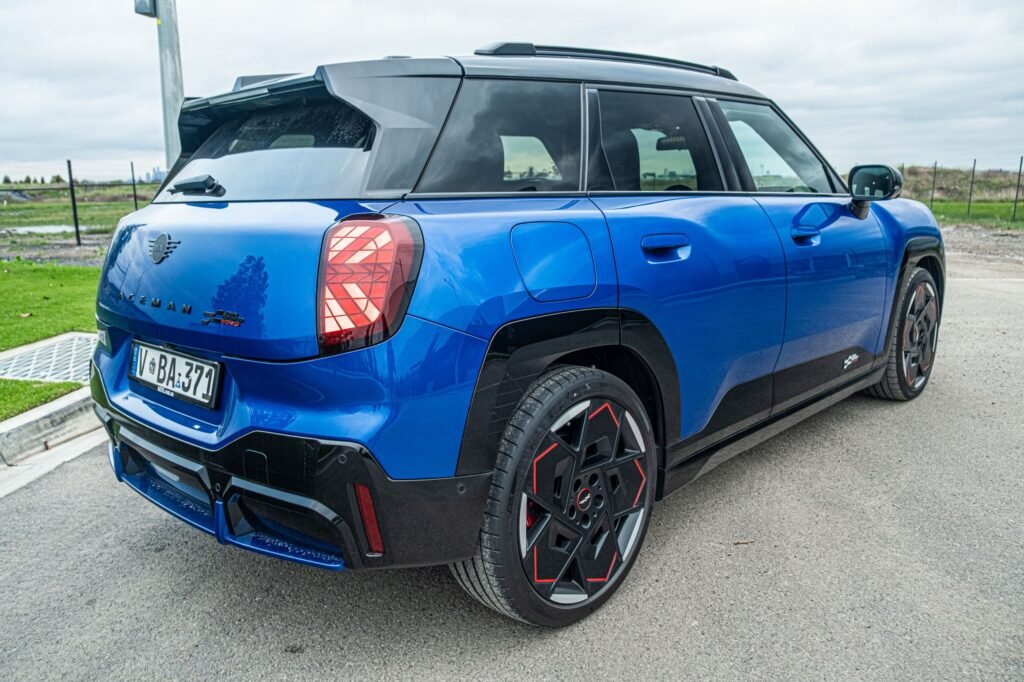
Practicality is somewhat limited compared to dedicated EV platforms. The Aceman retains a vestigial transmission tunnel, and rear-seat space is tight for tall adults. Cargo capacity stands at 300 liters with the seats up, expanding to 1,005 liters when folded.
Range and Efficiency
The 49 kWh battery provides a quoted driving range of 355 km (221 miles). While aggressive driving will deplete the battery quickly, sedate use with maximum brake regeneration can yield an efficiency of 14 kWh/100 km, making the official range figure achievable in real-world conditions.

Background: The Evolution of JCW
The John Cooper Works (JCW) name is historically significant for Mini, tracing its roots back to the 1960s when John Cooper, a racing car constructor, recognized the competitive potential of the original Mini. Traditionally, JCW models represent the pinnacle of Mini performance, featuring upgraded suspension, braking systems, and more powerful engines.
As the automotive industry shifts toward electrification, Mini is transitioning the JCW sub-brand to high-performance EVs. This move involves balancing the heavy weight of battery packs with the “go-kart handling” that has defined the brand for decades. The Aceman JCW e Favoured represents this transition, attempting to translate traditional hot-hatch characteristics into a modern electric crossover format.