Honda Civic e:HEV LX Review: Premium Hybrid Refinement Meets Segment Realities
Honda's upscale hybrid compact delivers exceptional driving dynamics and efficiency, but elevated pricing keeps it a niche player.
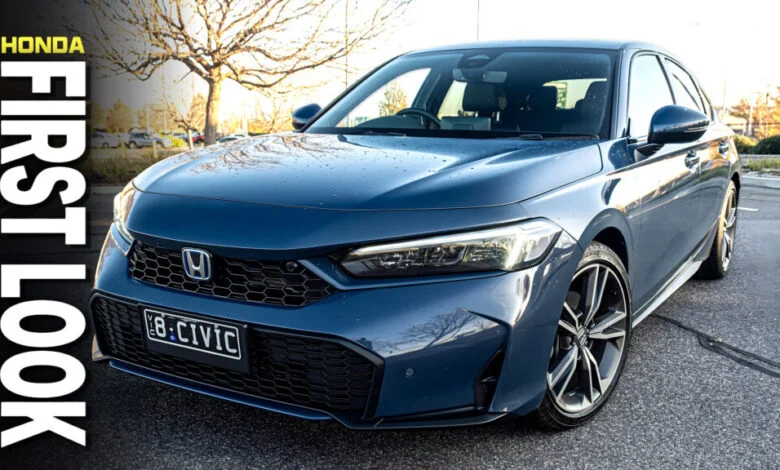
The eleventh-generation Honda Civic e:HEV LX highlights a dramatic strategic pivot by Honda in Australia, converting what was historically a high-volume budget hatchback into an upscale, technology-focused hybrid niche offering. While this repositioning delivers sophisticated driving dynamics, silent low-speed electric operation, and excellent cabin refinement, it also places the compact hatchback in a elevated pricing tier that drastically shrinks its potential buyer base.
When Honda Australia overhauled its retail operations to a fixed-price agency model alongside the release of the eleventh-generation Civic, it eliminated entry-level combustion trims in favor of high-spec electrified powertrains. As a result, starting prices for the Civic lineup jumped from AU$22,590 plus on-road costs in 2020 to AU$49,900 for the base e:HEV L and AU$55,900 drive-away for the top-tier e:HEV LX. In contrast, North American buyers retain access to entry-level gasoline sedans starting at $25,745, maintaining direct price parity with competitors.
This luxury shift has dramatically reduced the vehicle’s market footprint. According to VFACTS industry sales data, Honda sold 14,672 Civic models in Australia at its peak in 2017 and 10,531 units in 2019. By contrast, registration figures dropped to 966 units in 2024 and 933 in 2025. During the same period, mass-market rivals like the Toyota Corolla maintained dominant market share, delivering nearly 10,000 units annually due to more accessible pricing across its hybrid range.
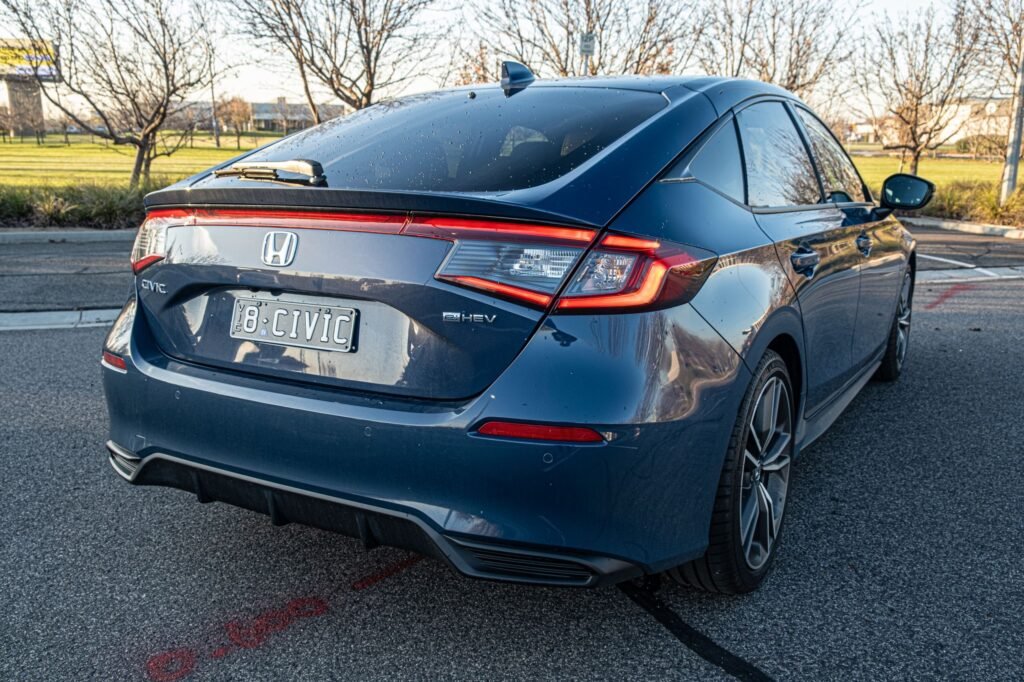
Underneath its sleek five-door bodywork, the 2026 Civic e:HEV LX features Honda’s advanced dual-motor hybrid propulsion architecture. The system combines a naturally aspirated 2.0-liter four-cylinder gasoline engine with a 1.05 kWh lithium-ion battery pack and two electric motors, sending 135 kW (181 hp) and 315 Nm (232 lb-ft) of torque to the front wheels. Rather than relying on a traditional mechanical gearbox, the e-CVT uses an electronically controlled clutch that toggles between electric drive, hybrid series generation, and direct engine lock-up at highway speeds.
On the road, this mechanical setup delivers a smooth and exceptionally quiet drive. Low-speed movement relies primarily on the electric motor, while high-speed cruising engages the gas engine directly. While factory claims rate fuel consumption at 4.2 L/100 km, real-world highway-heavy evaluation over 650 kilometers yielded a still-respectable average of 5.2 L/100 km. Steering feel is precise and well-weighted, avoiding the over-assisted sensation common among modern hybrids, while the suspension setup balances plush bump absorption with body control over twisty backroads.
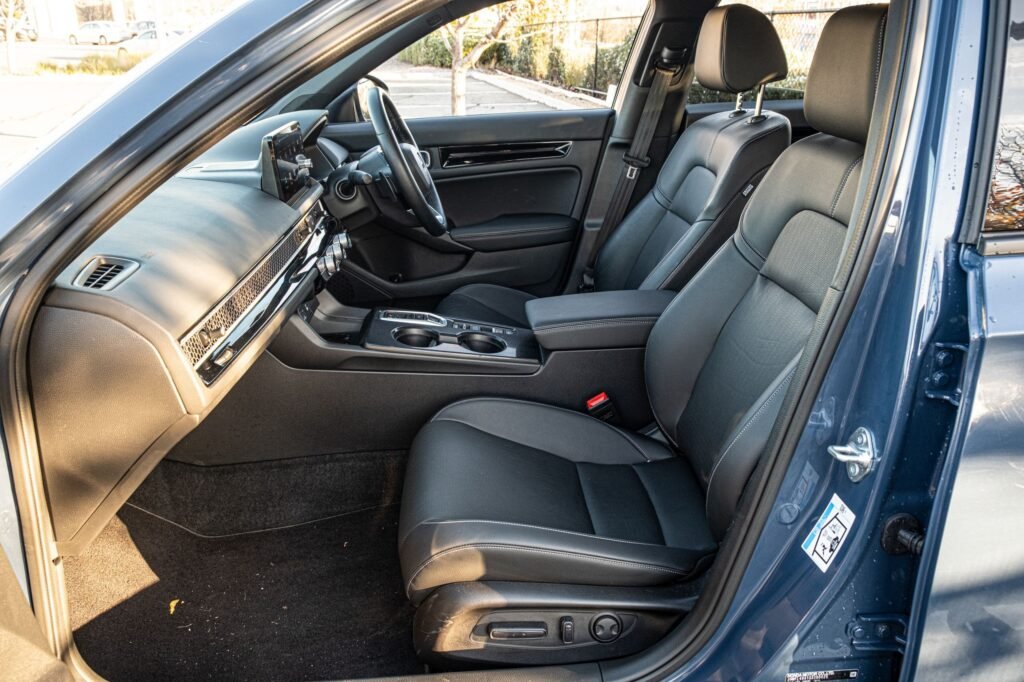
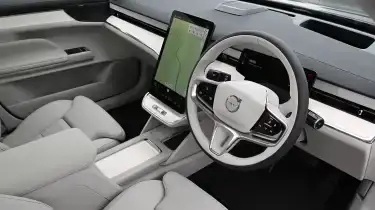
Inside, the Civic e:HEV LX adopts Honda’s current cabin layout, defined by a full-width metallic honeycomb mesh that conceals the climate vents. Driver controls include a leather-wrapped steering wheel, a 10.2-inch digital driver display, and a dash-mounted 9-inch infotainment screen supporting wireless Apple CarPlay and Android Auto. While material quality and build tolerances reflect the higher price point, initial smartphone connectivity can occasionally require a full system reboot to establish link-up.
Occupants benefit from a low, sport-focused seating position that echoes the high-performance Civic Type R, complemented by a standard panoramic sunroof that opens up interior light. The Australian market receives exclusively the hatchback body style, measuring 4,560 mm long with a 2,735 mm wheelbase and weighing 1,497 kg. Cargo space is generous, extending to 1,187 liters with the split-folding rear seats down, though the swooping rear roofline slightly curtails headroom for adult passengers over six feet tall.
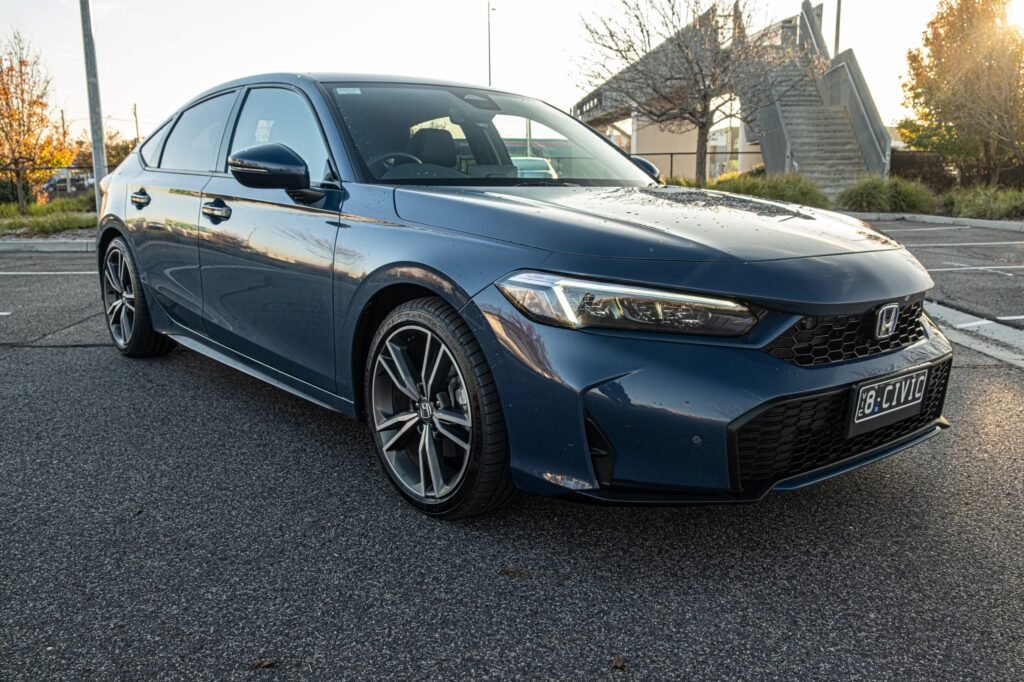
The challenge for the Civic e:HEV LX lies less in its execution and more in its internal and external positioning. Within Honda’s own showroom, buyers can step into the smaller HR-V Hybrid for roughly AU$15,000 less, or purchase the larger CR-V Hybrid SUV starting at the exact same AU$49,900 baseline as the entry Civic. Meanwhile, premium small-car rivals like the Mazda3 G25 Astina top out around AU$47,000.
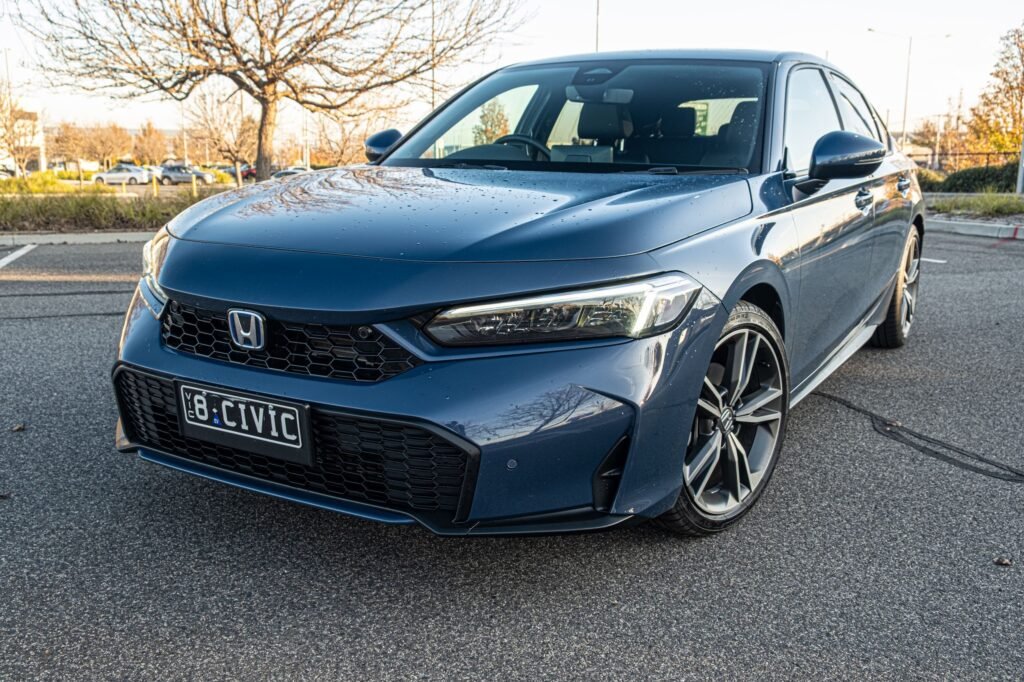
As a engineering package, the 2026 Honda Civic e:HEV LX succeeds in delivering high fuel efficiency, polished road manners, and premium build quality. However, without a lower-cost petrol variant in the mid-AU$30,000 range to attract volume buyers, it remains an impressive engineering achievement tailored for a very specific subset of buyers.