AI Power Rush Drives Surge in Off-Grid Natural Gas Plants
Bespoke fossil infrastructure threatens tech industry net-zero climate goals
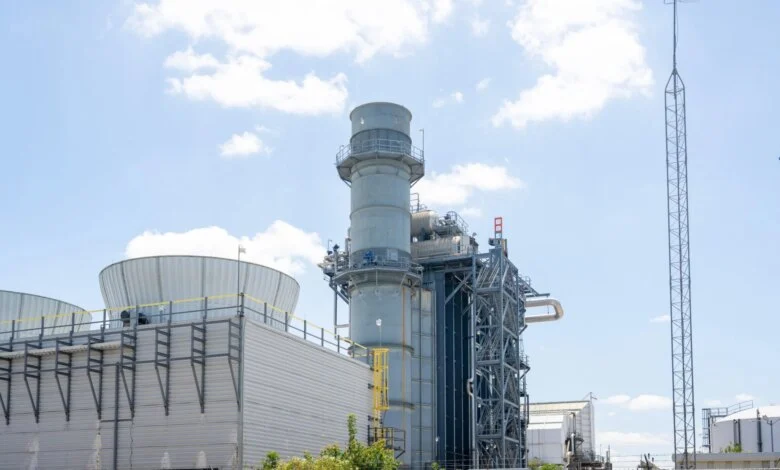
Prompted by severe strain on the U.S. electrical grid, the rapid surge in data center construction has sparked growing reliability concerns and triggered local moratoriums on new project approvals. Because even facilities with preliminary clearance face multi-year delays to connect to utility networks, data center developers are actively turning to alternative power arrangements. These include off-grid, “behind-the-meter” installations that can be permitted and built without requiring authorization from local utilities or regional independent system operators tasked with maintaining grid reliability. According to Federal Energy Regulatory Commission (FERC) filings, interconnection queues across major regional grid operators now exceed 2,000 gigawatts of total requested capacity, with average wait times extending beyond five years.
A Bloomberg News analysis of 99 proposed gas power plants tracked by BloombergNEF indicates they would generate approximately 318 million metric tons of carbon dioxide annually if operated at typical industry utilization rates. In comparison, U.S. Energy Information Administration data shows the entire national electric power sector generated about 1,485 million metric tons of carbon last year. This demonstrates that a single segment of data center energy infrastructure could elevate total U.S. power grid emissions by 20%, and by as much as a third if these new facilities operate continuously at maximum capacity.
Data center developers are turning to bespoke natural-gas power plants, a shift that threatens a sharp increase in carbon emissions and creates major obstacles for U.S. technology companies striving to meet ambitious corporate climate goals.
“There is immense, immense pressure on the whole sector to get power, and get it fast,” said David Pomerantz, executive director of the Energy and Policy Institute, a utility watchdog that promotes renewable energy. “They’re sort of agnostic if it is clean or dirty.”
The projects tracked by BloombergNEF are located across 22 states, stretching from Alaska to Georgia. More than a third are concentrated in Texas, where abundant natural gas resources and historically forgiving regulatory policies prompted developers to erect data centers as fast as they can be built and powered. (Texas Governor Greg Abbott recently announced a pause in data center approvals). Texas operates under the isolated ERCOT power grid, which operates outside federal interstate jurisdiction, enabling faster local permits for off-grid fossil generation.
Earlier this month, energy tracking firm Cleanview, which monitors U.S. power infrastructure and data center developments, identified Amazon as the developer behind an 8,000-acre site in Pecos County, Texas, which is set to become one of the largest single sources of carbon pollution in the United States.
Roughly 30 miles (48 kilometers) to the west, past scrublands and pecan orchards dotted with oil derricks, Chevron Corp. is constructing a natural gas power plant for Microsoft to energize a new 2,000-acre data center complex.
Together, those two plants alone could generate more than 10 gigawatts of electricity—enough power for New York City on a hot summer day. Regulatory filings indicate their combined annual emissions may reach 45 million metric tons of carbon dioxide equivalent, representing slightly less than half of the cumulative emissions of Washington state, where both tech giants are headquartered.
That fossil-fuel infrastructure includes facilities backed by Amazon.com Inc. and Microsoft Corp., the largest sellers of rented computing power and data storage.
That expansion of fossil-fuel power threatens to push Big Tech’s environmental goals out of reach. Both Amazon and Microsoft are major backers of clean energy projects and have pledged to zero out their contribution to planet-warming carbon emissions. Those climate pledges were established prior to the artificial intelligence boom, at a time when technology firms faced heavy pressure from employees and outside activists to reduce emissions. Spokespeople for Amazon and Microsoft said their corporate climate targets have not changed, noting Amazon is exploring options for solar power and battery storage at its West Texas site.
Bloomberg’s emissions baseline relies on 126 gigawatts of planned on-site natural gas capacity cataloged by BloombergNEF, an energy research firm owned by Bloomberg LP. The carbon footprint calculation uses operational usage ranging from an industry average of 60% to 100% for round-the-clock deployment, alongside the fuel burn rate of a standard single-cycle gas generator. Actual emissions will vary based on utilization and generator fuel efficiency; single-cycle units represent one of the most common types currently planned, despite being dirtier than combined-cycle plants that developers prefer but struggle to secure due to a multi-year turbine backlog. According to Department of Energy data, single-cycle gas turbines convert roughly 35% to 40% of fuel energy to power compared to over 60% for combined-cycle plants, but order backlogs at major turbine manufacturers like GE Vernova and Siemens Energy stretch up to five years.
The BloombergNEF dataset encompasses projects tied to leading artificial intelligence labs, including OpenAI and Anthropic PBC, upstart data center operators focused on AI specialization, as well as cloud-computing giants and investor groups seeking commercial tenants.
Not all of the proposed facilities in the BloombergNEF data are likely to be built. The rush to capitalize on AI developers’ seemingly bottomless demand for computing capacity has produced some speculative phantom projects and long-shot pitches.
“It has been a remarkable shift in the last three years,” said Drew Wilkinson, a former Microsoft employee who organized colleagues to advocate for tougher sustainability measures. “The companies who set the bar for corporate climate action are now bringing net new fossil infrastructure online at a breakneck pace. Few of us saw it coming.”