Global Markets Retreat as US-Iran Military Escalation Drives Oil Prices Higher
Oil prices jump and semiconductor stocks slump as military hostilities escalate in the Middle East.

Global equity markets declined and oil prices surged on Monday following an escalation of military strikes between the United States and Iran. The hostilities, centered on the strategic Strait of Hormuz, have triggered a sharp sell-off in Asian technology stocks and raised concerns over the stability of global energy supplies.
Brent crude, the international oil benchmark, rose as much as 5 per cent to reach $79.80. The price jump followed a fifth round of U.S. strikes on Iran, which prompted retaliatory actions from Tehran. US Central Command, the body responsible for military operations in the Middle East, stated that the strikes were initiated after the Islamic Revolutionary Guard Corps (IRGC) fired upon a commercial vessel in the strait.
Iranian state media reported explosions in several locations along the waterway, including Bandar Abbas, Sirik, Jask, and Qeshm. In response, the IRGC claimed its forces targeted sites in Jordan, Bahrain, Kuwait, and Oman, asserting that military operations would continue. The exchange has placed a previous ceasefire agreement on the verge of collapse.
Tech Stocks and Semiconductor Slump
The geopolitical tension weighed heavily on global semiconductor stocks, which were already experiencing volatility following a significant rally earlier this year. Investors have expressed growing concern regarding the sustainability of the current boom in artificial intelligence spending.
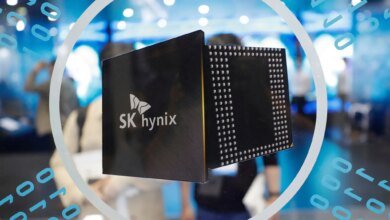
South Korea’s tech-heavy Kospi index fell by 9 per cent, triggering a trading halt. The index had already entered a technical bear market last week. Memory chipmakers bore the brunt of the decline; Samsung Electronics retreated 10.7 per cent, while Japanese firm Kioxia fell 12.9 per cent. SK Hynix, which recently listed in New York, saw its Seoul-listed shares slump 15.4 per cent.
On Wall Street, futures for the Nasdaq 100 and S&P 500 indicated lower openings of 1.3 per cent and 0.5 per cent, respectively. Albert Saporta, group chief executive of GAM Holding, described the current environment as an “asset liquidation process,” suggesting the possibility of a “secular bear market” in the making.
Corporate and Political Developments
In other global news, Ukrainian President Volodymyr Zelenskyy has announced a significant government overhaul. The reshuffle includes the replacement of the prime minister and a cabinet shake-up intended to implement a new political strategy. This marks the third major reorganization since the full-scale conflict with Russia began in February 2022.
In the corporate sector, Japan’s Nippon Paint has made a €7.5bn bid to acquire the decorative coatings business of Dutch rival AkzoNobel. The offer for the division, which includes the Dulux brand, comes as Nippon Paint attempts to intervene in a potential industry merger involving New York-based Axalta.
Wall Street banks are also preparing to report quarterly results. Forecasts suggest a 27 per cent year-on-year gain in investment banking fees for the second quarter, aided by mega-mergers and the stock market listing of SpaceX.
Separately, U.S. Senator Elizabeth Warren has requested information from JPMorgan Chase CEO Jamie Dimon regarding whether he lobbied the British government against a tax on bankers’ bonuses, allegedly on the advice of Jeffrey Epstein.
At Citigroup, CEO Jane Fraser continues a restructuring effort aimed at simplifying the bank’s operations. After taking over in 2021, Fraser has worked to move the institution past previous operational errors, including a mistaken $900mn payment to creditors. Analysts are looking to upcoming financial results to see if the leaner structure can generate faster growth.

Background: The Strait of Hormuz
The Strait of Hormuz is widely regarded as the world’s most important oil transit chokepoint. Located between Oman and Iran, it connects the Persian Gulf with the Gulf of Oman and the Arabian Sea. Approximately one-fifth of the world’s total oil consumption passes through the strait daily, making any military disruption in the area a high-risk event for global energy markets and shipping insurance rates.
Technical Overview: Memory Chip Sensitivity
The sharp decline in memory chipmakers like Samsung and SK Hynix reflects the cyclical nature of the semiconductor industry. These companies produce DRAM and NAND flash memory, which are essential components for everything from smartphones to AI servers. Because these products are often treated as commodities, their prices and the share values of their manufacturers are highly sensitive to shifts in global economic sentiment and capital expenditure forecasts from major tech firms.