Home Depot Sales Rise 5.7% to $47.9B Amid Corporate Job Cuts
Retailer posts $47.9 billion revenue while restructuring Atlanta corporate team.
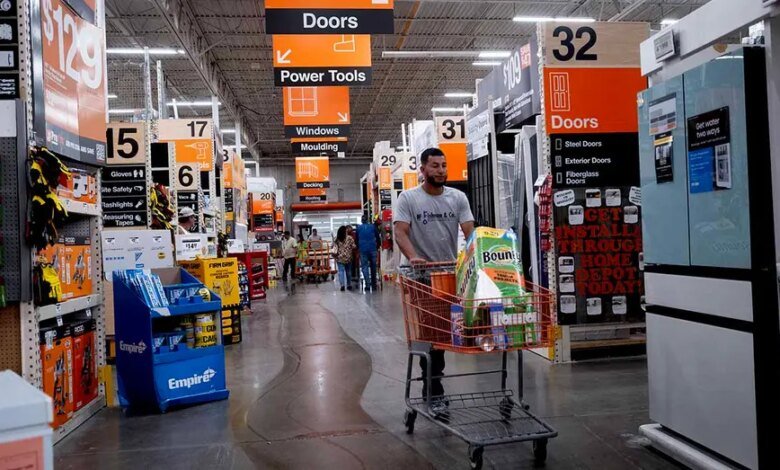
Home Depot reported second-quarter sales of $47.9 billion, representing a 5.7 percent increase from the same period last year, as demand for small-scale home improvement projects helped offset broader market pressures from elevated home prices and high mortgage rates. Alongside its quarterly financial performance, the Atlanta-based retailer confirmed plans to cut approximately 800 corporate positions at its store support center as part of an operational restructuring.
Net income for the second quarter reached $4.8 billion, or $4.79 per diluted share. On an adjusted basis, earnings per share stood at $4.92. Systemwide comparable sales across the retail chain rose 1.7 percent year-over-year, while domestic comparable sales at stores located within the United States gained 1.3 percent during the quarter.
Detailed customer purchasing metrics for the quarter reflected shifting consumer behavior inside the company’s retail locations. Home Depot reported that its average ticket size increased 2.8 percent from a year earlier to $92.50 per transaction. However, comparable customer transactions fell 1.0 percent over the same period, showing that shoppers spent more per visit even as overall transaction frequency recorded a minor decline.
“Our second quarter results exceeded our expectations. We saw broad-based demand across the business as customers continued to engage in smaller projects,” Home Depot Chief Financial Officer Richard McPhail said in a statement accompanying the financial results.
The workforce reduction involves hundreds of positions connected to the company’s corporate headquarters in Atlanta. Home Depot confirmed that the corporate restructuring will eliminate roughly 800 job positions tied directly to its store support center, reflecting ongoing adjustments to manage operational expenditure and maintain corporate efficiency.
The retailer’s sales performance unfolded against a background of ongoing softness in the broader domestic housing sector. According to market figures reported by the National Association of Realtors, U.S. existing-home sales dropped 1.7 percent in July compared to the prior month, falling to a seasonally adjusted annual rate of 4.06 million units.
At the same time, real estate purchase costs remain historically elevated for buyers across the country. Data from the National Association of Realtors showed that the median price for an existing home reached $434,100 in July, marking a 2 percent increase from the same month a year ago and maintaining pressure on household purchasing power.
Elevated home financing costs continue to impact consumer activity as well. Federal mortgage enterprise Freddie Mac reported that the average rate on a benchmark 30-year fixed-rate mortgage stood at 6.67 percent as of mid-August, rising from 6.58 percent recorded during the corresponding timeframe a year prior.
High interest rates and record real estate valuations have altered typical home improvement spending patterns across the nation. While expensive borrowing costs make major home renovation projects—which often rely on home equity loans or credit lines—less feasible for many homeowners, spending on regular maintenance, minor repairs, and smaller DIY projects has sustained ongoing demand at retail locations.
Despite the uneven conditions across the housing market, Home Depot reaffirmed its financial outlook for fiscal 2026. The home improvement retailer expects total sales growth for the full year to range between approximately 2.5 percent and 4.5 percent, consistent with its previous guidance. The company also reiterated its forecast for full-year comparable sales, expecting those results to fall between flat and a 2.0 percent increase.