SpaceX Targets 20 Gigawatts of AI Compute in Multi-Billion Dollar Infrastructure Push
Elon Musk details massive capital spending and exclusive Nvidia GPU commitments on SpaceX's maiden public earnings call.
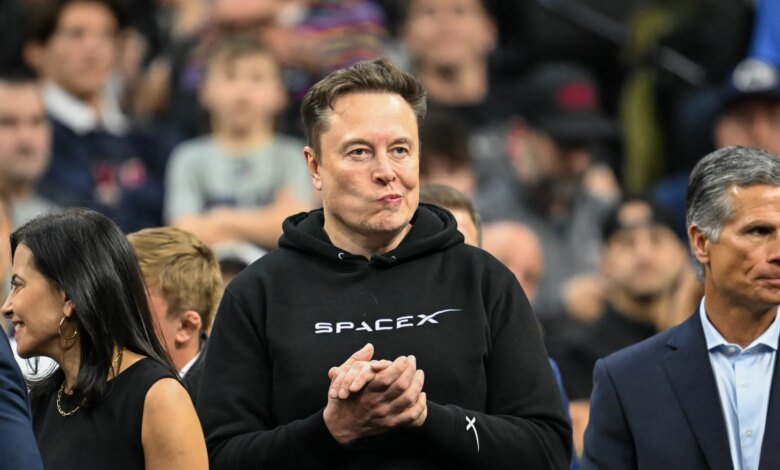
SpaceX is targeting up to 20 gigawatts of artificial intelligence computing capacity by the end of 2027, accelerating a massive infrastructure buildout backed by $18.4 billion in second-quarter capital spending.
Chief Executive Officer Elon Musk disclosed the expansion targets during the company’s debut earnings call as a public company on Tuesday, detailing a strategy to deploy aerospace engineering capabilities into terrestrial data center construction following SpaceX’s acquisition of AI startup xAI in February.
SpaceX reported second-quarter AI revenue of $2.6 billion—a 213% sequential increase—alongside $14.1 billion in contracted cloud services agreements, including key customer deals with Anthropic and Alphabet-owned Google. Total companywide capital expenditure reached $18.4 billion in the quarter, up from $10 billion in the first quarter, with nearly $16 billion dedicated specifically to AI infrastructure. Company executives stated that capital spending is expected to remain near current levels over the next two quarters.
To power the expansion, SpaceX is building its AI platform exclusively on Nvidia Corp.’s next-generation Vera Rubin architecture. Musk said on the call that SpaceX expects to receive a “very significant percentage” of Nvidia’s GPU shipments next year, highlighting a deep operational partnership with the chipmaker.
SpaceX finished the second quarter with 1.4 gigawatts of nameplate compute and expects to surpass 2 gigawatts by the end of the year. Looking further ahead, Musk outlined a “tentative target” of 20 gigawatts of power and cooling capacity online by late 2027, adding that even allowing for construction delays, output would likely reach “close to 15 gigawatts.” A single gigawatt of power can supply approximately 750,000 U.S. households, underscoring the industrial scale of the company’s energy requirements.
Defending the aggressive capital expenditures against traditional cloud compute operators, Musk argued that the technical challenges of terrestrial data center design are minimal compared to aerospace engineering.
“We’re taking a small amount of the expertise that we use for rockets and satellites, and applying that to scaling terrestrial data centers,” Musk said, calling data centers a “trivial problem” compared to the daily engineering required to keep orbital rockets from blowing apart. He added that applying aerospace discipline yields “an amazing outcome,” comparing SpaceX’s position in the AI infrastructure market to “the New York Yankees going in and playing a Little League team.”
While SpaceX has previously discussed potential space-based solar data centers, Musk emphasized that current infrastructure spending remains focused on ground-based facilities. The aggressive pivot places SpaceX in direct competition with legacy hyperscale cloud providers—including Amazon.com Inc., Microsoft Corp., and Google—which have all recorded record growth in their respective cloud divisions amid surging enterprise demand for AI compute capacity.