Beijing Orders State Entities to Accelerate Windows Removal
Beijing cuts reliance on foreign software amid tech trade tensions
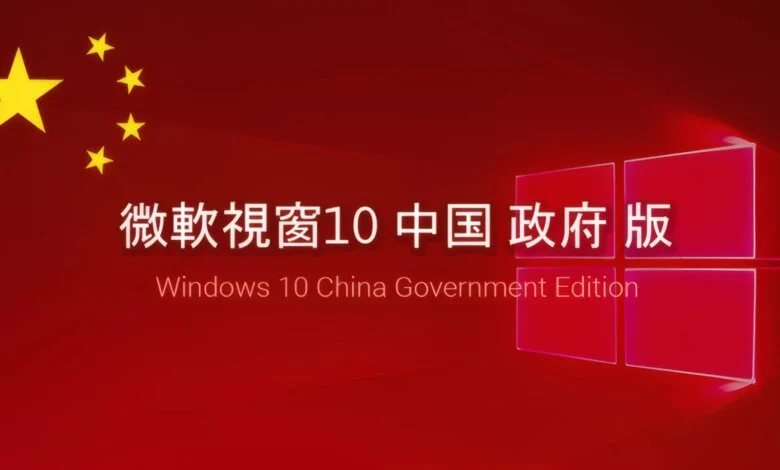
Formed in 2016, C&M Information Technologies operated as a joint venture combining Microsoft with the state-run China Electronics Technology Group Corporation. Windows 10 China Government Edition debuted one year later after high-level negotiations involving Microsoft Chief Executive Officer Satya Nadella alongside Chinese financial authorities.
The partner entity, CETC, is a major state-owned defense contractor that was previously placed on the U.S. Commerce Department’s trade restriction list over national security concerns. Despite Microsoft’s decade-long pursuit of the Chinese state market, executive testimony to the U.S. Congress reveals that China accounts for less than 1.5% of Microsoft’s total revenue, limiting the financial impact of the ban on the Redmond company.
The customized build was based upon Windows 10 Enterprise but modified specifically for government deployment. Microsoft stated that it removed consumer features deemed unnecessary by authorities—such as OneDrive—while giving state officials control over telemetry reporting and system updates alongside support for China’s proprietary encryption algorithms. Early pilot customers for the tailored software included China Customs, the municipal government of Shanghai, and state-owned cybersecurity firm Westone Information Technology.
China’s Ministry of State Security recently issued an instruction to affected organizations directing them to remove the customized operating system ahead of schedule, according to a report from Bloomberg. Developer C&M Information Technologies had originally planned to retire the specialized operating system in February 2027.
Sources familiar with the matter stated that the accelerated timetable was prompted by data-security concerns, although government officials did not publicly identify any specific software vulnerabilities.
Microsoft stated that it was unaware of any security incident involving the customized software and noted that the product continues to receive regular security updates. Meanwhile, neither China’s State Council Information Office nor C&M Information Technologies responded to requests seeking comment.
China has been systematically lessening its reliance on foreign technology for several years. In 2023, the government introduced strict purchasing rules requiring state entities to buy “safe and reliable” computer processors and operating systems. The approved central processing unit list was composed entirely of Chinese products, while Intel and AMD chips, Windows operating systems, and foreign database software were slated for phaseout.
The software phaseout is tied to Beijing’s broader “Xinchuang” (Information Technology Application Innovation) policy directive. Under this national framework, government agencies and critical state-owned enterprise operators are mandated to completely replace foreign core hardware, operating systems, and database architecture with fully indigenous technology by 2027.
Domestic replacements primarily feature operating systems from Chinese vendors such as Kylin Software and Tongxin Software Technology, most of which are built on Linux distribution kernels. Furthermore, China has actively backed openKylin, an open-source operating system development project intended to replace platforms like Windows and macOS.
The customized government build ultimately failed to achieve the widespread institutional adoption Microsoft had targeted. A Reuters review of six Chinese government computer procurement guides published between December 2023 and May 2026 found that five guidelines did not recommend Microsoft products at all, while the sixth listed Windows 10 China Government Edition alongside unspecified additional administrative requirements.
As a result of these tightening national policies, Microsoft’s operational footprint in China has been shrinking steadily. At least 15 of its Chinese branch offices and joint venture entities have closed over the past five years. However, the company maintains a presence in the country by offering cloud infrastructure and artificial intelligence services to local enterprises operating internationally.
The directive arrived just weeks before President Donald Trump’s planned meeting with Chinese leader Xi Jinping, unfolding amid persistent bilateral tensions over technology access and national security concerns. The accelerated removal timeline reportedly caught some state-agency employees by surprise, though there is no indication that the order was directly linked to the upcoming summit.
By directing state-linked organizations to uninstall the tailored operating system months ahead of schedule, Beijing is bringing Microsoft’s customized state enterprise strategy to a definitive end. The move reinforces China’s long-running sovereign tech initiative to systematically eliminate reliance on foreign software and replace foreign platforms with domestic technology across all government systems.