OpenAI Launches Dedicated Teen ChatGPT Mode Amid Rising Safety Concerns
New safety default settings and Study Mode target youth safety and cheating.
Questions persist regarding why essential protective features were absent during the initial launch phase of ChatGPT. The artificial intelligence platform originally debuted in late 2022 and scaled rapidly to reach 900 million weekly active users before OpenAI introduced dedicated, meaningful safeguard mechanisms tailored specifically for adolescent users.
The massive growth of generative AI among youth has drawn intense scrutiny from federal lawmakers, state attorneys general, and child safety advocates across the United States. Data from the Pew Research Center reveals that roughly one in five teenagers who are familiar with ChatGPT report using it to complete schoolwork, highlighting how rapidly generative software integrated into K-12 education prior to the establishment of age-appropriate safety protocols.
OpenAI states that tailored protections will now function by default within ChatGPT for Teens, aimed at curbing exposure to harmful or developmentally unsuitable material. The company notes that these features align with its Under-18 Principles outlined in its Model Spec, which it claims are rooted in developmental science and recommendations from child safety experts.
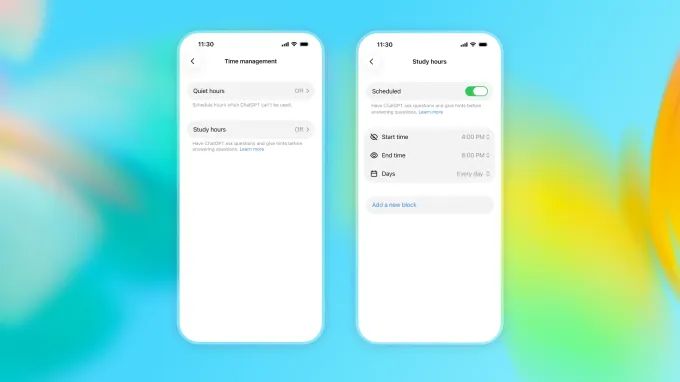
Guardians and parents will additionally have access to existing family management tools and parental controls to adjust configuration settings, receive automated safety alerts, and establish Quiet Hours restrictions, among other features.
Similar digital safety and parental oversight frameworks have become standard operating procedure across major consumer platforms such as Meta’s Instagram, ByteDance’s TikTok, and Alphabet’s YouTube. These technology companies faced intense bipartisan pressure from the U.S. Senate to implement safety measures, culminating in federal legislative initiatives such as the Kids Online Safety Act (KOSA).
Following a wave of legal actions citing a lack of safety measures in AI chatbots—cases connected to adolescent suicides and broader mental health issues—OpenAI officially launched ChatGPT for Teens on Monday. The updated product aims to address both safety vulnerabilities and the growing classroom crisis surrounding AI-driven cheating in educational institutions.
Legal exposure surrounding AI safety intensified following landmark lawsuits filed by grieving families against AI platform developers like Character.ai and OpenAI, alleging that unmonitored conversational agents encouraged self-harm and fostered unhealthy emotional dependence in vulnerable youth.
Focusing on education, ChatGPT for Teens rolls out a dedicated Study Mode along with supplementary tools designed to stimulate curiosity and prompt teenage users to solve academic problems directly rather than seeking automated quick answers.
In an official blog announcement, OpenAI detailed that Study Mode will supply teenagers with guided prompts and step-by-step assistance to help clarify complex academic subjects. Concurrently, the platform will feature interactive prompts when a teen attempts to generate direct answers for homework rather than learning the subject matter, redirecting the user back toward Study Mode.
According to the company, the application will also feature practice quizzes, interactive visual learning aids, and settings that allow parents or guardians to mandate Study Mode by default.
The integration of automated study aids arrives as school administrators across the country struggle with academic integrity. Surveys indicate that a vast majority of high school educators have modified their curriculum or testing methods due to the prevalence of generative AI software capable of generating essay drafts and solving complex STEM assignments in seconds.
OpenAI has also announced a collaboration with CodeAI intended to educate teenagers on AI literacy, including system operations, prompt engineering, critical evaluation, and practical application. For institutional settings, OpenAI continues to offer ChatGPT for Teachers to supply schools with administrative access and instructional support.
However, uncertainty remains over how resilient these safeguards will be if tech-savvy teenagers attempt to bypass them. Adolescents frequently demonstrate a knack for bypassing parental restrictions and digital limitations. Until ChatGPT’s specialized teen environment undergoes rigorous real-world testing, the true difficulty of circumventing these safety mechanisms remains unproven.