Race Control Error Mars Silverstone Finish as Reliability Reshuffles Podium
Technical glitch and reliability issues define a chaotic weekend at the British Grand Prix.
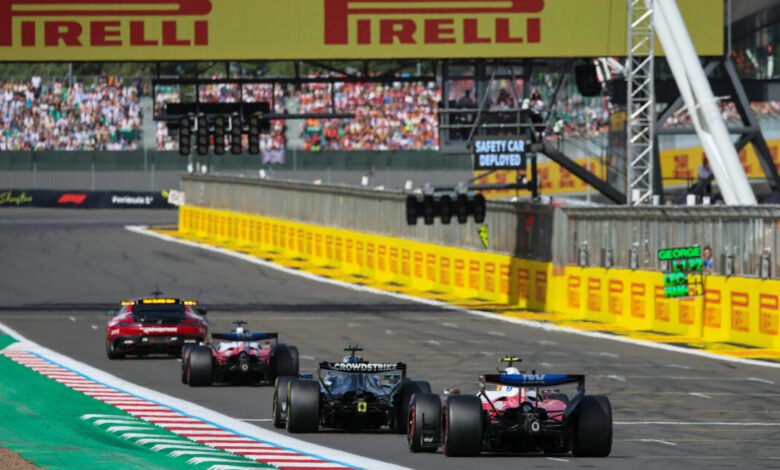
The British Grand Prix, traditionally a highlight of the Formula 1 calendar, concluded under a cloud of confusion this weekend after an erroneous race control message prematurely signaled a late-race restart that never materialized. The incident occurred on lap 48 of the 52-lap event following a safety car deployment. While an on-screen notification informed commentators and fans that racing would resume, the message was later confirmed to have been displayed in error. The mistake transformed what had been a high-stakes tactical battle into a “damp squib” finish behind the safety car.
The Federation Internationale de l’Automobile (FIA) oversees the technical and sporting regulations of the series, where precise communication is critical for both safety and competition. This administrative lapse overshadowed a race that had otherwise been defined by the high-speed volatility of the Silverstone circuit.
Beyond the broadcast error, the race underscored the ongoing reliability struggles facing the season’s fastest machinery. Mechanical failures once again dictated the podium, allowing a victory for a driver whose season desperately required a turnaround. This trend of the fastest car failing to reach the checkered flag first has become a recurring theme this year, shifting the championship’s momentum through attrition rather than pure pace.
Silverstone remains one of the most demanding circuits on the tour. A former World War II airbase, the track is characterized by its flat, windswept topography and high-speed directional changes through corners like Copse, Maggotts, and Becketts. Since its layout was last significantly modified in 2010, the circuit has pushed the limits of modern hybrid power units.
Technical constraints also played a significant role in the weekend’s strategy. During qualifying, cars were restricted to recovering and deploying 6.5 MJ of energy per lap, a limit designed to prevent the “energy starvation” seen at other high-speed venues like Suzuka. This limit was increased to 8 MJ for the main race, allowing drivers to maintain full throttle through the circuit’s most punishing sections without the pathetic sight of cars slowing down before high-speed turns.