Slate Truck: Can 180,000 Reservations Translate to a Modular EV Revolution?
As the $300 non-refundable deposit window opens, the startup faces its "put up or shut up" moment in the burgeoning small electric truck market.
For years, the automotive internet has clamored for a return to basics: a low-cost, utilitarian, and honest pickup truck that prioritizes function over frippery. When Slate announced its vision for a bare-bones electric truck, the response was immediate. By April 2026, the company reported 160,000 individuals had placed a $50 refundable deposit to signal their interest. This week, that number climbed to 180,000. But as the startup moves from concept to production, it is entering the most difficult phase of any vehicle launch: the conversion of digital hype into hard currency.
Slate is now asking its reservation holders to move from a casual interest to a firm commitment. To secure a place in the production queue, those who previously placed a $50 refundable deposit must now add an additional $250, bringing the total to a $300 non-refundable deposit. For newcomers who haven’t yet joined the list, the price of entry is a flat $300 non-refundable deposit. It is a classic industry maneuver designed to weed out the lookie-loos and establish a realistic order book for investors and suppliers.
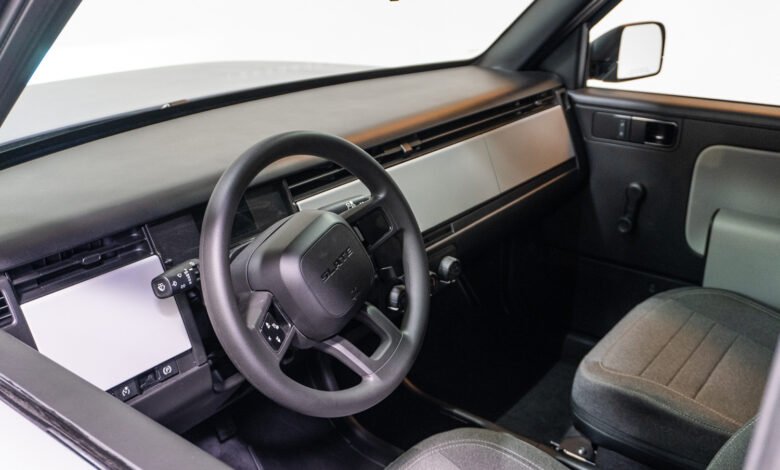
You can see the replaceable dash panels here. Credit: Roberto Baldwin
The clock is ticking for the early adopters. Those holding the original $50 reservations have until July 24, 2026, to lock in their delivery window by upgrading their deposit. Failing to meet this deadline means being pushed further back in the production cycle, a significant risk for a vehicle that has already captured so much public attention. According to the CEO, the strategy is already yielding results; as of 9 am PT on the day of the announcement, over 10,000 preorders had already been converted or placed under the new non-refundable terms.
Slate’s value proposition centers on a radical departure from the current EV trend of “software-defined vehicles.” While the industry has embraced over-the-air updates to improve performance and infotainment, Slate is betting on a hardware-first evolution. The interior features a modular philosophy, highlighted by replaceable dash panels that allow owners to physically modify and upgrade their vehicles over time. It is a vision of a truck that evolves in the driveway through hardware updates rather than just code.
This approach targets the same void that the Ford Maverick successfully exploited when it first arrived. The Maverick proved there was a massive, underserved market for compact, affordable pickups, though its price has famously increased by 40 percent since its debut. While Ford is readying its own small electric pickup, Slate hopes to capture the segment of buyers who want something even more elemental.
However, the road from 180,000 hand-raisers to a sustainable business is fraught with peril. Slate has confirmed an annual production capacity of 150,000 units, with deliveries scheduled to begin in the fourth quarter of 2026. If the conversion rate remains high, the company will have a healthy backlog that justifies its existence well into the future. But there is a historical precedent for caution. The automotive world is littered with “enthusiast darlings”—like manual transmissions and station wagons—that receive endless praise on social media but fail to find enough actual buyers to remain viable.
If Slate can successfully navigate the transition to the fourth quarter of 2026 and begin deliveries, it could redefine the entry-level EV market. If the conversion from $50 fans to $300 owners falters, the company may struggle to survive through 2027. For now, the industry is watching to see if the Slate truck can prove that the internet’s desire for a simple, modular workhorse is more than just a passing trend.