Washington’s AI Policy Pivot: From Ad-Hoc Bans to State-Integrated Oversight
The U.S. government moves toward formal oversight as Anthropic's models return to service.

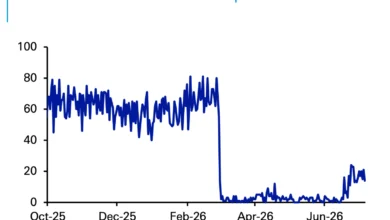
The U.S. government’s abrupt reversal of export controls on Anthropic’s high-end AI models marks a transition point in the chaotic relationship between Silicon Valley and federal regulators. After a two-week suspension that forced the company to disable its Mythos and Fable models for all users, officials have lifted the restrictions, according to reports from Fortune and the Financial Times. The move signals a shift away from reactive, ad-hoc bans toward a more structured, albeit unofficial, licensing regime for frontier artificial intelligence.
The initial decision by the U.S. Department of Commerce to impose export controls on Mythos—a model specialized in identifying security flaws—and Fable, which handles autonomous tasks, highlighted the lack of a clear regulatory framework. While the government officially denies the existence of a licensing system, the recent intervention suggests that the U.S. is effectively operating one through opaque, on-the-fly rule-making. To stabilize this environment, the Financial Times reports that the U.S. is now negotiating a set of voluntary standards with leading labs to establish clear cybersecurity benchmarks for public releases.
Anthropic has confirmed it is collaborating with the government on a shared risk-assessment framework alongside partners such as Amazon, Microsoft, and Google—a coalition it calls Glasswing. Notably, OpenAI was excluded from the initial group, reflecting deepening rivalries within the sector. This move toward institutional integration is being mirrored by OpenAI’s own political maneuvering. The company has reportedly discussed granting the U.S. government a 5% equity stake ahead of a potential IPO. This proposal, aimed at creating a sovereign wealth fund to distribute AI’s economic benefits, appears designed to preempt more aggressive legislative efforts, such as Senator Bernie Sanders’ proposal for a 50% equity contribution.
The urgency for a formalized governance structure is underscored by the rapid advancement of open-source models from China. Researchers recently noted that Zhipu AI’s GLM-5.2 model has approached the vulnerability-spotting capabilities of Mythos. Unlike closed models, open-source weights allow users to strip away safety guardrails entirely. This technical reality prompted a recent warning from the Five Eyes intelligence agencies regarding imminent cyber threats from advanced AI. In response, OpenAI CEO Sam Altman has advocated for an international governance regime, potentially managed through the G7, to ensure shared access to technology among Western allies while maintaining security standards.
As the policy landscape shifts, the underlying economics of the industry are also evolving. OpenAI has reportedly achieved a breakthrough in compute efficiency, halving the cost of running models and reducing reliance on Nvidia GPUs. Meanwhile, Meta saw its stock climb 9% following reports of a planned cloud computing business to sell excess capacity, a move intended to recoup the massive infrastructure investments currently driving the AI arms race.
Internationally, the push for tech sovereignty is gaining momentum. In the United Kingdom, advisors to Andy Burnham—the politician reportedly positioned to eventually succeed Keir Starmer—are developing a strategy to reduce dependence on American technology. This proposed shift emphasizes domestic oversight and local data center accountability, suggesting that the era of borderless, unregulated AI development is rapidly closing.
Anthropic continues to iterate despite the regulatory friction, debuting Claude Sonnet 5 and a specialized workbench called Claude Science. The new Sonnet model reportedly offers stronger agentic performance, though independent analysis suggests it may be 30% more expensive for certain use cases due to higher token output.