Trump Signals Impending US Air Strikes on Iran’s Underground Pickaxe Mountain Nuclear Facility

U.S. President Donald Trump has warned that American forces are preparing to launch heavy strikes against an under-construction underground Iranian nuclear facility known as Pickaxe Mountain, signaling a sharp escalation in the ongoing conflict spanning the Strait of Hormuz.
Speaking alongside Lebanese President Joseph Aoun in the Oval Office, Trump acknowledged that Tehran may have already transferred nuclear centrifuges into the subterranean complex, which is buried at depths designed to withstand conventional aerial bombardment. “We’ll be hitting that area… probably pretty soon. And there’s not a thing they can do about it,” Trump stated, adding that the site would be hit “very heavily.”
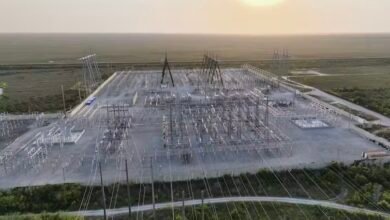
The facility, officially designated Kuh-e Kolang Gaz La—or Pickaxe Mountain—is located roughly 225 kilometers (140 miles) south of Tehran on the southern perimeter of the Natanz nuclear complex. Spanning 2.7 square kilometers in Iran’s arid Central Plateau, the heavily fortified perimeter is protected by surface-to-air missile batteries, perimeter fencing, and units of the Islamic Revolutionary Guard Corps.
Inspectors from the International Atomic Energy Agency have never been granted access to Pickaxe Mountain, leaving international observers reliant on satellite imagery and intelligence assessments. Initial evaluations by nonproliferation experts at the James Martin Center for Nonproliferation Studies indicated that excavation reached depths between 80 and 100 meters (260 to 328 feet). Continued digging suggests the complex may extend even deeper underground.
The extreme depth presents a formidable tactical challenge for U.S. military planners. The American arsenal relies heavily on the GBU-57 Massive Ordnance Penetrator, a 30,000-pound precision-guided bunker-buster engineered to penetrate up to 60 meters (200 feet) of earth before detonating. While defense analysts have discussed deploying multiple GBU-57 munitions in rapid succession on a single point, it remains uncertain whether such strikes could breach the reinforced rock shielding Pickaxe Mountain.
Construction at the site accelerated following repeated acts of sabotage against above-ground infrastructure at Natanz, including an attack attributed to Israel that destroyed a major centrifuge manufacturing plant. During the 2025 twelve-day conflict between Israel and Iran, the United States executed Operation Midnight Hammer, bombing primary Iranian enrichment facilities at Fordo, Isfahan, and Natanz. However, Pickaxe Mountain remained untouched, allowing Iranian engineers to continue underground excavation.
Military experts believe the subterranean complex is sized not only to host cascades of rapidly spinning centrifuges for uranium gas enrichment, but also to serve as a secret manufacturing center for advanced centrifuge components.
The threat against Pickaxe Mountain comes amid widening military engagements across the region. Iranian officials reported that areas surrounding the Russian-built civilian reactor at Bushehr were targeted, alongside a cleared site intended for the planned Darkhovin power plant. The IAEA confirmed no nuclear material was present at Darkhovin during its last inspection. Meanwhile, strikes have also targeted the four-reactor Barakah nuclear plant in the United Arab Emirates.
Political leadership in Tehran remains unsettled following the death of Supreme Leader Ayatollah Ali Khamenei on February 28 during the opening actions of the war. While the elder Khamenei had previously issued a religious fatwa declaring atomic weapons un-Islamic, his son and successor, Mojtaba Khamenei, has not publicly clarified his stance on nuclear armament. Iranian officials have increasingly signaled a willingness to rethink their strategic posture.
Despite the rhetoric, technical barriers to a nuclear warhead remain significant. While Iran had accumulated uranium enriched up to 60% purity prior to the 2025 strikes—close to the 90% threshold required for weapons-grade material—producing an operational weapon requires warhead design, miniaturization, and integration onto ballistic missile re-entry vehicles, a multi-stage engineering challenge that experts estimate would take months or years to complete under heavy foreign surveillance.