Why Auto Dealerships Are Fighting Jiffy Lube for Your Next Oil Change
Shrinking car sales margins compel auto retailers to battle independent quick-lube chains for long-term customer maintenance.
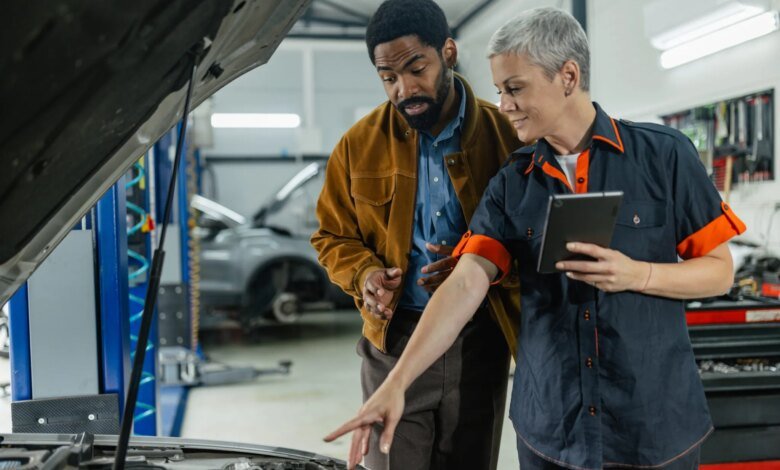
Independent quick-lube shops and big-box retailers are taking maintenance market share away from traditional auto dealers, forcing showrooms across the nation to aggressively fight for routine oil changes and basic repairs to bolster shrinking earnings.
The market conditions that enabled car sellers to collect record profits during the early 2020s—characterized by scarce inventory and minimal price competition—have effectively vanished. With car inventories balancing out against consumer demand and sales competition tightening, profit margins are shrinking, compelling retail operators to pivot toward secondary business lines to safeguard revenue.
That strategic pivot centers heavily on the service drive. To compete directly with fast-lube operations like Jiffy Lube, Meineke, and Walmart, a growing number of franchise dealers are overhauling the customer experience to overcome their long-held reputation for expensive labor and questionable value. The competitive threat is substantial: data from consulting firm Ducker Carlisle shows that 42% of American motorists named an independent repair chain as their primary service provider in 2025, up sharply from 20% in 2020.
Tim Pohanka, executive vice president and chief operating officer of Pohanka Nissan Hyundai, a dealership group in Fredericksburg, Va., told Fortune that narrowing returns on new-car sales have made vehicle maintenance “the biggest opportunity” for dealership groups.
Industry figures back up Pohanka’s assessment. While profit margins on vehicle deliveries have steadily eroded, total service and parts revenue across U.S. franchised dealerships surged 48% over the past five years, topping $164.6 billion last year, according to data from the National Automobile Dealers Association.
In automotive retail, service departments—often referred to as fixed operations—typically generate gross profit margins exceeding 50% to 60%, compared to single-digit or low double-digit margins on new vehicle transactions. High fixed operations absorption rates allow dealerships to cover operational overhead costs strictly through parts and service, effectively insulating the business when car sales slow down.
Car sellers can no longer count on the extreme pricing power and elevated vehicle margins that defined the supply-starved pandemic period. To win back customers from quick-service chains—which dominated simple maintenance by offering flexible scheduling for tire rotations, filter replacements, and oil changes—dealerships are revamping their operational models.
To bridge that gap, Pohanka’s stores introduced express walk-in service and flexible payment plans for repair bills. The dealership group also sends customers a comprehensive video walkthrough of their vehicle inspection to build trust and provide transparency.
Such initiatives aim to maximize the lifetime financial value of every car buyer, generating recurring revenue long after the initial sale is finalized.
This strategy aligns with a broader trend of Americans driving older cars longer, expanding the timeline during which a vehicle requires routine maintenance. Bureau of Transportation Statistics figures show the average age of passenger cars on U.S. roads reached 14.5 years last year, up from 11.5 years a decade earlier.
Pohanka noted that building a reliable stream of recurring maintenance revenue cushions dealership operations against broader industry shocks, including trade tariffs and supply chain disruptions.
Maintaining a continuous relationship through routine service visits also yields advantages when drivers eventually decide to trade in their vehicles. Customers who consistently service their cars at a dealership demonstrate a higher likelihood of purchasing their next vehicle from that same retailer, Pohanka said.
The intense focus on service bays comes as financial pressures on dealership balance sheets continue to build.
During the peak of the pandemic supply squeeze in 2022, average pretax profits per publicly traded dealership soared to $6.8 million, up from $1.9 million in 2018, according to Kerrigan Advisers data reported by CNBC. By 2025, however, average gross profits for public dealership groups had moderated to roughly $3.9 million.
The contraction in car-selling profitability coincides with a broader normalization across the retail automotive sector following historic inventory shortages.
U.S. auto dealers held approximately 2.73 million new vehicles in inventory at the start of August, matching levels from the prior year, according to Cox Automotive. The research firm noted in a recent market report that the supply-demand balance is steadying, signaling an end to the extraordinary seller’s market where low inventory allowed retailers to demand premium pricing.
Even with supply normalizing, vehicle affordability remains a hurdle for buyers. Kelley Blue Book reported that the average new-car listing price stood at $49,249 in late July, while the average transaction price climbed 1.9% year-over-year to $49,855.
With vehicle prices remaining near record levels, Pohanka acknowledged concerns over potential softening in overall vehicle sales volume. High sticker prices also make it harder to convince cost-conscious owners to choose dealership maintenance over cheaper independent garages, even as dealers point to factory-trained technicians, OEM diagnostic software, and specialized tools as justification for higher rates.
Whereas the pandemic market rewarded dealerships that prioritized sales transactions above all else, today’s environment demands a sustained focus on customer retention through service department operations.
With vehicle margins narrowing across the industry, maintaining customer loyalty in the service bay has transitioned from a secondary task into the main line of defense against market volatility. “If you’re not engaged in the service industry, and you’re relying only on sales, then you’re really setting yourself up for a potential problem if something goes wrong,” Pohanka said.