LG Ditching Metal Masks in Breakthrough That Makes OLED Panels Brighter and Cheaper
A photolithography technique called FLiPP promises to scale OLED technology from micro-displays to massive TV screens.
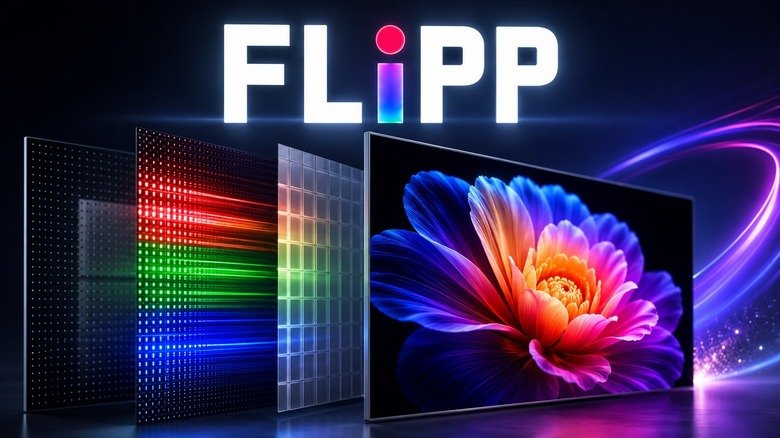
Manufacturing limits on organic light-emitting diode displays are being rewritten after LG created a technique that removes metal stencils from the production line entirely. Known as FLiPP, or FMM-less Innovative Pixel Patterning, the process proves that even established display hardware can undergo sweeping fabrication updates.
Standard OLED production relies on thin metal plates featuring tiny apertures called fine metal masks (FMMs), which guide light to stencil organic LEDs into precise pixel grids. These physical stencils remain expensive and challenging to produce, with larger sheets prone to sagging that misaligns subpixels on TV-sized displays.
The physical sagging of metal masks has long forced display makers to use different manufacturing methods for small mobile screens versus large televisions. By replacing physical masks with optical patterning, manufacturers can streamline production onto unified manufacturing lines rather than maintaining separate architectures for different device scales.
LG addresses these alignment bottlenecks by stenciling RGB pixels directly onto panels in sequential order, using photolithography and UV light to “erase unnecessary areas during OLED pixel patterning,” according to the company. The shift yields panels that operate 1.6 times brighter with a 2.4 times increase in operational lifespan, all while lowering energy consumption by 13 percent. LG added that because the system is “free from panel size and resolution constraints,” it applies equally to VR headsets and expansive living room displays.
During preliminary manufacturing trials, LG produced an OLED laptop display on a single mother glass sheet, achieving up to 64 percent higher glass utilization compared to conventional methods. “As a result, less substrate material is wasted and FLiPP directly translates into higher productivity and lower manufacturing costs,” the company stated.
Although LG has not disclosed a commercial release timeline for FLiPP-equipped devices, the manufacturer confirmed initial deployment will target tablets and monitors. That early phase will lead into a broader rollout designed to “cover a range of products from 1-inch wearable devices to ultra-large TVs… tailoring products to customer needs.”