Taxpayers Foot the Bill as College Sports Budget Explosion Triggers State Subsidies
How state legislatures are indirectly bankrolling student-athlete payrolls by covering stadium debts and administrative costs
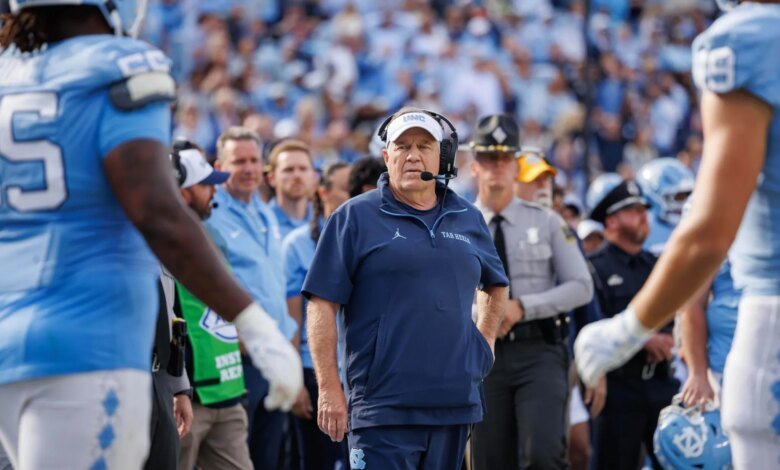
State taxpayers are increasingly footing the bill for college athletic budgets, putting the North Carolina Tar Heels in rare company as they open their football season against Texas Christian University in Dublin. North Carolina’s program joins a select yet expanding group of public athletic departments backed by state tax dollars.
As higher education institutions hustle to assemble million-dollar payrolls for players, several state governments are intervening with unprecedented financial cushions for cash-strapped athletic operations. While public tax receipts do not pass directly into student-athletes’ hands, state subsidies for capital projects and administrative expenses allow universities to redirect internal revenues toward athlete compensation and competing costs.
For the first time in school history, the University of North Carolina at Chapel Hill athletic department is collecting $3 million directly from state sports betting tax revenue. In Wisconsin, state legislators authorized $15 million for athletic spending at the state’s flagship campus, while Connecticut and Louisiana are similarly funneling tax dollars into collegiate athletic departments, with additional state legislatures weighing similar measures.
Industry analysts view these legislative moves as the start of a broader shift across public higher education.
“Once one state provides that kind of assistance, schools in competing states can argue that they are being placed at a competitive disadvantage, which could create additional pressure on legislatures to respond,” said Daniel McIntosh, faculty director of the sports business program at Arizona State University.
Legal decisions drive up university sports spending
Historically, strict NCAA regulations prohibited student-athletes from receiving cash compensation from universities or alumni donors. That structure collapsed under sustained litigation and state legislative pressure, prompting the NCAA in 2021 to allow players to profit from their name, image or likeness (NIL) through third-party deals. A landmark legal settlement last year went further, permitting universities to pay players directly up to roughly $20.5 million annually in addition to athletic scholarships and external NIL income.
The institutional revenue-sharing cap expanded to $21.3 million for the current academic year, with further increases slated for subsequent seasons.
While mid-tier programs frequently struggle to reach those limits, nearly every NCAA Division I program is aggressively hunting for capital to pay athletes and maintain competitive parity. Concurrently, universities face ballooning costs for modern training facilities, head coach contracts, and cross-country travel caused by nation-spanning conference realignments that dismantled traditional regional rivalries.
Athletic department operating expenditures across public Division I universities jumped by almost a third over the last four years, significantly outpacing budget growth and triggering widespread financial deficits, according to an Associated Press analysis of Knight-Newhouse College Athletics Database figures.
Historically, public university athletic departments operated almost exclusively on self-generated revenues—such as broadcasting rights, ticket sales, and booster donations—without requiring operational bailouts from state general funds. The turn toward state tax revenue highlights how profoundly athletic financial models have fractured under modern payroll demands.
Proposed federal legislation could expand spending limits
Senate lawmakers have pitched the Protect College Sports Act as a mechanism to stabilize overall spending across college athletics, though the legislation could ultimately enable institutions to spend even larger sums.
Under its most recent draft, the bill would authorize schools to spend as much as $27.5 million more each year to secure roster talent, elevating total annual compensation caps near $50 million per school. A higher university payment threshold could subsequently lessen reliance on external NIL collective funding.
However, the federal bill does not include any mechanism to curb expanding state support or university-level athletic spending, according to Amy Privette Perko, chief executive of the Knight Commission on Intercollegiate Athletics.
“Without some restraint on the underlying spending competition, additional public funding could simply finance the next stage of the arms race,” McIntosh said.
States leverage tax policy to inject capital into sports programs
When online sports betting debuted in North Carolina in 2024, state leaders directed a portion of tax collections to athletic departments across 13 public campuses, though the state’s flagship schools—the University of North Carolina at Chapel Hill and North Carolina State University—were initially left out.
A state budget revision enacted in July raised sports betting tax rates and added both institutions to the allocation list, positioning UNC-Chapel Hill and NC State to receive $3 million apiece this year and $5.8 million the following year.
Similarly, Louisiana increased its own gaming tax rates, carving out roughly $2.2 million annually for each of its 11 public universities housing Division I football teams.
In Connecticut, legislators approved a scheme allowing the University of Connecticut to distribute state tax credit vouchers worth 50% of qualifying athletic donations, corporate sponsorships, and licensing deals. A university report showed the initiative raised $1.7 million within its first four months.
New Jersey’s current state budget designates $5 million for “events attraction and marketing” at the main campus of Rutgers University, though a campus representative declined to clarify whether those funds will support athletic operations.
Florida’s university system board of governors took a different approach last year by permitting campuses to shift up to $22.5 million from general institution accounts to athletic departments. Florida State University executed a transfer shortly after authorization, with multiple peer institutions adopting the tactic.
State lawmakers frame athletic subsidies as economic investments
Wisconsin’s state budget supplies $14.6 million to pay off athletic facility debts at the University of Wisconsin-Madison, alongside $200,000 allocations for campuses in Milwaukee and Green Bay.
“None of that state funds technically would go toward student athletes,” said Republican state Rep. Alex Dallman, who sponsored the legislation.
By absorbing those infrastructure debt payments, the state enables the university to apply institutional revenue “for other things, such as NIL, or just trying to compete,” noted Dallman, a regular attendee at Wisconsin football games.
That relief strategy highlights how state lawmakers are utilizing indirect funding mechanisms—ranging from tax credit incentives to debt coverage—to effectively insulate public universities from the financial pressures of modern college sports. By taking on baseline operational and facility expenses, state governments are leaving campuses with the unencumbered capital required to keep pace in an increasingly costly national athletic market.