

Moderna Cofounder Robert Langer Reclaims Billionaire Status Following Skin Cancer Trial Breakthrough
A massive stock surge following cancer trial progress doubles the chemical engineer's equity stake past $1 billion.
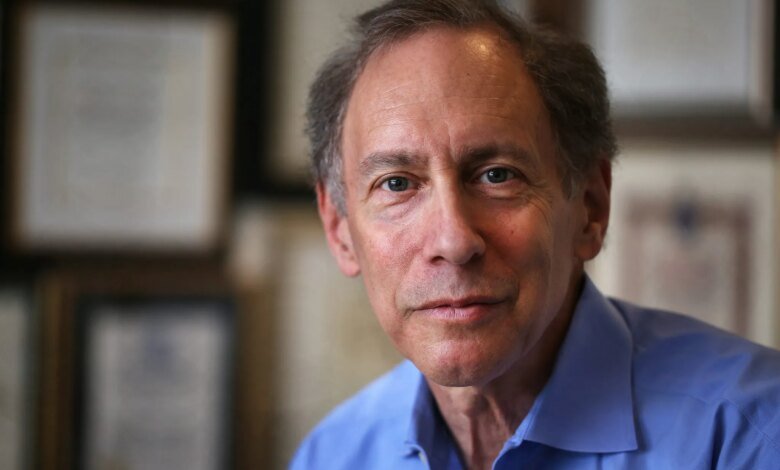
A surge in biotechnology stock driven by positive skin cancer trial results has pushed Moderna cofounder Robert Langer back into the billionaire ranks.
The chemical engineer, widely referred to as the “Edison of Medicine,” watched his holdings in the biotechnology enterprise double, lifting his total personal net worth to approximately $1.7 billion, according to valuation estimates from Forbes.
The rapid wealth accumulation came after Moderna and pharmaceutical partner Merck confirmed Wednesday that their joint mRNA cancer vaccine achieved its primary targets in a Phase 3 trial for melanoma. Shares of Moderna soared by more than 100% following the announcement, driving the value of Langer’s roughly 3% ownership stake past the $1 billion threshold—a dramatic rise from the approximately $730 million recorded on Tuesday.
The clinical milestone for the mRNA-4157 (V940) therapeutic candidate in combination with Keytruda represents a major commercial validation for custom messenger RNA applications outside infectious diseases, demonstrating how cancer immunotherapy advancements can rapidly alter equity valuations for pioneering biotech firms.
This market movement marks Langer’s second entry into the ten-figure net worth category. He originally achieved billionaire status in November 2020 after Moderna disclosed encouraging Phase 3 trial results for its COVID-19 vaccine, with Forbes tracking his net worth to a peak of $4.9 billion in 2021 before biotech stocks fell and removed him from the club.
In early January, when Moderna shares hit a low of $29.81, Langer’s stake was estimated at $343 million. Now back in the ultra-rich club, the 77-year-old cofounder continues to urge young workers to prioritize meaningful work over money and job security.
“What you want is somebody to have a great career and be happy,” Langer said in an interview with Big Think in 2018. “So my advice to students is don’t do what’s going to make you the most money or the most security, but do something that will make you happy, whatever that is.”
Fortune reached out to Moderna for comment.
Langer turned down 20 job offers to chase his dreams—he advises workers not to ‘give up too easily’
Langer’s main piece of advice to young workers is to maintain a “broad and open-minded” approach when evaluating their career options.
The billionaire founder experienced a tumultuous career path, turning down high-paying employment offers and facing professional rejection prior to establishing one of the world’s largest biotech enterprises.
Langer developed his passion for science while studying chemical engineering at Cornell University before obtaining his doctorate at MIT in 1974. Following graduation, the budding biotech pioneer received numerous job offers from oil companies seeking technical talent amid a national gas shortage.
Almost all of his classmates accepted those “very high-paying jobs,” Langer explained, but he was committed to making a different kind of impact. A recruiter noted that raising the yield on a single petrochemical by 0.1% was worth billions of dollars, but Langer was not interested in spending his career boosting oil margins.
“I did get 20 job interviews from these companies, and I got 20 offers too, but I wasn’t very excited about doing that,” Langer said in the Big Think interview. “I just wasn’t excited about the impact that that would have, and I kept looking for ways where I guess I felt I could have more of an impact on the world.”
Even after turning down 20 high-paying job offers, Langer was met with rejection
Choosing to pass on those lucrative energy jobs, Langer accepted a postdoctoral research position in Judah Folkman’s laboratory at Boston Children’s Hospital. During his three years there, he focused on drug delivery mechanisms, creating a polymer matrix system designed to transport large molecules like proteins directly into cells. Because the concept was so novel, the scientific community expressed deep skepticism, leading to nine straight grant rejections and zero faculty job offers from chemical engineering departments worldwide.
“I ended up going into a nutrition department, but the problem there was that the people in that department didn’t think very much of what I was doing, and they basically told me I should start looking for another job,” Langer recounted. “So it was not very pleasant in the beginning. I think if I’d moved away from it, I don’t know what would have happened.”
Langer eventually obtained a faculty role at his alma mater MIT in 1978, going on to construct the world’s largest biomedical engineering lab. His primary commercial breakthrough occurred in 2010 when, in his 60s, he cofounded Moderna, successfully transitioning his academic work into a $56 billion enterprise known for developing an effective mRNA COVID-19 vaccine and advancing melanoma clinical trials.
For the academic researcher turned corporate founder, refusing to abandon unproven scientific concepts despite early professional rejections ultimately turned a late-career venture into a major driver of modern medicine and personal fortune.





One Comment