Wall Street Capital Takes Control of U.S. Soccer as MLS Names Larry Berg Commissioner and Citadel’s Ken Griffin Funds Pochettino Through 2030
Private equity veteran Larry Berg takes over MLS as Citadel founder Ken Griffin finances USMNT coach Mauricio Pochettino's extension.
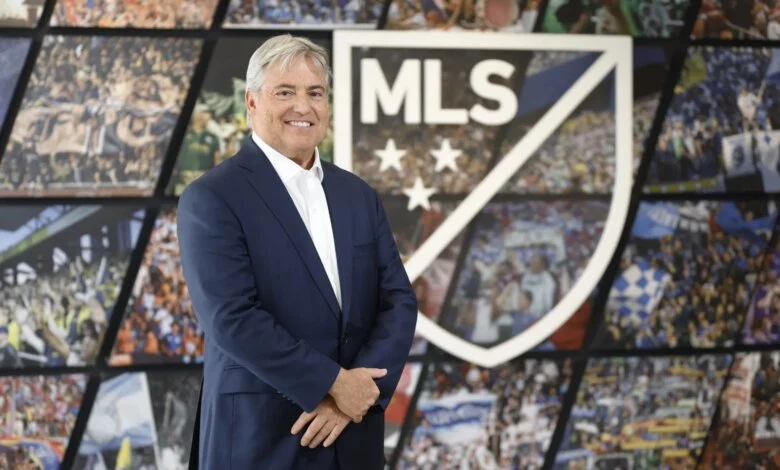
NEW YORK — Private equity and hedge fund capital cemented control over the executive and financial leadership of American soccer on Monday, marked by Major League Soccer appointing private equity veteran Larry Berg as its next commissioner and U.S. Soccer extending men’s national team head coach Mauricio Pochettino through 2030 via funding from Citadel founder Ken Griffin.
Berg, a co-owner of LAFC and a 30-year private equity executive who previously served as senior partner at Apollo Global Management, succeeds long-serving MLS commissioner Don Garber. The appointment places an institutional buy-side executive directly at the helm of North American club soccer ahead of the 2026 FIFA World Cup.
Concurrently, U.S. Soccer confirmed that Mauricio Pochettino will remain head coach of the U.S. Men’s National Team through 2030. The extension was largely financed by a philanthropic leadership gift from Ken Griffin, the founder and CEO of Citadel, alongside contributions from investors Scott Goodwin and Adam Freede. Griffin previously funded the agreement that secured Pochettino in 2024 ahead of the upcoming tournament hosted jointly by the U.S., Canada, and Mexico.
The leadership shift highlights how institutional finance has permeated American soccer from national team coaching to lower-tier commercial development. In April, Major League Soccer formed a 50-50 joint venture with KKR called Hometown Soccer Holdings, valued between $150 million and $200 million, to centralize local commercial rights, venue operations, ticketing, and marketing for MLS NEXT Pro franchises while clubs retain soccer operations.
Speaking at a press conference at Major League Soccer headquarters in New York, Berg cited his background at Apollo Global Management and 26North—the firm backed by Philadelphia 76ers co-owner Josh Harris—as pivotal to his operational approach.
“I do think there’s a lot of characteristics in private equity that apply to other things,” Berg said, pointing to governance, capital allocation, and board experience gained across three decades in private markets.
While traditional private equity funds in North American sports are subject to institutional restrictions—limited to holding maximum 30% non-controlling stakes without governance rights—Berg’s selection gives league owners an administrator deeply familiar with private capital. Bennett Rosenthal, co-founder of Ares Capital Management and co-chair of the search committee, noted Berg brings a broader business mandate to the role.
Columbus Crew owner Jimmy Haslam, who co-chaired the committee alongside Rosenthal, said Berg’s executive work at LAFC and background in private equity gave the 30 franchise owners confidence in his ability to manage complex ownership structures.
Outgoing commissioner Don Garber, who was responsible for expanding the league and recruiting 28 of its 30 current club owners since taking over in 1999, stated that the league’s ownership group has moved beyond early-stage alignment challenges, paving the way for institutional capital structures.
Institutional investment in U.S. sports leagues has accelerated since 2019, when Major League Baseball first allowed institutional funds to purchase minority franchise stakes, followed by the NBA, NHL, Major League Soccer, and the NFL opening its doors to institutional buyers in 2024.