Massive MicroSD Endurance Test Kills 177 Cards—Exposing Big Gaps Between Storage Brands
Independent stress testing of 351 memory cards reveals surprising longevity leaders and unexpected brand failures under relentless write workloads.
TL;DR: Independent stress testing of 351 microSD cards across 52 manufacturers has recorded 177 hardware failures, read-only lockouts, or severe sector verification faults under continuous write cycles. The ongoing experiment demonstrates significant durability differences among major storage brands and card tiers.
Independent researcher Matt Cole launched the experiment in 2023 and recently published his latest findings on Reddit’s r/DataHoarder community. The project evaluates 111 distinct card models. Out of the 351 total units involved, 107 remain actively operational, with an additional 67 awaiting available card reader slots.
Cole engineered the testing rig explicitly to drive memory modules to operational exhaustion. The process does not mimic typical consumer usage patterns inside smartphones, digital cameras, or portable gaming systems. Because cards are cycled continuously until they fail to save or store data reliably, the dataset measures structural resilience under non-stop workload rather than projecting everyday battery or device longevity.
MicroSD storage units rely on NAND flash memory cells, which physically deteriorate as electric charges move through their floating-gate or charge-trap layers during repeated write and erase operations. Unlike modern solid-state drives equipped with advanced wear-leveling controllers, smaller removable flash cards often feature stripped-down firmware that struggles to distribute write loads evenly, accelerating wear when subjected to constant data rewriting.
The project categorizes items into consumer, high-endurance, and industrial tiers. Consumer variants represent standard retail memory units. High-endurance models target hardware subject to frequent overwriting, such as dashcams and security setups. Industrial-grade hardware is crafted for grueling operational conditions and typically comes backed by technical datasheets and formal endurance specifications.
Standard retail cards averaged roughly 10,000 full program/verify/erase routines before breakdown. Across consumer offerings, PNY, Kingston, Delkin Devices, Lexar, and Samsung emerged as the five most durable brand names.
Remarkably, Amazon Basics units have avoided any hardware breakdowns to date. They have logged 788 consecutive days of testing, finishing 16,600 cycles while processing a total of 4.2 petabytes of data. Cole omitted these units from official leaderboard standings because Amazon might modify internal NAND flash hardware or controller components without revising the retail model designation. Any hardware revisions by the distributor would render current test findings unrepresentative of future inventory.
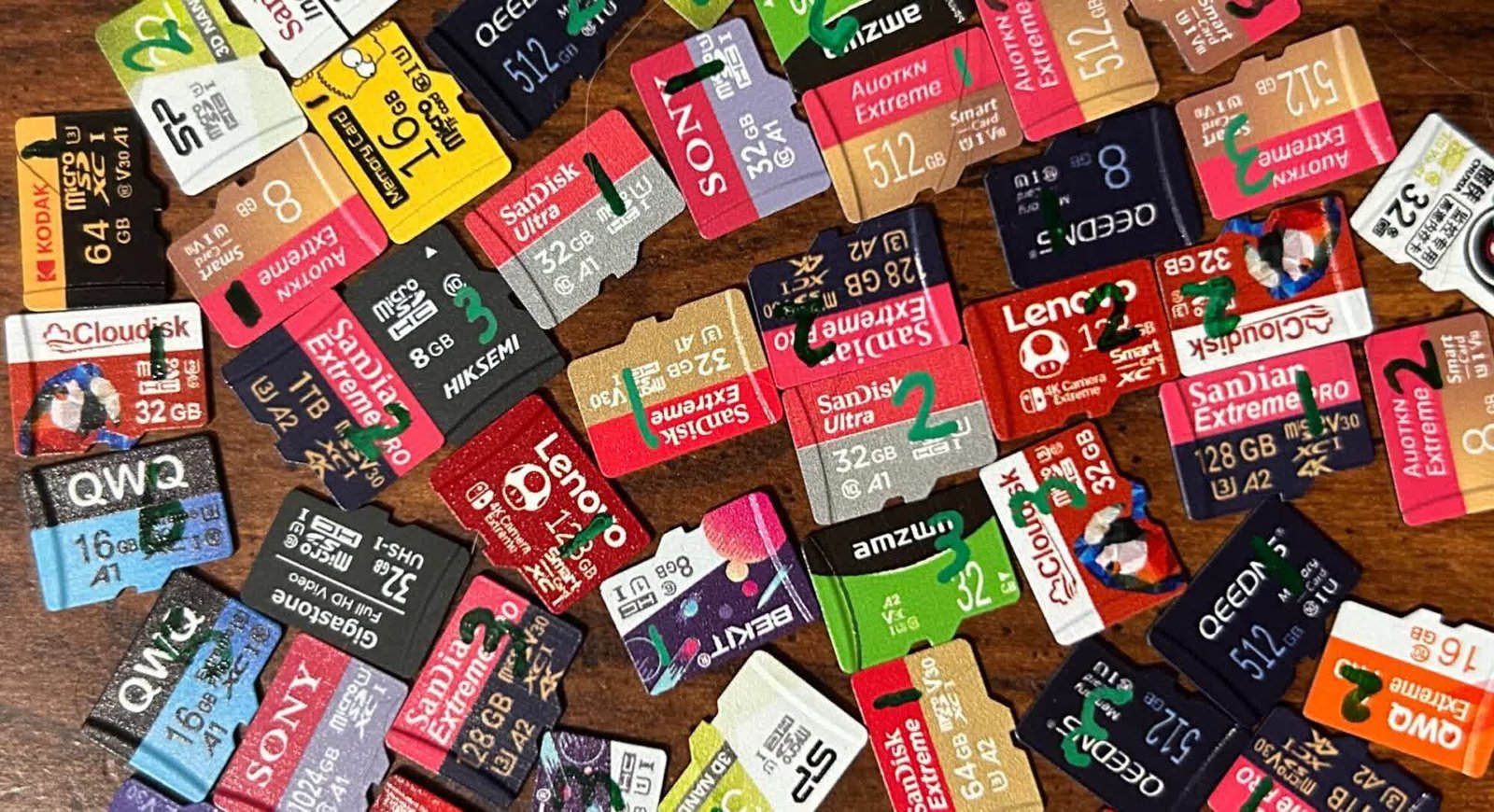
Conversely, the compiled logs reveal disappointing durability figures for several prominent memory suppliers. Cole highlighted ADATA, Gigastone, Micro Center, Silicon Power, and Sandisk among the underperforming labels within their respective categories. Unbranded off-label options were excluded from those comparative listings due to the erratic quality controls typical of generic memory products.
In his preceding project report, Cole had monitored 200 units. An additional 84 cards have succumbed to failure since that baseline. That attrition rate directly stems from the rigorous automated workload rather than typical failure probabilities encountered during everyday consumer operations.
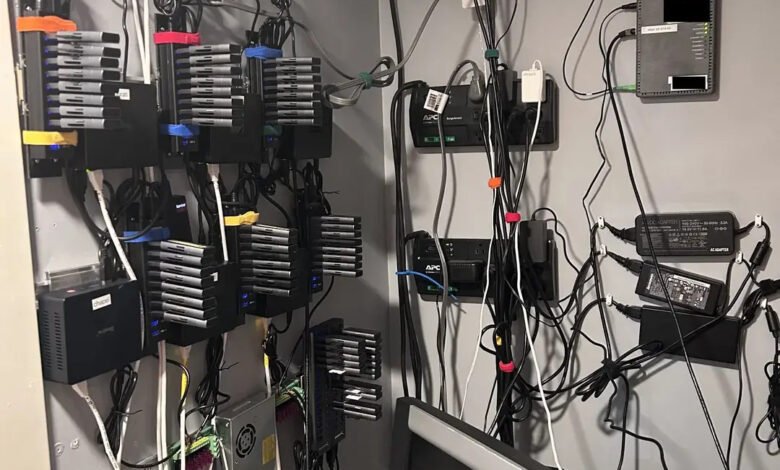
Conducting the experiment demands a broad array of compact desktop computers and legacy gaming notebooks. Cole relies on a Beelink Mini-S powered by an Intel N95 CPU with 8GB RAM and a 500GB SSD; five TRIGKEY Green G4 mini PCs; a TRIGKEY K-N100 featuring an Intel N100 CPU, 16GB RAM and a 500GB SSD; plus an AOOSTAR mini PC configured with an Intel N150 processor, 12GB RAM and a 500GB SSD.
His testing hardware further includes an MSI GE62VR-7RF Apache Pro notebook equipped with an Intel Core i7-7700HQ chip, 32GB RAM and a 1TB SSD; a Lenovo IdeaPad Y850 housing an Intel Core i7-3630QM processor, 8GB RAM and a 1TB SSD; alongside an Asus ROG Strix Hero II GL504GM featuring an Intel Core i7-8750H, 32GB RAM and a 500GB SSD.
The entire hardware setup and card procurement remain largely self-funded by Matt Cole, alongside contributions from community donors. Managing the extensive cluster of host PCs, specialized software scripts, and card readers forms the core operational backbone of the ongoing project, even as fluctuating component prices introduce financial pressure on future card acquisitions.