Runware Launches Modular ‘Sonic Inference Pod’ Data Centers to Decentralize AI Compute
Modular waterless data centers aim to speed up AI inference and bypass traditional grid bottlenecks.
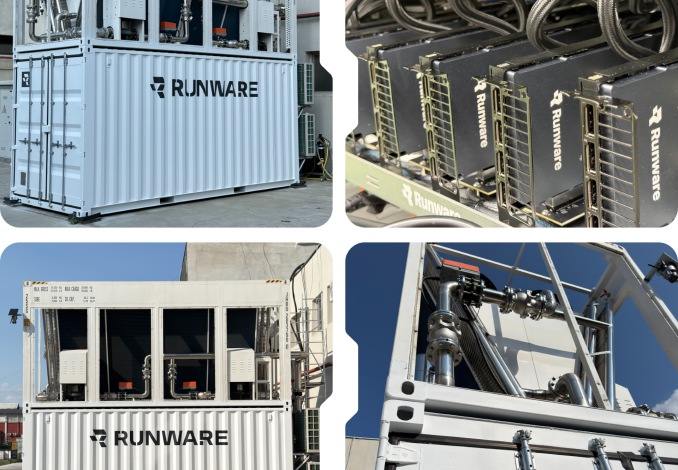
AI infrastructure company Runware on Tuesday launched the Sonic Inference Pod, a transportable, modular data center unit designed to deliver decentralized artificial intelligence compute directly to edge locations without relying on traditional water-cooled facilities or multi-year grid expansion projects.
The move targets the rapidly escalating demand for AI inference—the live execution phase of trained models generating text, images, and media—which accounts for the vast majority of operational AI compute costs. Traditional hyperscale facilities often require years to construct, draw grid-straining electrical loads, and consume millions of gallons of water daily for evaporative cooling. In contrast, the Sonic Inference Pod utilizes a zero-water, closed-loop cooling system that can be assembled in days and deployed anywhere electrical power is accessible, mitigating local utility price spikes that have sparked public pushback against conventional data center builds.
“Demand for inference is growing faster than facilities can be built,” said Flaviu Radulescu, co-founder and CEO of Runware. “What we want is to power the world’s intelligence, to be the backbone every AI model runs on with capacity that keeps up with demand instead of throttling it.”
Runware currently operates 10 pods deployed across the U.S., Europe, and Asia-Pacific regions, with 160 additional sites identified and available to host future pod units. The company already delivers serverless inference infrastructure to clients including Higgsfield AI and Wix. Rather than operating as isolated servers, every pod integrates into a single distributed network, automatically shifting execution requests to nearest available units and providing fault tolerance if an individual pod goes offline.
“We believe distributed compute, positioned closer to end users for faster inference, is what will win in the long term,” Radulescu said, adding that customers seeking dedicated hardware can reserve entire pods exclusively for their workloads.
The rollout follows a $50 million Series A funding round secured in December to expand Runware’s core image-generation and inference services. The capital expansion comes as AI developers like OpenAI and SpaceX continue to pursue massive centralized data center projects, including OpenAI’s potential $500 billion development project in Ohio. Radulescu noted that mega-facility builds do not diminish the need for flexible, localized hardware, highlighting that custom hardware development faces long turnarounds and severe talent shortages.
“A mistake in a circuit board design costs months between redesign, simulation, fabrication, testing and delivery,” Radulescu explained. “Every one of those calls needs someone who understands exactly what each component does and what breaks if it’s gone.”
Addressing environmental concerns surrounding computing expansion, Radulescu emphasized that overall AI power consumption will continue rising driven by application demand rather than infrastructure suppliers. “No transmission losses, no water in cooling, and we’re using power that already exists instead of asking for new grid capacity to be built,” he said. “More inference built this way means less new grid, less water, for the same amount of compute.”