OpenAI Rollout of ChatGPT Health Integrates Personal Medical Records into Daily AI Chats
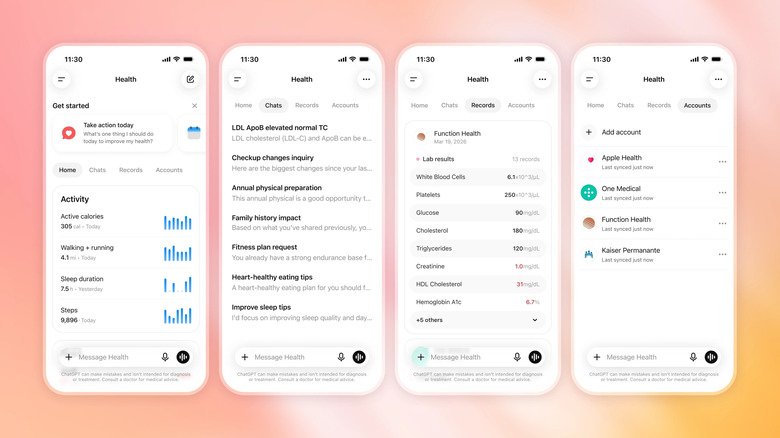
OpenAI has launched ChatGPT Health for adult users across the United States, allowing personal medical histories, laboratory results, and active prescriptions to be referenced directly within standard conversational threads. The feature expands on a initial standalone testing portal launched in January and leverages the company’s GPT-5.6 Sol model to process personal health information.
Through a centralized Health tab inside the application, users aged 18 and older can link their accounts to major electronic health platforms. The system supports integrations with Apple Health via its HealthKit framework, as well as healthcare providers such as Kaiser Permanente and One Medical. Once connected, ChatGPT can review blood tests, physician notes, pre-existing conditions, active medications, and family medical backgrounds to contextually inform user prompts.
The integration of electronic health records into consumer artificial intelligence tools represents an evolving strategy in digital wellness. While traditional patient portals offer static views of diagnostic data, generative AI platforms aim to digest complex medical language, assist users in reviewing appointment outcomes, and identify multi-year physical trends. However, clinical researchers consistently highlight that probabilistic language models lack independent clinical judgment and should not replace professional medical evaluations.
To address data privacy concerns, OpenAI stated that connected health information is strictly separated from model training pipelines. Medical files and personal logs are excluded from foundation model training and will not be used to target advertisements, regardless of account settings. Users can configure granular privacy settings to require explicit permission each time ChatGPT references medical data in a conversation, and connected provider links can be removed at any point.
In the United States, third-party health applications operated by consumer technology companies often fall outside the traditional scope of the Health Insurance Portability and Accountability Act (HIPAA), which primarily regulates covered entities like healthcare providers and insurers. As a result, oversight bodies including the U.S. Department of Health and Human Services monitor how consumer software platforms safeguard sensitive personal health details.
The rollout arrives amidst broader legal challenges for the company. OpenAI is currently facing a lawsuit filed by a pastor who alleges that incorrect medical guidance provided by ChatGPT led him to delay seeking emergency treatment for a pulmonary embolism. The company is also navigating a separate legal dispute with Apple, creating an underlying tension given ChatGPT Health’s technical reliance on Apple’s HealthKit ecosystem.