New Mexico Sues U.S. Justice Department Over Blocked Epstein Sex Crime Files
State Attorney General Raúl Torrez accuses federal prosecutors of obstructing access to evidence from Jeffrey Epstein’s Santa Fe ranch.
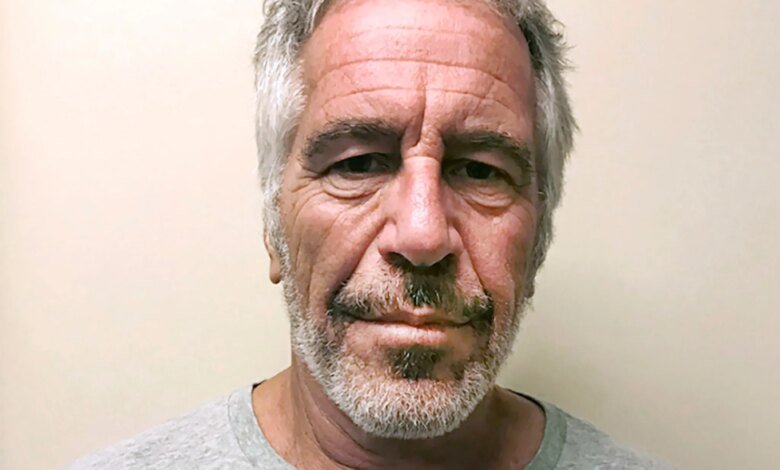
New Mexico’s attorney general launched federal legal proceedings against the U.S. Department of Justice on Wednesday, alleging that federal officials are unlawfully blocking state prosecutors from obtaining files crucial to investigating sex crimes committed at Jeffrey Epstein’s Santa Fe-area estate.
The lawsuit, filed in the U.S. District Court for the District of Columbia, directly names Acting Attorney General Todd Blanche. State prosecutors contend that the Justice Department has repeatedly stymied efforts by New Mexico Attorney General Raúl Torrez to review records tied to Epstein and his co-conspirators, ignoring 10 separate information requests from state investigators.
Addressing reporters during a video conference, Torrez sharply criticized the federal government’s posture toward state authorities.
“We have heard repeatedly they will cooperate and what our team has experienced is anything but cooperation,” Torrez said.
“Todd Blanche today with a stroke of a pen could grant us the access that he claimed,” Torrez said. “Instead they have decided to stonewall, to obstruct and to frankly conceal for whatever reason.”
According to the court filing, federal officials are taking actions that “actively harms victims and undermines the public interest.” State officials argue that New Mexico represents one of the few law enforcement jurisdictions that retains active legal standing to prosecute surviving accomplices and “provide some sense of justice to survivors.”
The legal action coincides with the release of a state investigative report asserting that “those directly responsible for protecting New Mexicans relied on others to do their job,” leaving offenses at Epstein’s ranch unaddressed for years.
“The federal prosecutors, though, never prioritized New Mexicans, focusing instead on Epstein’s misdeeds in New York, Palm Beach, Florida, and the Virgin Islands, while leaving Epstein’s offenses in New Mexico unexamined,” the report said.
The complaint notes that Torrez and senior state prosecutors “have faced sustained resistance” to information-sharing mechanisms that traditionally exist between federal and state law enforcement agencies.
The Department of Justice defended its position, stating that statutory privacy mandates prevent unredacted disclosures. In a statement, the Justice Department said it was not releasing some information the state requested because federal court orders ban disclosing “victim-identifying information carte blanche, and New Mexico has provided no lawful basis to justify such sweeping disclosures.”
The department added that protecting victim privacy remains a top priority, though the Justice Department “remains available to assist New Mexico’s investigation consistent with the law and binding court orders.”
The dispute arises amid ongoing scrutiny of the federal government’s compliance with the Epstein Files Transparency Act, enacted by Congress to force public access to investigative records. Since the Justice Department began publishing files in December, victim advocates and lawmakers have criticized federal authorities for broad redactions, sealed documents, and missing context within released interview transcripts, flight logs, and photographic evidence.
Epstein purchased the hilltop estate in Stanley, New Mexico—a remote ranching town roughly 30 miles south of Santa Fe—from former Democratic Governor Bruce King in 1993. The property was subsequently outfitted with a mansion, private airstrip, and helipad. During the 2021 trial of Epstein’s longtime associate Ghislaine Maxwell, who is serving a 20-year prison sentence following her conviction on federal sex-trafficking charges, witness testimony explicitly described sexual abuse occurring at the New Mexico ranch.
Epstein died by suicide in a Manhattan federal detention facility in August 2019, one month after his arrest on federal sex trafficking charges. The New Mexico ranch was sold by his estate in 2023 to the family of Don Huffines, a former Texas state senator and Texas state comptroller appointee, who renamed the location San Rafael Ranch with plans to convert the property into a Christian retreat.