U.S.-Backed Gaza Peace Roadmap Faces Instant Rejection from Israel and Hamas
Israel refuses pullback, Hamas shuns full disarmament, and Iran pledges continued backing despite Trump's U.S.-backed Board of Peace initiative.

A U.S.-led initiative to disarm Hamas and overhaul Gaza’s governance has stalled immediately after launch, facing explicit rejection from both the Israeli government and Hamas, alongside renewed pledges of Iranian backing for the militant group. Despite U.S. President Donald Trump announcing a roadmap for the full disarmament of all armed groups in Gaza under a newly created Board of Peace, key stakeholders on the ground have refused to comply with its core requirements.
In meetings in Jerusalem, Board of Peace Director-General Nickolay Mladenov and advisor Aryeh Lightstone urged Israeli Prime Minister Benjamin Netanyahu to halt military operations and withdraw forces to a designated “yellow line” boundary. Israel formally rejected the demand shortly after. “Israel will not withdraw from its current line in the Gaza Strip and will continue to thwart any threat to our civilians and soldiers,” an Israeli political official stated, ruling out operational concessions or an immediate troop drawdown.
The U.S. plan is also triggering severe political friction inside Netanyahu’s governing coalition. In an urgent letter reported by Israel’s N12 news outlet on Aug. 3, 2026, Israeli Finance Minister Bezalel Smotrich and Settlements Minister Orit Strock urged Netanyahu to immediately convene the security Cabinet to block international stabilization forces from entering Gaza. The ministers labeled the U.S. roadmap “dangerous to Israel,” objecting to clauses that place surrendered weapons under a new Palestinian body rather than handing them over to the Israeli military or destroying them outright.
The U.S.-backed framework relies on a 15-point roadmap administered by the Board of Peace, chaired by Trump alongside an executive committee including Secretary of State Marco Rubio, special envoy Steve Witkoff, Jared Kushner, and former British Prime Minister Tony Blair. The plan mandates that Hamas hand over civilian administration and local policing duties to a technocratic governing body known as the National Committee for the Administration of Gaza. Heavy weaponry, production facilities, and underground tunnel networks are designated for a multi-stage decommissioning process tied to Israeli military withdrawals. However, economic hurdles remain steep: while The Associated Press reported that the board secured approximately $7 billion in funding pledges by February, international authorities estimate that rebuilding Gaza will require at least $70 billion.
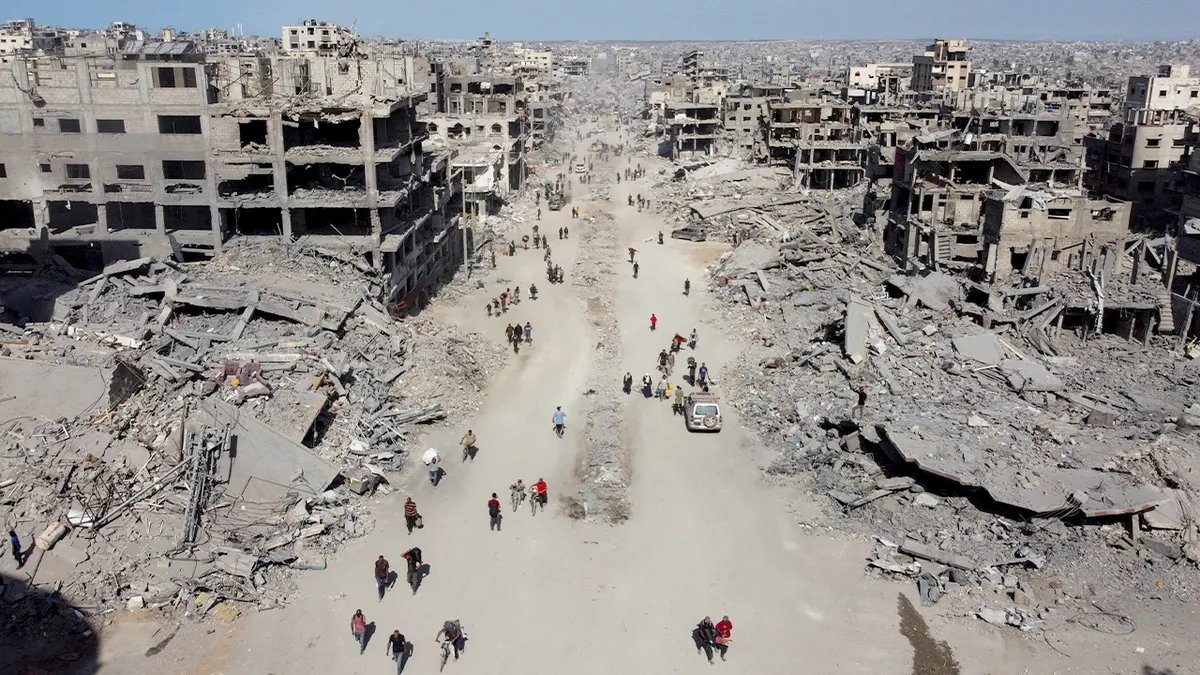
Hamas leadership has firmly rejected surrendering its arsenal to external oversight. The group stated it has only agreed to a conditional weapons storage framework that would take effect only after Israel completely stops military attacks, pulls back its army, and allows unrestricted humanitarian aid into Gaza. Hamas intentionally excluded the word “disarmament” from its public communications, maintaining that all weaponry must remain under Palestinian control.
Concurrently, Iranian President Masoud Pezeshkian held a phone call with Khalil al-Hayya, the newly elected head of Hamas’ political bureau, reinforcing Tehran’s military and political patronage. According to a Hamas statement, Pezeshkian directly pledged Tehran’s support, stating: “We are with you, and we support you in every action you take, despite the attacks we are facing.”

Intelligence and regional analysts view these developments as evidence that Hamas plans to maintain operational continuity under a civilian facade. Michael Milstein, former head of Palestinian affairs for Israeli military intelligence and current director of the Palestinian Studies Centre at Tel Aviv University, stated that pressure from regional mediators Qatar, Turkey, and Egypt has led Hamas to consider yielding daily municipal administration while safeguarding its military capabilities. Milstein noted this mirrors the model utilized by Hezbollah in Lebanon, where a militant organization operates independently alongside a formal government structure. “There is a very, very low chance that Hamas will completely disarm,” Milstein said.
On the ground in Gaza, civilian organizations express profound skepticism that Hamas will willingly yield authority. Moumen al-Natour, a Gazan lawyer and co-founder of the anti-Hamas movement “We Want to Live” who was previously jailed by Hamas, warned that international enforcement mechanisms remain critically understaffed. “Civilian people inside Gaza Strip… want safety, want to stop this war, want a new government, want to be alive,” al-Natour said, adding: “I can’t trust Hamas because I know Hamas.” Al-Natour warned that a deployment of only a few hundred international monitors would fail to prevent Hamas from intimidating local residents, proposing instead that civilians be allowed to relocate to protected administrative zones along the “yellow line” boundary under international protection.

Military activity across Gaza continues to challenge peace negotiations. Following Israeli air strikes in Gaza City on Aug. 2, 2026, and an overnight strike on a medicine warehouse adjacent to displaced persons’ tents in Deir al-Balah on Aug. 1, 2026, Mladenov publicly condemned the escalating violence. Writing on social media platform X, Mladenov noted that “two days of strikes across Gaza have killed civilians and destroyed medical supplies,” confirming he is coordinating with regional mediators to restore operational conditions necessary to advance the diplomatic plan.

A spokesperson for the Board of Peace reiterated that the administration intends to enforce the roadmap despite operational friction. “We are focused on implementation,” the official said. “We have provided a pragmatic path forward to transform Gaza by removing Hamas from power and seeing it hand over its weapons. These steps would undoubtedly allow for the improvement of life in Gaza and enhancement of security in Israel. We remain determined to advance these objectives.”