Germany and UK Confront Rising Concerns Over Organized Sexual Exploitation and Grooming Networks
New German crime figures and UK inquiries highlight the complex intersection of migration, integration, and organized abuse.
A series of newly released crime figures in Germany and an expanding investigation into the exploitation of teenage girls in Nuremberg have reignited a fierce pan-European debate over migration, social integration, and the perceived reluctance of authorities to address organized sexual abuse.
According to data provided by the German federal government in response to a parliamentary inquiry from the Alternative für Deutschland party, Germany recorded 751 cases categorized as group rapes in 2025. The figures were compiled through a process where opposition lawmakers in the Bundestag use formal questions to scrutinize federal policy—a standard mechanism of oversight in the German parliamentary system.
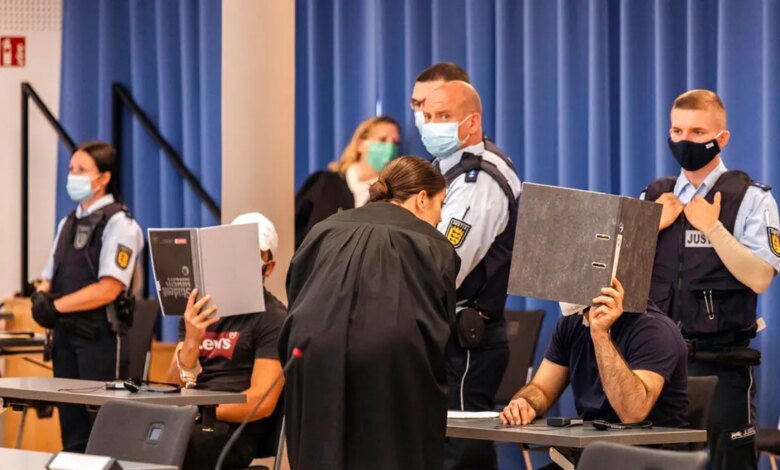
Two defendants hold folders in front of their faces while a defense attorney talks to one of them at a trial in Freiburg, Germany, July 23, 2020. (Philipp von Ditfurth/dpa via AP)
Police identified a total of 1,087 suspects in connection with these cases. Of those, 509 were German citizens and 578 were non-German nationals. Among the foreign suspects, Syrians represented the largest group with 110 individuals, followed by 64 Afghans, 46 Iraqis, and 44 Turks. Federal officials noted that “group rape” is not a standalone criminal offense under the German penal code; rather, these figures represent a filtered subset of rape cases where multiple suspects were identified during the investigative phase.
The Nuremberg ‘EKO Kajal’ Investigation
The statistical release coincides with an intensifying probe in Nuremberg, where Bavarian police are dismantling a suspected network that targeted vulnerable girls near the city’s central railway station. The investigation, codenamed EKO Kajal, suggests a predatory model where men approached teenagers from unstable backgrounds, initially offering small gifts such as clothing, cosmetics, or attention.
Investigators allege the grooming process escalated into the distribution of hard drugs, including crystal meth. This induced dependency was then allegedly exploited to coerce the victims into sexual acts. As of Tuesday, 10 suspects remain in pretrial detention. Recent arrests include a 21-year-old Syrian man accused of raping two girls, aged 15 and 18, in a Nuremberg apartment after they were allegedly drugged by a 40-year-old Syrian accomplice. These cases remain under investigation and have not yet been adjudicated.
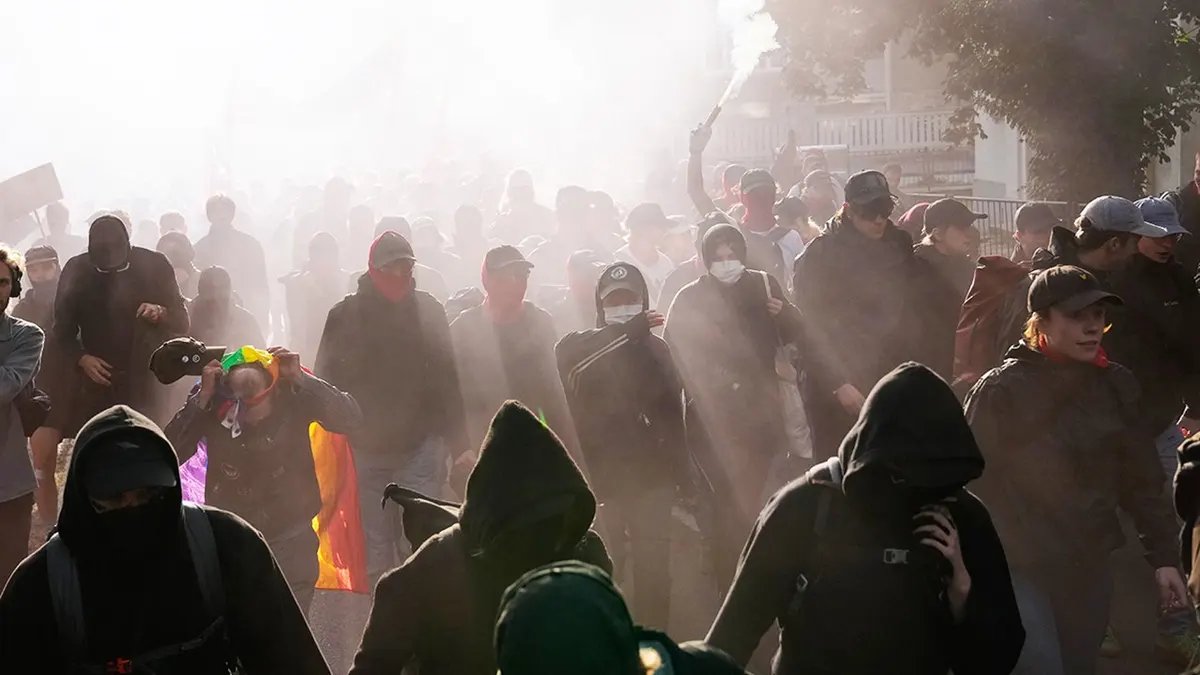
Protesters gather before a party convention of Alternative for Germany, or AfD in Erfurt, Germany, July 4, 2026. (Ebrahim Noroozi/The Associated Press )
Parallels with the British Grooming Scandal
The tactics reported in Nuremberg have drawn direct comparisons to the “grooming gang” phenomenon that has plagued the United Kingdom for decades. Emma Schubart, a research fellow at the London-based Henry Jackson Society, told Fox News Digital that the patterns of plying victims with alcohol and drugs before group abuse are strikingly similar.
“It’s a severe failure in both countries,” Schubart said, pointing to what she described as a lack of effective screening and integration for migrants. She argued that the isolation of certain immigrant communities can lead to “ghettoization,” allowing criminal networks to operate with minimal oversight. Schubart further contended that while socioeconomic factors are relevant, they do not fully account for the statistical disparities in group sexual offending between different demographic groups.

A supporter wearing a plastic policeman’s helmet and holding fake money criticizes the way the police dealt with the grooming gang scandal on Jan. 29, 2022, in Telford, England. (Martin Pope/Getty Images)
The UK is currently navigating its own bombshell inquiry which detailed alleged child sex exploitation across 149 local authority areas, with an estimated 250,000 victims nationwide. This follows years of high-profile scandals in towns like Rotherham, Rochdale, and Telford, where official reviews found that social workers and police often ignored evidence of systematic abuse.
A national audit published in June 2025 by Baroness Louise Casey concluded that inconsistent data collection and a failure to record ethnicity made it difficult to grasp the full national scale. However, the audit did find a disproportionate representation of Pakistani-heritage suspects in specific local datasets, while cautioning against applying those findings to the entire country. Schubart suggested that a desire to protect “community relations” has historically hindered transparent discussion regarding the backgrounds of offenders.
Conflicting Data and Social Contributions
Despite the focus on crime statistics, other data suggests a more complex relationship between migration and public safety. In February 2025, the ifo Institute reported that an analysis of German district-level data from 2018 to 2023 showed no direct correlation between an increasing foreign population and local crime rates. Researcher Jean-Victor Alipour noted that differences in suspect rates are often influenced by demographic variables such as age, sex, and urban concentration rather than nationality alone.
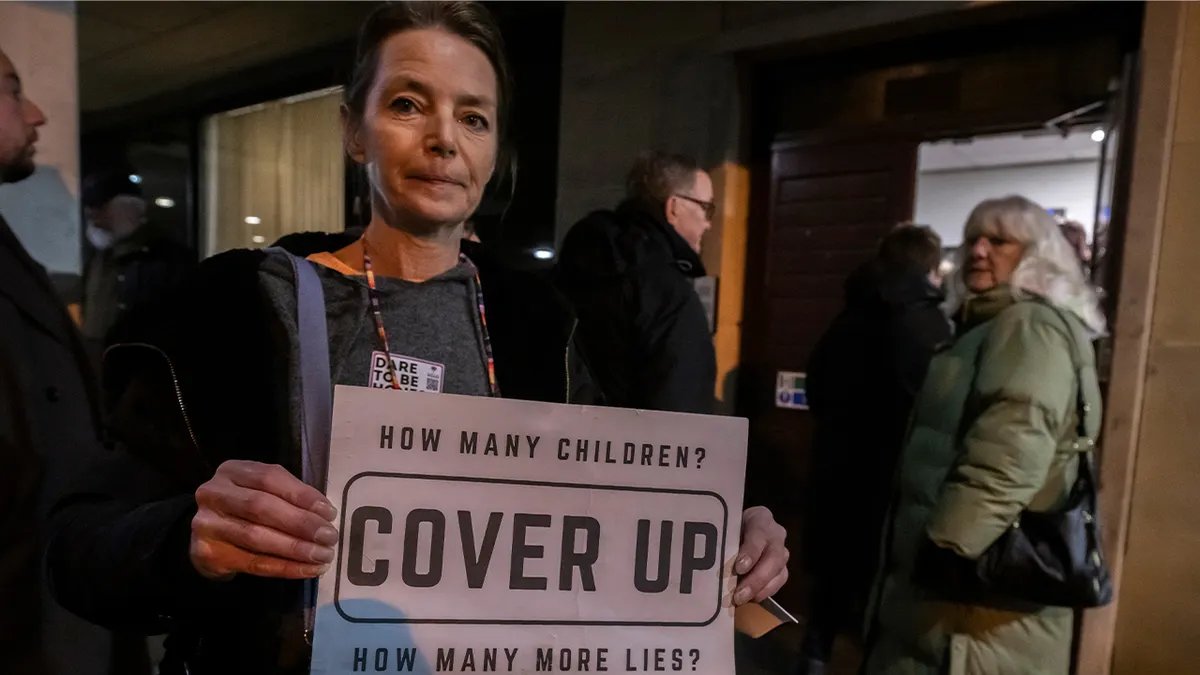
A woman poses with a sign as members of the public queue to enter a council meeting during a protest calling for justice for victims of sexual abuse and grooming gangs, outside the council offices at City Centre on Jan. 20, 2025, in Oldham, England. (Anthony Devlin/Getty Images)
Furthermore, the German Medical Association highlighted the significant professional contributions of the Syrian community. By the end of 2025, 7,959 Syrian citizens were practicing as physicians in Germany, making them the largest group of foreign doctors in a country facing critical labor shortages in the healthcare sector.
European governments now face the dual challenge of aggressively investigating organized exploitation networks and addressing demographic crime patterns without stigmatizing the millions of immigrants who contribute to the continent’s economy and social fabric.