UK Bans Iran’s IRGC and Russian Proxy Groups Under Tough New Sabotage Laws
Sweeping new powers target Tehran and Moscow-backed proxy networks following London arson attacks.
The British government has launched a sweeping legal crackdown on foreign-backed hostile operations, banning Iran’s powerful Islamic Revolutionary Guard Corps and a Russian military intelligence proxy following a series of antisemitic arson attacks targeting Jewish community sites in London.
Under the newly enacted National Security (State Threats) Act 2026, British authorities will wield significantly expanded powers to prosecute individuals acting on behalf of hostile states. If Parliament approves the designations later this week, anyone convicted of carrying out sabotage or arson on behalf of the banned organizations could face life imprisonment, while those found supporting or assisting them could be sentenced to up to 14 years in prison.
A key target of the new measures is the Islamic Movement of the Companions of the Right (IMCR), an Iran-linked proxy group that British officials say has publicly claimed responsibility for seven attacks this year. These incidents targeted British Jewish and Israeli-linked locations, as well as a Persian-language media outlet critical of the clerical regime in Tehran. British intelligence assessments indicate that members of the IRGC’s elite Qods Force were “almost certainly” directing the group’s operations across Europe, which also included attacks on synagogues in Belgium and the Netherlands.
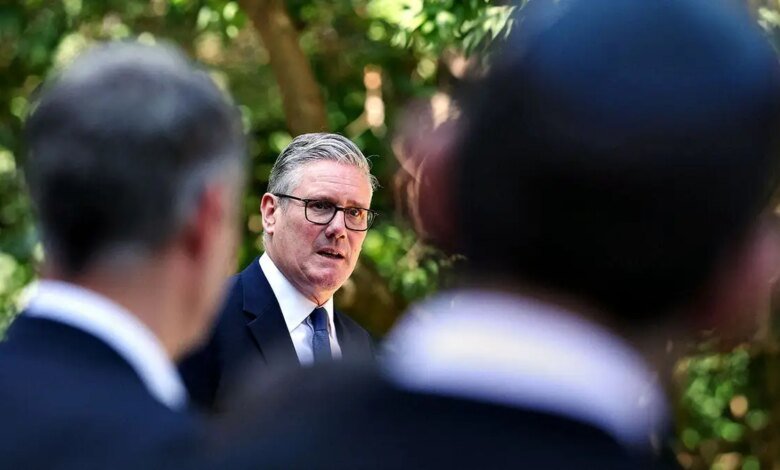
Britain’s Prime Minister Keir Starmer hosts a reception with the Jewish community to discuss efforts to tackle antisemitism, at Downing Street, in London, July 13, 2026. (Reuters/Suzanne Plunkett/Pool)
The arson campaign in London targeted synagogues, Jewish community sites, and emergency vehicles. Among the targets were ambulances belonging to Hatzola, a Jewish community medical response organization, which were set ablaze in north London. While no injuries were reported in the attacks, the incidents have heightened anxieties within Britain’s Jewish community amid a broader rise in antisemitic hate crimes.
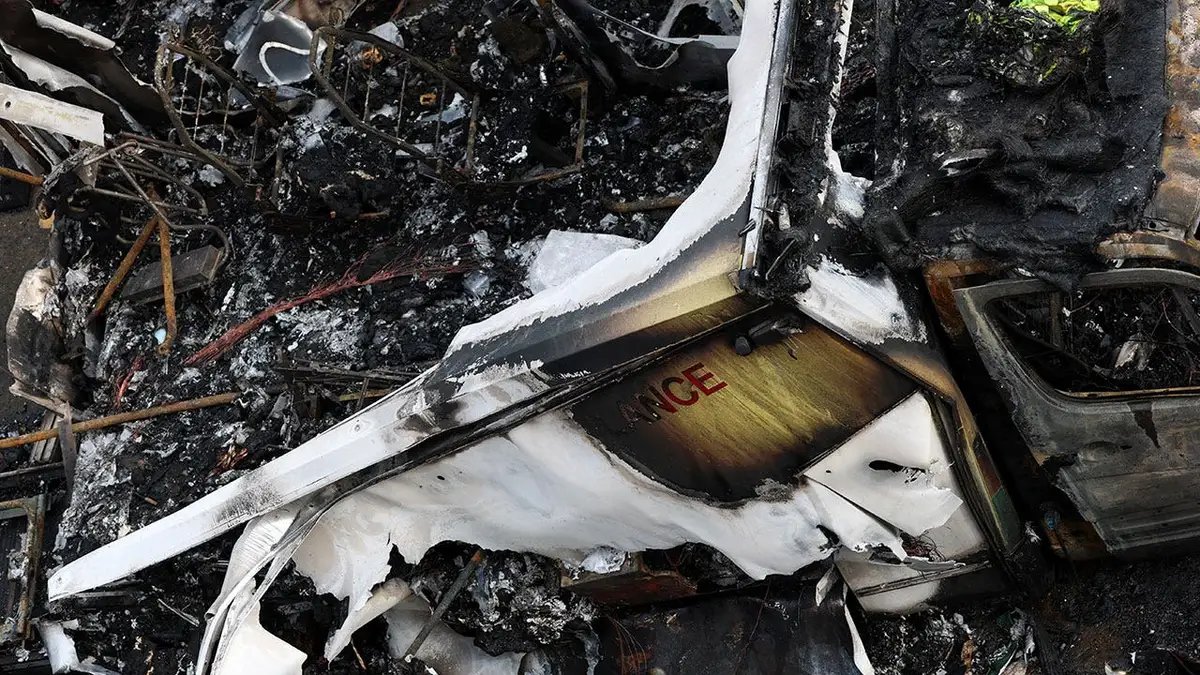
Charred remains of ambulances belonging to Hatzola, a Jewish community organization, which were set on fire in an incident that the police say is being treated as an antisemitic hate crime, in London, March 23, 2026. (Hannah McKay/Reuters)
Prime Minister Keir Starmer emphasized that the UK would not tolerate foreign states exporting violence to British soil.
“We will never let Britain be a playground for states who want to spread fear, division and violence on our streets,” Starmer said. “Anyone acting on behalf of those who threaten our national security should be in no doubt that there is no place for you in Britain.”
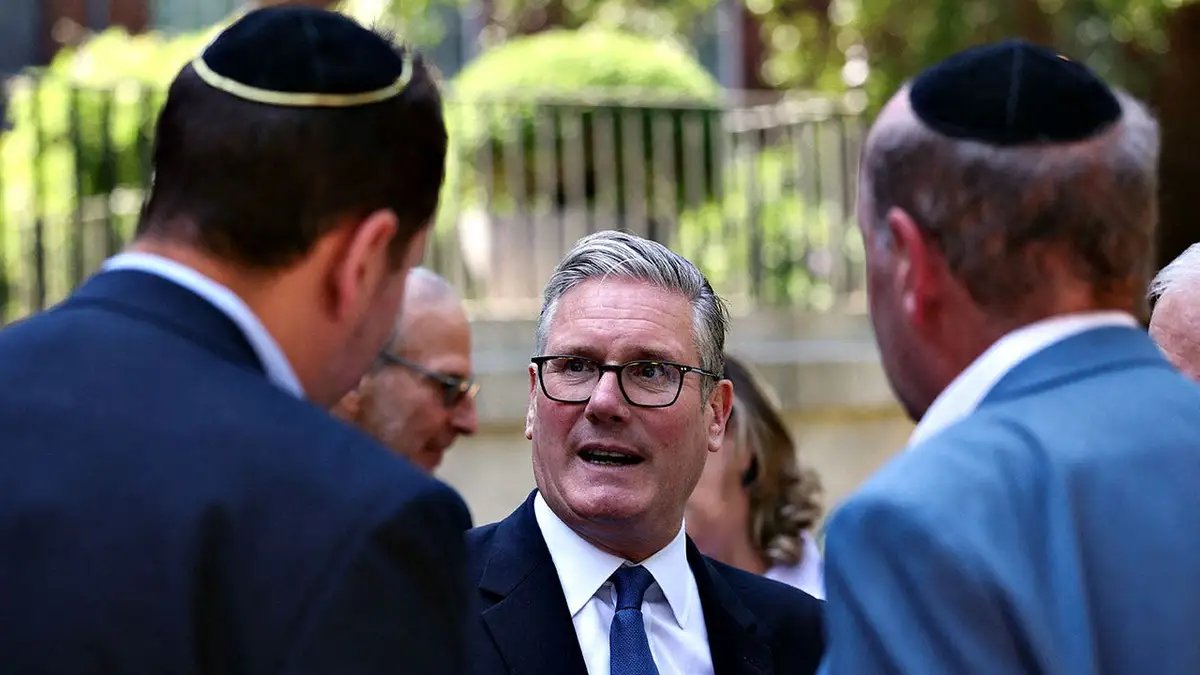
Britain’s Prime Minister Keir Starmer discusses efforts to tackle antisemitism at Downing Street in London, Monday, July 13, 2026. (Suzanne Plunkett/Pool Photo via AP)
The legislative shift under the National Security (State Threats) Act 2026 is designed to bypass previous legal hurdles. Historically, prosecuting state-sponsored sabotage required proving a direct, unbroken chain of command to a foreign government—a high bar in cases involving decentralized proxy networks. The new framework allows prosecutors to secure convictions without having to prove a direct foreign government connection in every case, reflecting the evolving nature of modern “grey-zone” warfare.
Home Secretary Shabana Mahmood accused both Tehran and Moscow of outsourcing hostile operations to criminal syndicates and local street gangs to maintain plausible deniability.
“Iran and Russia are using proxies and thugs to do their dirty work on our shores,” Mahmood said. “I have rapidly designated three groups so those working for them will be tracked down and put behind bars.”
Alongside the Iranian entities, the UK has designated Russia’s GRU Volunteer Corps. According to British officials, the group acts as a proxy for Russian military intelligence, utilizing online recruitment platforms to hire individuals to conduct sabotage, arson, and other hostile operations across Europe.
The move comes amid growing alarm over state-sponsored operations in the UK. According to government figures, the domestic security service MI5 has identified at least 20 potentially lethal Iran-backed plots targeting individuals in Britain over the past year alone. This includes a high-profile incident where two Romanian men were sentenced to prison for the stabbing of a journalist working for a Persian-language television station in London—an assault that a British judge concluded was orchestrated on behalf of the Iranian state.
In response to the rising threat landscape, the British government has already sanctioned more than 550 Iranian-linked individuals and entities. Additionally, officials have pledged £250 million ($334,662,500) over three years to bolster security for Jewish communities, funding enhanced physical protection for synagogues, schools, and community centers.
Iran did not immediately comment on Monday’s announcement.