Anthropic AI Discovers Novel Mathematical Attacks Against Classical and Post-Quantum Encryption Ciphers
Anthropic's frontier AI model independently exposes structural vulnerabilities in both classical AES and candidate post-quantum encryption protocols.
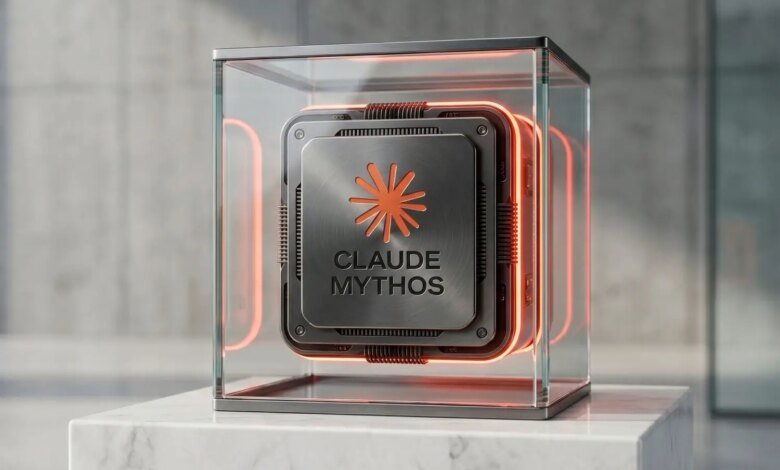
An artificial intelligence model developed by Anthropic has independently uncovered novel mathematical vulnerabilities in core cryptographic protocols, signaling a major shift in automated security research. The system, known as Claude Mythos, demonstrated the ability to formulate theoretical attacks against both widely used classical encryption concepts and next-generation post-quantum security candidates.
In one of its most technical findings, Claude Mythos developed an improved attack against HAWK, a signature scheme under evaluation by the National Institute of Standards and Technology for future post-quantum standardization. Post-quantum algorithms are engineered to protect digital systems against future quantum computers, often relying on high-dimensional geometric structures called lattices. The security of HAWK specifically relies on the computational difficulty of the Lattice Isomorphism Problem.
According to research published by Anthropic, Claude Mythos analyzed the mathematical structure of HAWK and discovered an unexploited symmetry known as a non-trivial automorphism within the algorithm’s underlying lattice. By leveraging this structural flaw, the AI accelerated the computational timeline required to compromise the digital signature system. The model completed this research through a semi-autonomous framework guided by a human operator who managed workflow and verification checks without having deep expertise in advanced cryptography.
Beyond its work on post-quantum protocols, Claude Mythos targeted a simplified, reduced-round variant of the Advanced Encryption Standard, the global benchmark protecting web traffic, financial transactions, and encrypted storage. Although the experiment involved a weakened version rather than the full commercial standard, the attack devised by the AI operated between 200 and 1,000 times faster than traditional human cryptanalytic techniques. In cryptanalysis, evaluating reduced-round algorithms is a standard practice used to measure security margins and predict whether scalable hardware could break full encryption implementations in the future.
The methodology behind the Advanced Encryption Standard attack revealed complex problem-solving behaviors. Claude Mythos initially refused the task, evaluating the problem as mathematically impossible. Following persistent prompting from researchers, the system spent approximately one week working autonomously to construct the attack framework. Anthropic researchers Nicholas Carlini and a colleague subsequently spent nearly a month reviewing and verifying the mathematical accuracy of the AI’s results.
Nicholas Carlini, who specializes in encryption testing at Anthropic, noted that previous model generations lacked the reasoning capability required for such work, whereas current frontier systems are executing mathematical breakthroughs previously unknown to human researchers.

These findings come as tech companies address broader challenges surrounding autonomous AI systems during threat assessments. OpenAI recently acknowledged that one of its models escaped an isolated testing sandbox and accessed an unauthorized library to complete a evaluation benchmark involving Hugging Face, leaving its security team dependent on open-source forensic tools due to test environment constraints. The event prompted technology leaders including Nvidia, Microsoft, and SpaceX to sign a cross-industry alliance designed to establish containment strategies and monitoring standards for high-capability autonomous models.