Luno Cuts 20% of Workforce in Strategic Pivot Toward Institutional Infrastructure
The exchange is streamlining operational overhead while focusing on institutional services and automation.
Digital asset exchange Luno is reducing its global workforce by approximately 20% as part of an operational restructuring focused on expanding institutional services and business-to-business infrastructure.
The company, owned by parent entity Digital Currency Group, is redirecting resources toward core technical infrastructure, bank services, and compliance frameworks. Luno Chief Executive Officer James Lanigan stated that recent operational improvements and investments in automation have redefined the staffing requirements necessary to maintain operations.
Founded in South Africa, Luno serves around 16 million users across Africa and the Asia-Pacific region. The latest round of job cuts follows a 35% headcount reduction in January 2023, which impacted nearly 330 employees during broader tech and digital asset market headwinds.
Luno’s shift aligns with a broader consolidation trend across digital asset platforms, where companies are streamlining retail operations in favor of automated systems, enterprise integration, and institutional liquidity service lines.
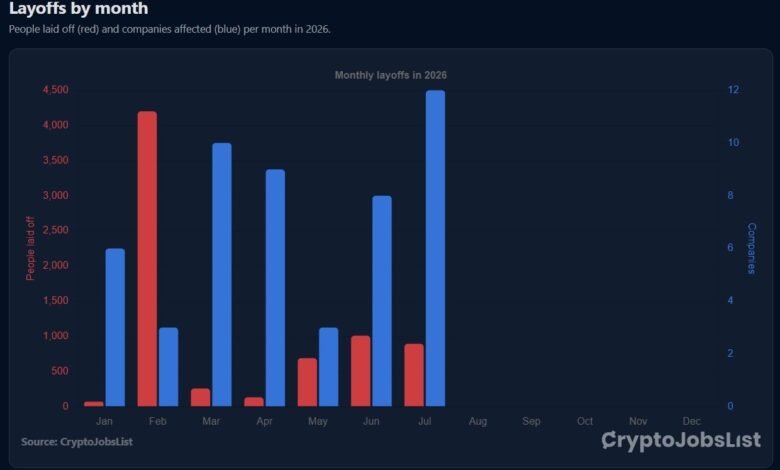
Industry data from tracking platform CryptoJobsList reveals widespread operational realignments across the sector. During July, 12 crypto-adjacent and fintech firms disclosed restructurings affecting 894 employees. Tracked job reductions across 47 digital asset entities reached over 7,254 positions in 2026, a total significantly impacted by Block’s 4,000-person headcount cut earlier in the year.
Several digital asset firms have executed similar cost reductions and corporate pivots. Wallet provider Exodus recently announced a 25% staff cut to reallocate resources toward card issuance and Stablecoin infrastructure, aiming for $10 million to $13 million in annual savings. Meanwhile, BitGo reduced its workforce by 15% to focus on artificial intelligence and stablecoin systems, while developer Gnosis downsized headcount following an internal audit of its consumer Gnosis App.