Fauci Invokes Fifth Amendment 111 Times in Senate Hearing Amid Fresh Debate Over Lockdown Efficacy
The former COVID czar refused to answer questions as critics highlight research pointing to the high economic cost and low efficacy of pandemic lockdowns.
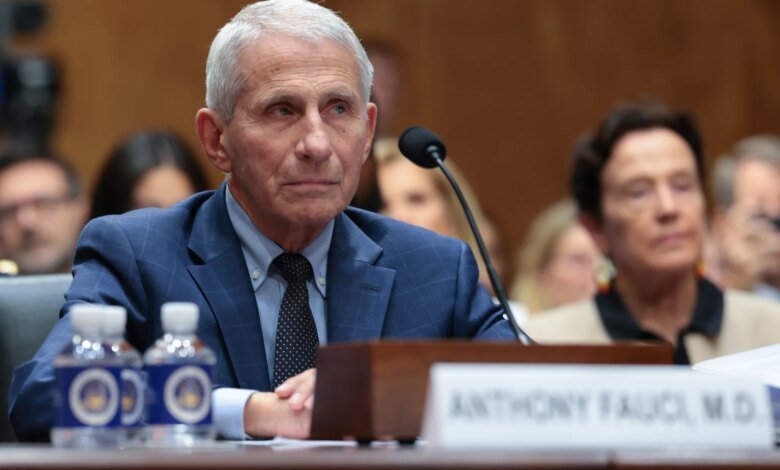
Former white house chief medical advisor Dr. Anthony Fauci faced intense scrutiny during a recent appearance before the U.S. Senate Homeland Security and Government Affairs Committee, refusing to answer questions 111 times by invoking his Fifth Amendment rights. This high-profile standoff follows the public release of Fauci’s personal diaries by Senator Rand Paul, reigniting the fierce national debate over the government’s pandemic-era policies.
Under the U.S. Constitution, the Fifth Amendment protects individuals from self-incrimination, a legal safeguard Fauci relied upon heavily during the session. The silence of the former director of the National Institute of Allergy and Infectious Diseases stood in stark contrast to his highly visible role as the chief architect of the U.S. pandemic response, which heavily promoted sweeping business closures, school shutdowns, and strict social distancing mandates.
The hearing came shortly after Senator Rand Paul, a long-standing critic of the federal pandemic response, made Fauci’s private diaries public. Critics argue the entries reveal an official highly focused on public relations and neutralizing dissenting opinions. Among those dissenters are academic researchers who argue their scientific evaluations of the government’s pandemic policies were systematically suppressed by a coordinated network of federal officials and media platforms.
A major point of contention remains the actual efficacy of the lockdowns. A comprehensive scientific meta-analysis co-authored by Johns Hopkins University applied economics professor Steve Hanke, alongside Danish researcher Jonas Herby and Swedish economist Lars Jonung, sought to quantify the real-world impact of these policies. The researchers screened 19,646 potential studies, ultimately identifying 22 rigorous, standardized papers suitable for high-quality meta-analysis.
The findings, published in a book by the Institute of Economic Affairs in London and in the peer-reviewed journal Public Choice, concluded that lockdowns had a negligible effect on COVID-19 mortality. The study estimated that the mandates saved between 4,000 and 16,000 lives in the United States, and between 6,000 and 23,000 lives in Europe. By comparison, a typical flu season claims roughly 38,000 lives in the U.S. and 72,000 in Europe. The researchers concluded that the marginal benefits of lockdowns were vastly outweighed by their immense economic and social costs, calling the policies a historic public policy failure.
Following the dissemination of their work, the authors experienced significant institutional pushback. They reported direct censorship on the Social Science Research Network, a major academic repository managed by the Netherlands-based publisher Elsevier, alongside coordinated campaigns by media fact-checkers designed to discredit their peer-reviewed findings.