Waymo Robotaxis Record 68 Percent Fewer Crashes Than Human Drivers in Independent IIHS Study
An IIHS analysis of 50 million autonomous miles finds significant crash reductions on city streets despite night-vision anomalies and regional variances.
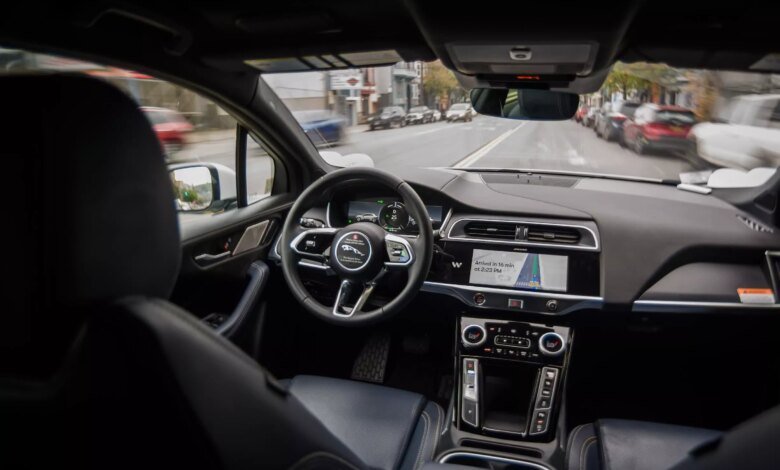
An independent safety evaluation by the Insurance Institute for Highway Safety (IIHS) reveals that Waymo‘s autonomous driverless fleet experiences significantly fewer serious collisions than human motorists, providing empirical backing to the company’s long-standing safety claims.
Analyzing federal crash data from 2021 through 2024, IIHS researchers examined approximately 50 million autonomous miles accumulated by Waymo vehicles. The analysis demonstrated that the driverless fleet recorded 1.28 police-reportable crashes per million miles traveled, compared to an average baseline of 4.06 crashes per million miles for human drivers, reflecting a 68 percent reduction in comparable collision rates.
To construct an equitable benchmark, researchers adjusted for key reporting asymmetries between commercial autonomous vehicle operators and human motorists. While federal oversight bodies—such as the National Highway Traffic Safety Administration—mandate that self-driving developers document minor low-speed contact events, human drivers frequently omit reporting minor fender benders. The IIHS accounted for this by filtering out minor incidents, isolating collisions severe enough to generate an official police crash report.
The evaluation focuses on Level 4 autonomous technology, an industry standard defined by SAE International where a system manages all driving functions within specific geofenced operating domains without human supervision. Waymo currently operates commercial driverless services across 11 U.S. cities, having completed tens of millions of passenger rides.
The underlying data highlights distinct operating conditions that influence these safety figures. Unlike typical passenger traffic, Waymo vehicles do not operate on high-speed interstates, where crash rates per mile driven are historically lower. Instead, the fleet operates predominantly on local urban streets. Half of all Waymo collisions occurred on roadways with posted speed limits under 25 miles per hour, compared with just 8 percent of human driver crashes occurring in similar low-speed zones.
Occupancy patterns also play a critical role in the risk profile. Nearly half of the 50 million miles evaluated were driven without passengers inside the vehicle, mitigating occupant injury exposure during fleet rebalancing while raising questions regarding urban roadway efficiency.
Geographic performance varied according to deployment maturity. In established operational markets including Phoenix, San Francisco, and Los Angeles, Waymo consistently maintained lower crash rates than human drivers. However, in Austin, Texas, the fleet recorded a slightly higher crash rate than human drivers, a discrepancy linked to ongoing testing operations and lower cumulative mileage in that market.
Despite utilizing advanced sensor suites integrating light detection and ranging (LiDAR), radar, and optical cameras, the evaluation revealed an unexplained performance anomaly: Waymo vehicles were involved in a higher proportion of crashes during dark or nighttime conditions relative to human drivers.
Broader comparative research across the self-driving sector remains hindered by regulatory gaps. Although federal mandates require automated vehicle developers to report crash incidents, operators are not obligated to publicly disclose their total vehicle miles traveled. Waymo voluntarily reports its mileage data, enabling detailed third-party safety assessments that remain impossible for competitors withholding fleet mileage metrics.