Anthony Fauci Invokes Fifth Amendment in Combative Senate Hearing as Contempt Vote Looms
Former NIH chief declines to answer Senate panel questions over COVID-19 origins, prompting threat of congressional contempt.
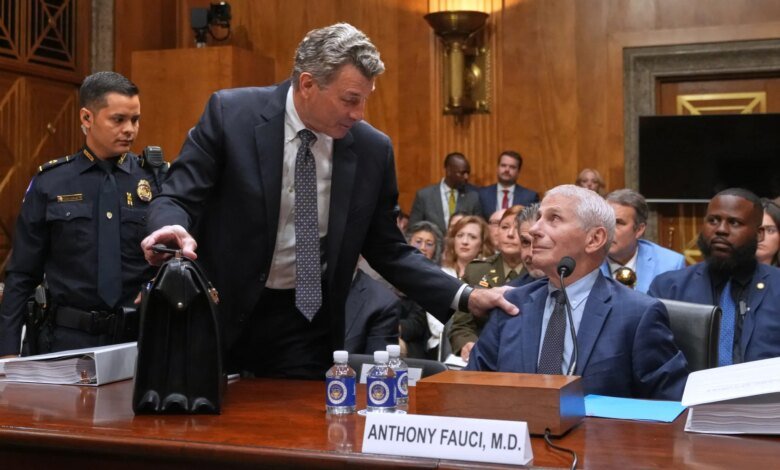
Dr. Anthony Fauci, former director of the National Institute of Allergy and Infectious Diseases, repeatedly invoked his constitutional right against self-incrimination on Wednesday during a volatile Senate committee hearing, refusing to answer more than 100 questions regarding his role in shaping the U.S. response to COVID-19.
The three-hour proceeding, chaired by Kentucky Republican Sen. Rand Paul, exposed deep political and legal tensions surrounding public health governance. Following Fauci’s silence, Paul announced that the committee will convene next week to vote on holding the 84-year-old former official in contempt of Congress, a move that could trigger further legal proceedings.
Under American constitutional law, the Fifth Amendment privilege protects individuals from providing self-incriminating testimony. While President Joe Biden granted Fauci a preemptive federal pardon prior to leaving office in early 2025, legal advisers cautioned that answering new questions under oath before Congress could leave him vulnerable to perjury charges—an offense not covered by prior pardons.
In a brief opening statement before entering his refusal to testify, Fauci described the hearing as an orchestrated effort to force statements that could be used against him. He stated that he was acting strictly on the advice of legal counsel to prevent political entrapment.
Tensions boiled over early in the hearing when Paul ordered the removal of Fauci’s attorney, David Schertler, after Schertler attempted to interject without being formally recognized by the chair. Schertler subsequently issued a public statement condemning the proceeding as biased and lacking basic procedural fairness.
Democratic members of the committee sharply criticized the proceedings. Sen. Maggie Hassan accused Republican leadership of using congressional subpoena powers to stage a political trap rather than conduct legitimate legislative oversight.
The dispute centers largely on the origins of SARS-CoV-2 and the federal government’s funding of virological research abroad. At issue is whether the National Institutes of Health (NIH) funded gain-of-function research—experiments that intentionally enhance the transmissibility or virulence of pathogens—at the Wuhan Institute of Virology in China through grants allocated to the New York-based nonprofit EcoHealth Alliance.
While Fauci has consistently maintained that the bat coronavirus studies funded by the NIH did not meet the formal federal regulatory definition of enhanced potential pandemic pathogens and could not have evolved into the virus that caused the pandemic, critics argue the boundaries were blurred. The federal government recently introduced stricter regulatory frameworks governing high-consequence pathogen research, following executive actions that temporarily halted certain federally backed gain-of-function projects.
Prior to the hearing, more than 1,000 pages of Fauci’s personal wartime notes and diary entries were provided to the committee by Health Secretary Robert F. Kennedy Jr. Sen. Paul released portions of these documents online, asserting they revealed discrepancies between Fauci’s private assessments of early pandemic uncertainty and his public directives.
Scientific consensus regarding the origin of COVID-19 remains focused on zoonotic spillover—where a pathogen jumps naturally from animals to humans—a hypothesis supported by findings near animal trading hubs in Wuhan. However, the possibility of a laboratory leak continues to be investigated by political committees and intelligence agencies, despite a 2024 congressional subcommittee finding no direct evidence linking Fauci to scientific misconduct or virus creation.
In response to the high-stakes inquiry, more than 150 prominent infectious disease specialists and public health researchers signed an open letter defending Fauci’s four-decade career in public service. Over his tenure at the NIH, which spanned seven presidential administrations, Fauci helped direct federal responses to major health crises including HIV/AIDS, the 2001 anthrax attacks, Ebola, and Zika.