Inside the $689 Billion GE Resurrection: How Larry Culp Saved an Industrial Icon from the Brink of Bankruptcy
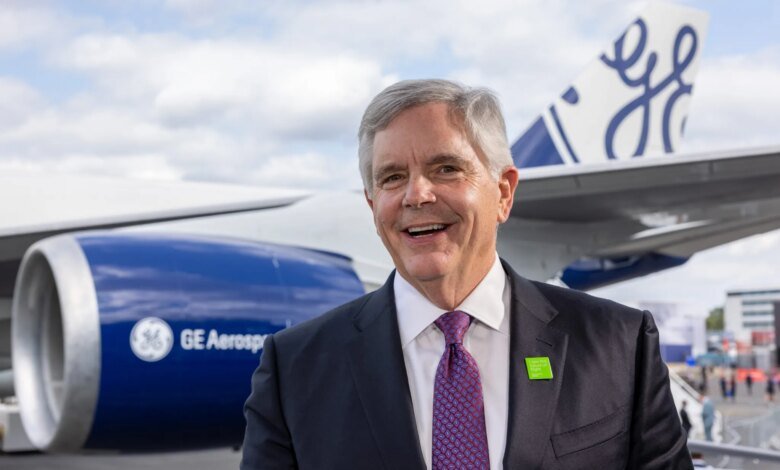
General Electric’s historic transformation from a struggling conglomerate on the verge of insolvency into three highly valuable, independent market leaders has culminated in a combined valuation of $689 billion. The restructuring marks one of the most significant turnarounds in modern corporate history, reversing decades of decline for the American industrial pioneer.
When Larry Culp took the helm of GE as chief executive officer in 2018, the company’s market capitalization had plummeted to $96 billion—a loss of more than 80% from its peak valuation in September 2000. Prominent activist investor Nelson Peltz recently reflected on the depth of the crisis, admitting he believed the legacy giant was destined to file for Chapter 11 bankruptcy protection. Instead, under Culp’s stewardship, the newly independent spinoffs—GE Aerospace, GE Healthcare, and GE Vernova—have generated annualized returns of approximately 30%, doubling the performance of the S&P 500 index over the same period.
Today, the combined value of the three entities places them second only to Tesla among U.S. industrial giants, outstripping legacy energy heavyweights like ExxonMobil and major financial institutions like Visa. The strategic breakup dismantled the classic conglomerate model popularized by former CEO Jack Welch, which had come under immense pressure due to high debt levels and unprofitable divisions, particularly within its power and financial services segments.
To execute the turnaround, Culp implemented a “Lean” manufacturing philosophy, a systematic methodology for operational efficiency and waste reduction famously adapted from the Toyota Production System. Rather than managing from a distant executive suite, Culp’s strategy centers on the Japanese concept of gemba—which translates to “the actual place” where real work occurs on the factory floor.
This hands-on operational style is highly active at manufacturing sites like the historic plant in Lynn, Massachusetts, which produces engines for military aircraft including the F-16 fighter jet and Apache helicopters. On the factory floor, Culp routinely participates in kaizen—continuous improvement—sessions, working directly alongside engineering teams, welders, and union representatives to streamline production and boost productivity. This collaborative, detail-oriented approach was a hallmark of his previous tenure leading Danaher Corporation, where he successfully utilized similar lean principles.
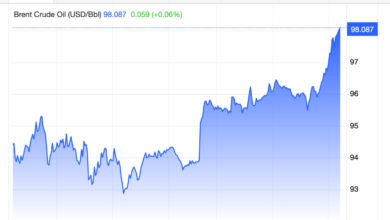
GE’s industrial revival comes amid broader structural shifts in the global corporate landscape, where legacy firms are leaning heavily into advanced technology and operational pivots. For instance, oilfield services giant SLB, founded in 1926, is currently pivoting toward artificial intelligence infrastructure by constructing modular data centers to capture demand from the global tech boom. The company is also positioned to benefit from a rebound in Middle East energy production following supply disruptions in the Strait of Hormuz, which historically choked off nearly 20% of global oil supplies.
Similarly, enterprise software firm ServiceNow recently reported that its specialized AI products have crossed $1 billion in annual contract value. Under CEO Bill McDermott, the company posted a 24.5% year-on-year increase in second-quarter subscription revenue, reaching $3.88 billion and raising its full-year guidance to between $15.76 billion and $15.78 billion, despite broader industry concerns over autonomous AI agents reducing software demand.
These microeconomic successes contrast with recent volatility in the broader global markets. While S&P 500 futures showed a modest 0.3% recovery following a 1.2% close lower, international indexes have faced sharp sell-offs. South Korea’s KOSPI index plunged 5.7%—weighed down by steep drops in chipmakers Samsung and SK Hynix—while Japan’s Nikkei 225 fell 2.7% and Bitcoin slid below the $65,000 threshold.